


Community Pools
Happy residents with a safer, healthier pool and lower maintenance costs
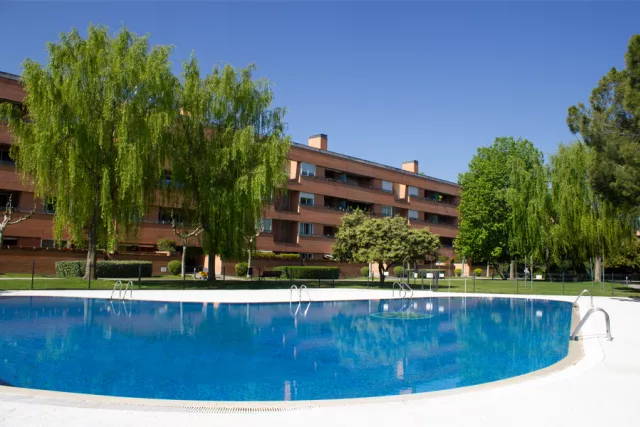
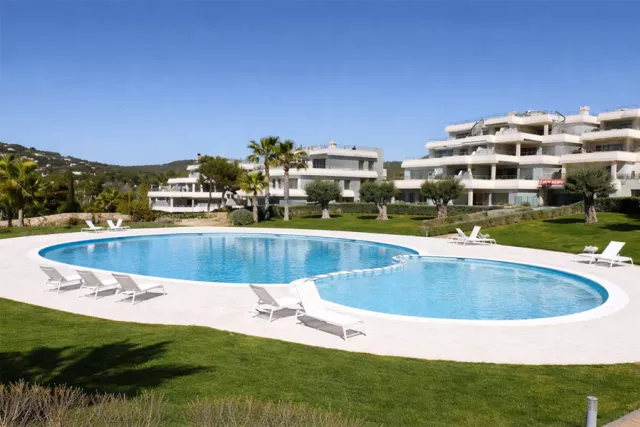
More and more residential communities are deciding to switch their pools to salt chlorination. Higher water quality, lower maintenance, and significant savings in chemicals and water make salt chlorination a highly recommended alternative for community pools.
The approach is clear. If the goal is for the investment to pay off immediately, a salt chlorinator is not the alternative. However, if what we are looking for is a pool with the highest quality water, safer and more pleasant for swimming, and ideal for young children or people with possible dermatological issues, salt chlorination is more than an adequate alternative.
A salt chlorinator for every community pool
Within the extensive Innowater salt chlorinator range, there are models adapted to the needs of different community pools, regardless of their size.
Savings for any residential community pool
Salt chlorination not only provides better water quality and safety. It also greatly reduces maintenance and the need for other chemicals, resulting in lower associated costs.
More pleasant swimming in the pool
With softer, more balanced water, we avoid eye irritation, skin reactions, dry hair, etc.

SMC Salt Chlorinator

SMC-M Salt Chlorinator

Monitor Controller

Frequently Asked Questions
Community Pools
Is it easy to switch from traditional chlorine to salt chlorination in a community pool?
The change is very straightforward. Generally, the main aspect to consider is the space available in the machine room to install the corresponding salt chlorination system.
How long does the changeover take?
The installation process can vary depending on the model, access and other factors. Usually, the installation takes no more than 1 or 2 days.
Does salt chlorination comply with the regulations applicable to community pools?
Yes, of course. It is worth remembering that this is an efficient and sustainable system in which chlorine is generated naturally through electrolysis.
Is salt chlorination recommended for small community pools with few residents?
Absolutely. Just having the highest quality water and drastically reducing maintenance are reasons enough. The important thing is to define which model is the most suitable, depending on the pool volume.
Recommended levels of different water parameters in community pools:
- pH: Between 7 and 7.4.
- Redox (ORP): Between 650 and 750 mV (up to 800 mV with intensive use).
- Free Chlorine: Between 0.5 and 2 mg/L (ideally above 1 mg/L).
- Combined Chlorine: Less than or equal to 0.6 mg/L.
How long does it take to recover the initial cost of installing a salt chlorinator in a community pool?
Although this depends on different factors, in community pools with intensive use, the payback period is usually between 3 and 5 years.
