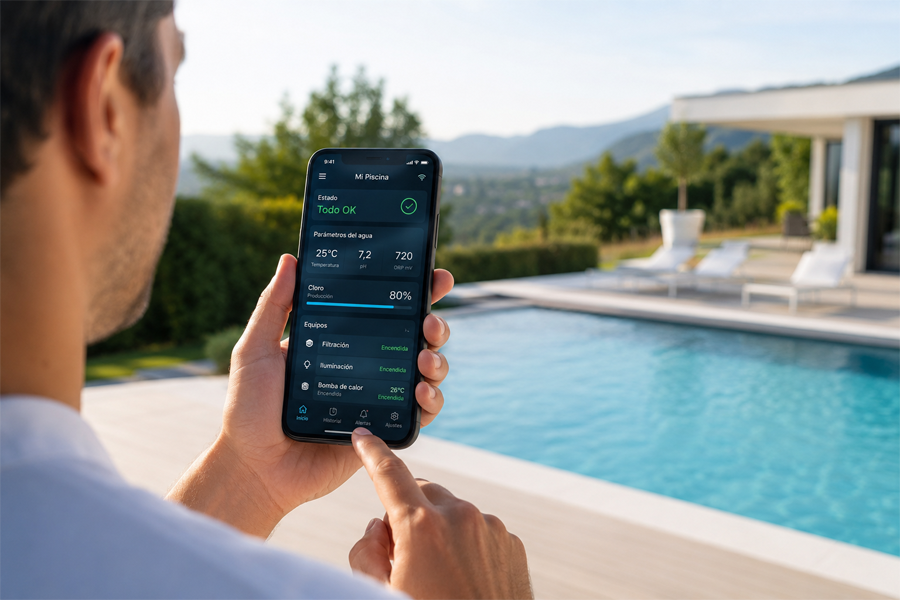
How to Use a Salt Chlorinator Properly in Summer: Complete Guide for Perfect Pool Water
Properly adjusting your salt chlorinator is essential to maintain excellent water quality throughout the summer. During swimming season, disinfectant demand increases significantly due to higher temperatures, increased sunlight exposure, and more frequent pool use.
Adjust chlorine production according to demand
Increase chlorine production based on:
- Water temperature.
- Sun exposure.
- Number of swimmers.
- Pool usage frequency.
- Whether a pool cover is used.
Most salt chlorinators operate between 50% and 100% capacity during summer, but settings should always be based on actual water test results.

Maintain the recommended free chlorine level
Check free chlorine levels regularly.
As a general guideline:
- Residential pools: 0.5 to 2 ppm (mg/L).
- Public pools: according to local regulations.
An insufficient level can encourage the growth of algae and microorganisms, while an excess can cause irritation and increase energy consumption.
Monitor pH frequently
The effectiveness of chlorine generated by a salt chlorinator depends heavily on pH.
Keep pH levels between 7.2 and 7.6.
Improper pH can reduce chlorine efficiency, irritate skin and eyes, cause scale formation, and damage equipment.
What if the Water Tends to Be Alkaline?
Salt chlorination naturally causes pH to rise over time.
If your pool water frequently has a high pH:
- Install an automatic pH control system.
- Add pH reducer as needed.
- Maintain total alkalinity between 80 and 120 ppm.
- Check for excessive aeration from waterfalls or water features.
High pH significantly reduces chlorine effectiveness.
What if the Water Tends to Be Acidic?
Although less common, low pH can cause corrosion and premature equipment wear.
If pH regularly falls below 7.2:
- Add pH increaser gradually.
- Check and adjust total alkalinity.
- Avoid overdosing corrective chemicals.
- Inspect automatic dosing systems regularly.
Overly acidic water can damage the electrolytic cell, metal components, and pool finishes.

Take advantage of Automation
Automatic pH and redox control systems help:
- Adjust chlorine production in real time.
- Maintain stable water parameters.
- Reduce energy consumption.
- Minimize manual intervention.
Ultimately, automation helps us optimize the water disinfection process.
Platforms like Loxone make the control and maintenance of public swimming pools, for example, even easier.
“Automation allows us to optimize the pool water disinfection process”
Check salt levels regularly
Evaporation, backwashing, rainfall, and water replacement can affect salinity.
Maintain salt concentration within the manufacturer’s recommended range, typically between 3 and 6 g/L.
Increase filtration time
In summer, the filtration system should be adjusted to the pool’s usage. The hotter it is, the more hours of filtration are needed.
As a general guideline:
- Filter for 8 to 12 hours daily.
- Divide the filtration into several cycles if possible.
Remember that the salt chlorinator only generates disinfectant while the filter system is running.
Inspect and clean the electrolytic cell
Check the cell regularly for:
- Calcium scale buildup.
- Dirt accumulation.
- Signs of wear.
Even self-cleaning systems require periodic visual inspections.
Here are more tips for maintaining your salt chlorinator cell.
Monitor cyanuric acid levels
If you use stabilized chlorine products for shock treatments, keep cyanuric acid below 50 ppm to avoid reducing chlorine efficiency.
As a general guideline, it is advisable to keep it below 50 ppm to avoid reducing the effectiveness of the chlorine generated.
Conclusion
Proper summer operation of a salt chlorinator requires adjusting chlorine production, monitoring pH and salt levels, and optimizing filtration.
Effective salt chlorination management improves water quality, extends equipment lifespan, and provides a safer and more comfortable swimming experience.

Salt chlorination for pools is a treatment system that generates pure chlorine from the salt dissolved in the water, through an electrolysis process. A sustainable, automated, and safe treatment for swimming.
Related News
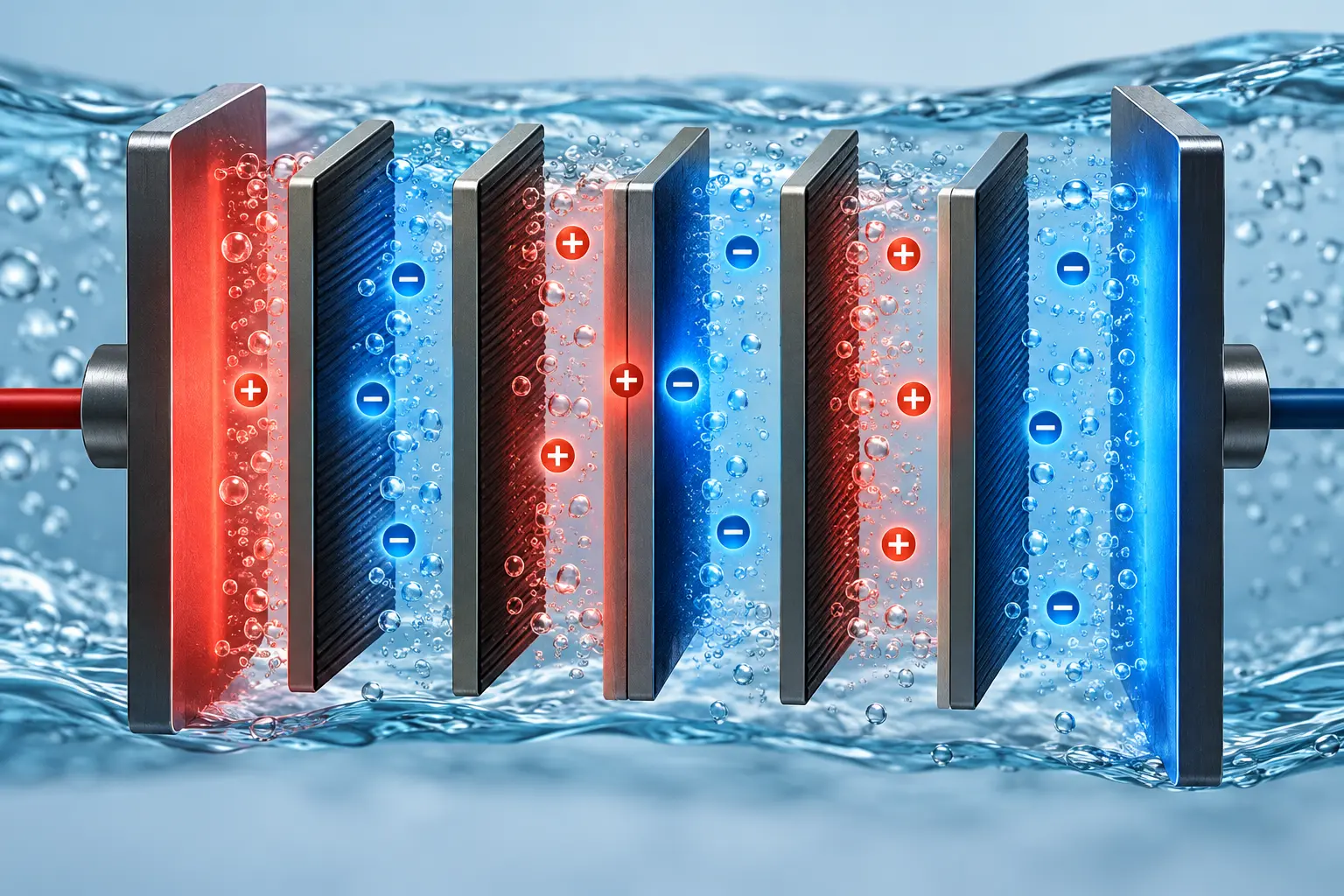
Bipolar cells, reverse polarity and programmable polarity in salt chlorination
Superchlorination or Boost Function in a Salt Chlorinator: What It Is, What It’s For, and When to Use It
Chloramines in Pools: What They Are, How They Form, and How to Eliminate Them
How to solve the 20 most frequent pool water problems
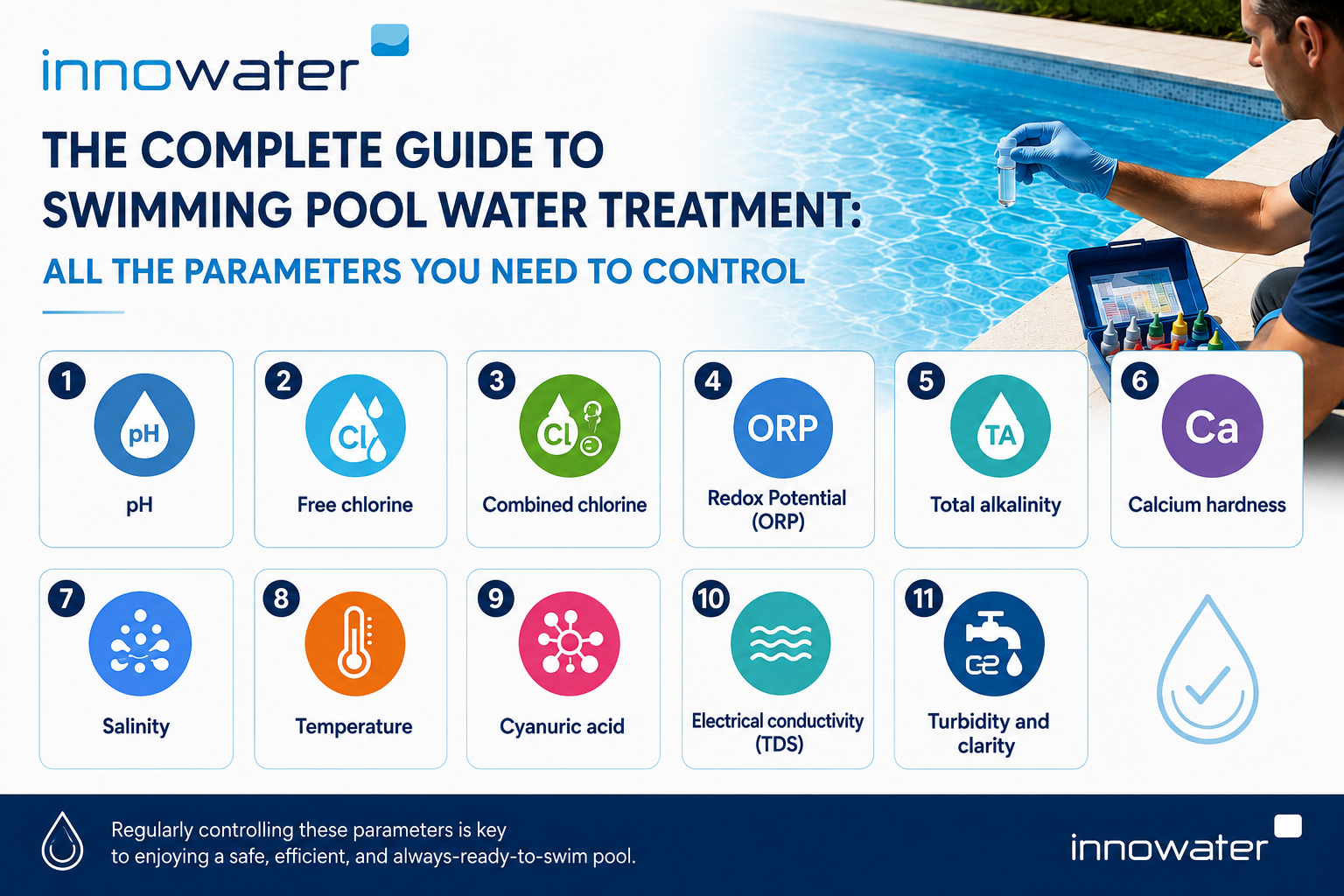
Complete guide to pool water treatment: all the parameters you need to control
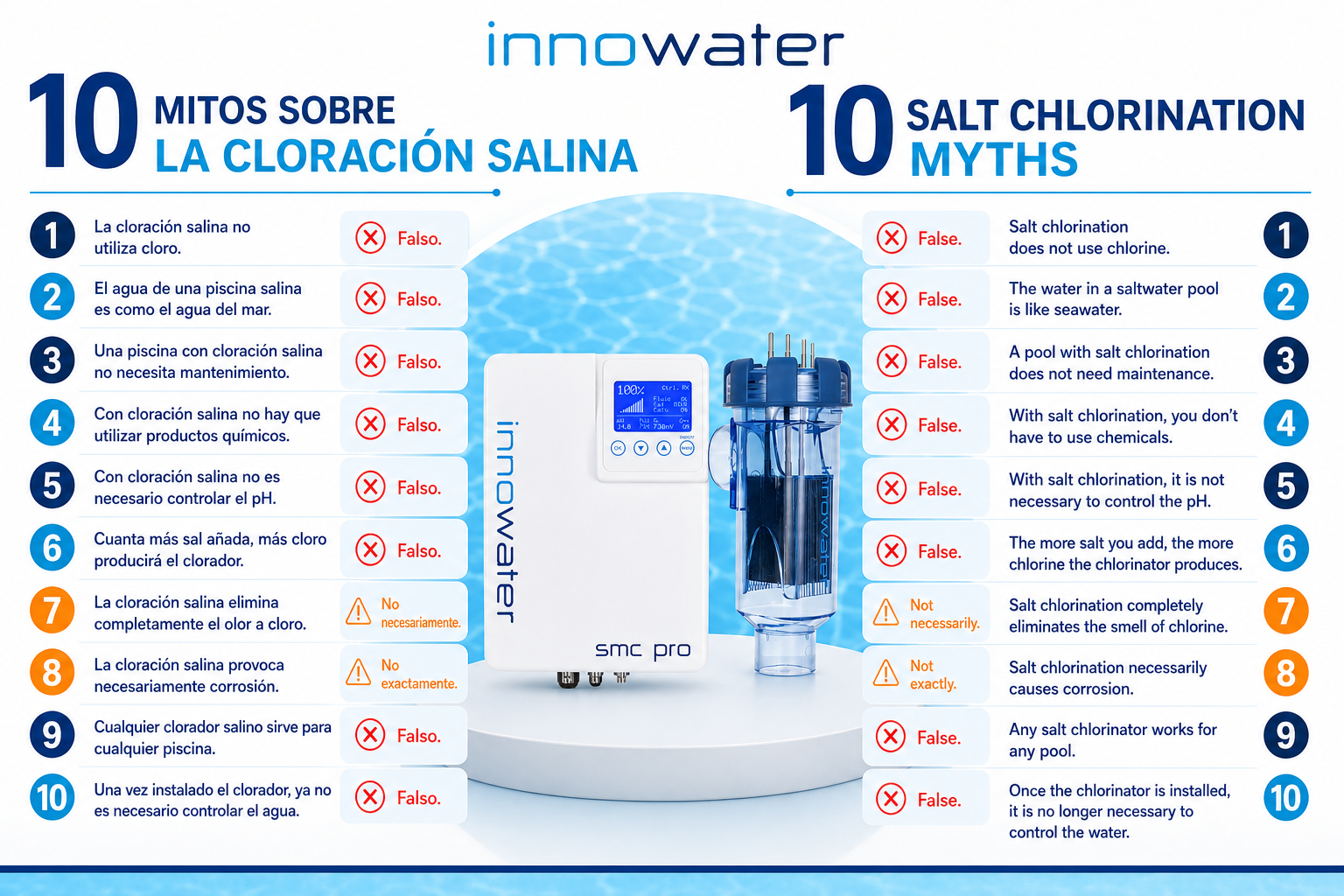
Myths about Salt Chlorination: 10 Misconceptions You Need to Know
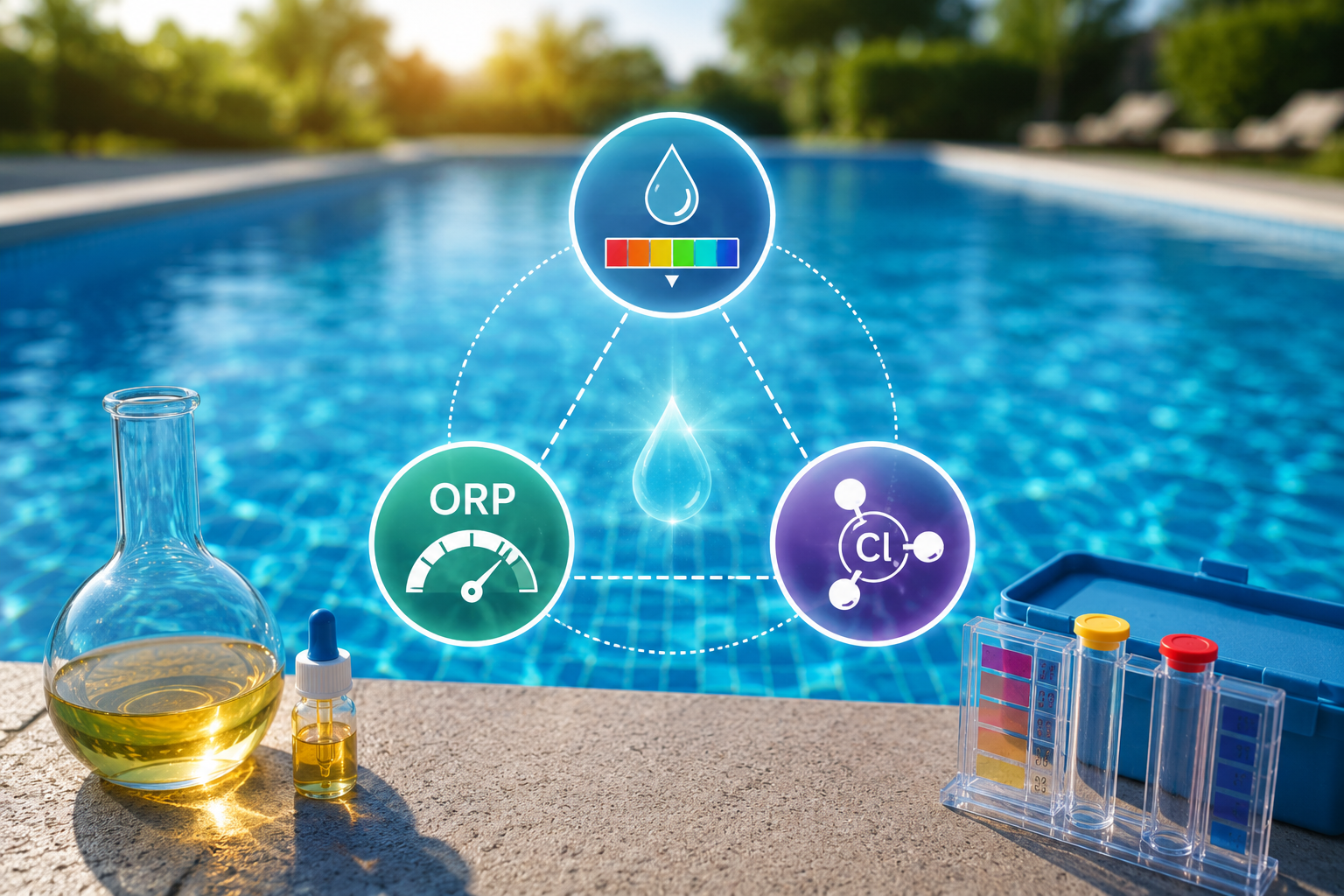
Relationship between pH, ORP, and free chlorine: The ultimate guide to achieving effective pool disinfection
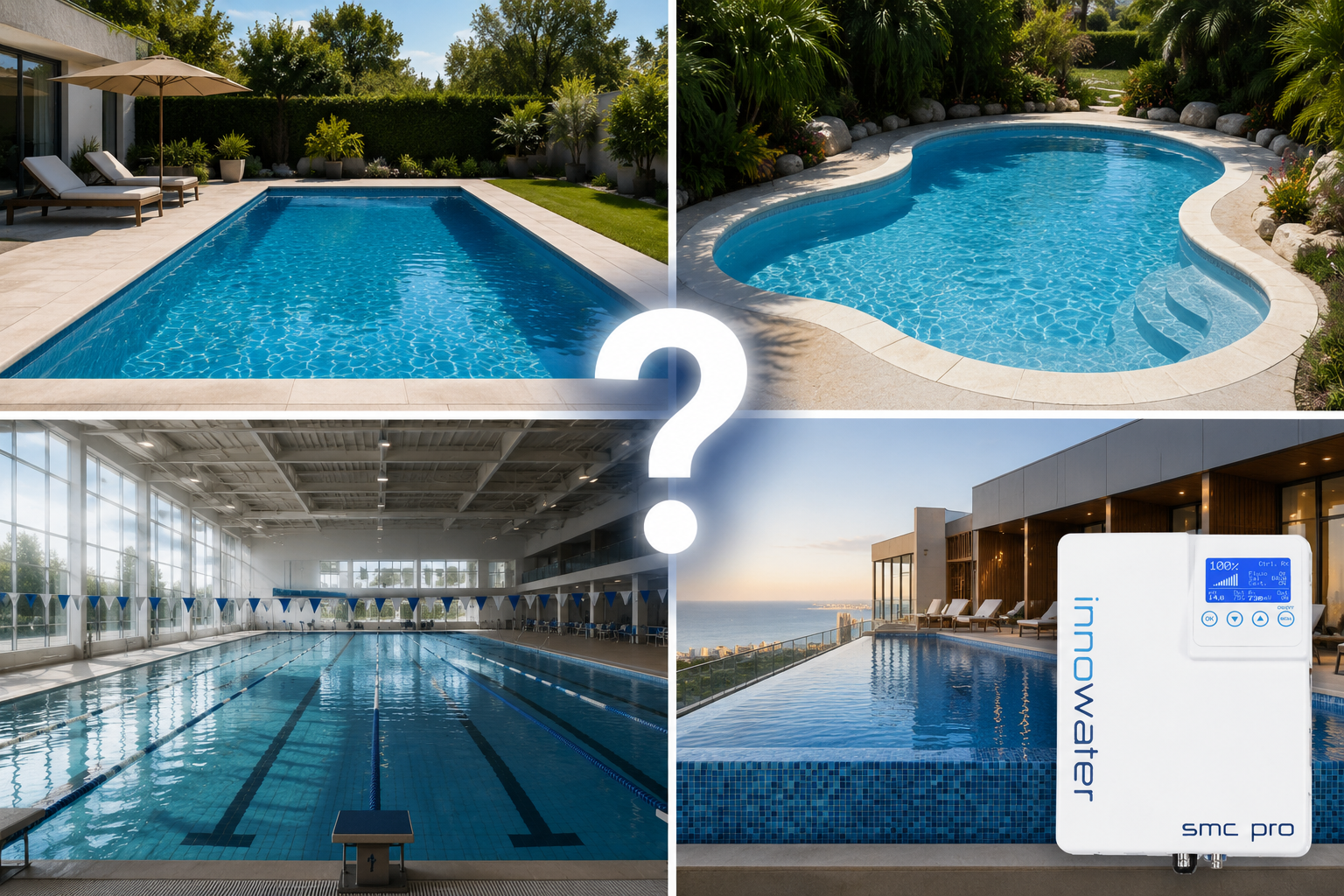
How to correctly size a salt chlorinator for your pool: the ultimate guide to choosing the right equipment

What is ORP and why is it the most important parameter to ensure effective disinfection in a swimming pool?