Myths about Salt Chlorination: 10 Misconceptions You Need to Know
Salt chlorination has become one of the most widely used water treatment systems in private pools and also in numerous public facilities. However, its popularization has been accompanied by all kinds of claims, some true and others not so much.
Does a salt-chlorinated pool have no chlorine? Is the water as salty as seawater? Does salt eliminate all maintenance problems? Is it really healthier? Can it cause corrosion?
In this article, we debunk the main myths about salt chlorination and explain what lies behind each one so you can make an informed decision when installing a salt chlorinator.
How Does Salt Chlorination Really Work?
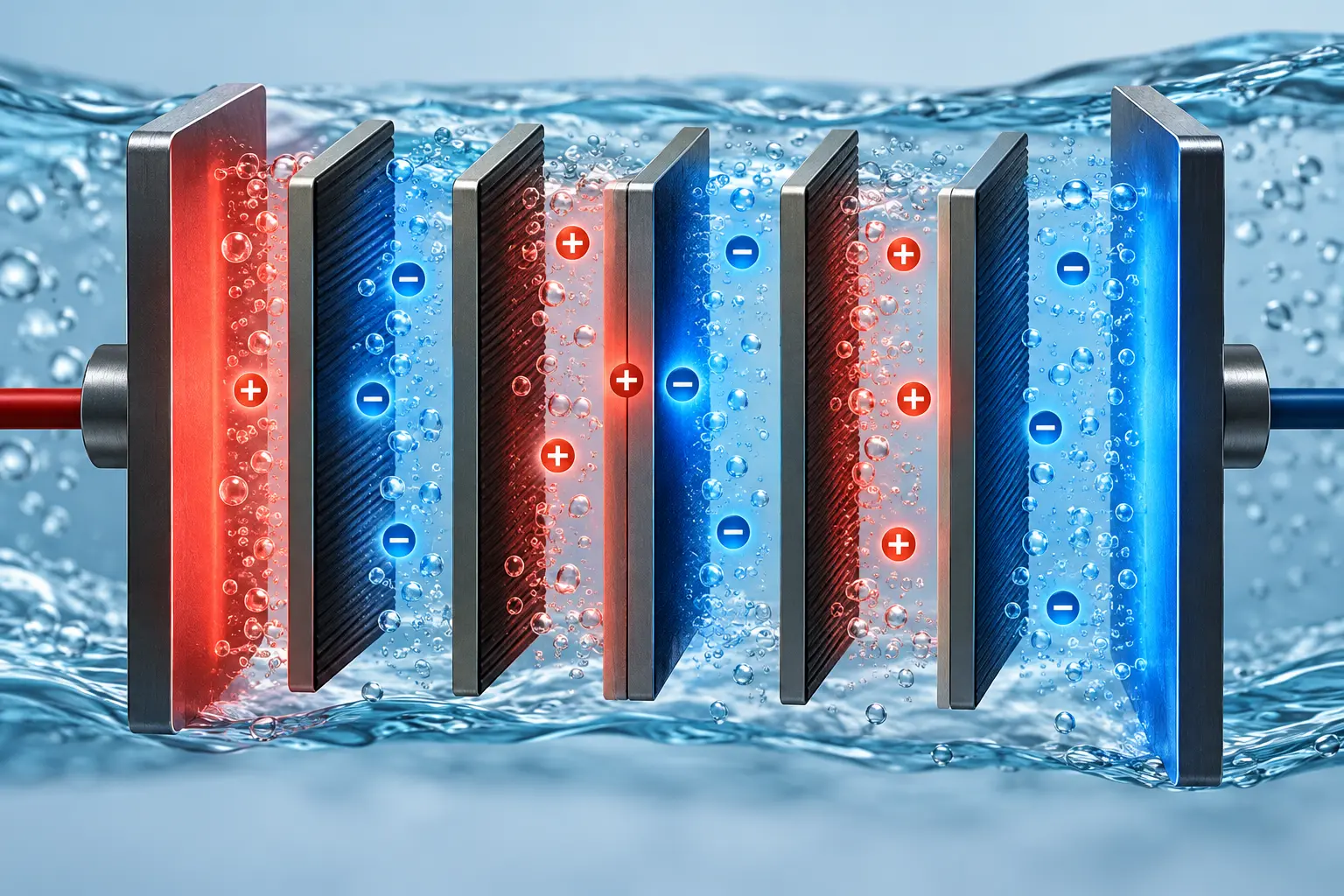
Before we begin, we must make it clear that salt chlorination does not replace chlorine with salt. What it actually does is naturally produce, through an electrolysis process on the pool water with a certain salt concentration, the chlorine needed to disinfect the water automatically and continuously.
The main difference compared to conventional dosing is that the disinfectant is generated directly in the system, instead of having to add it manually or via a dosing system.
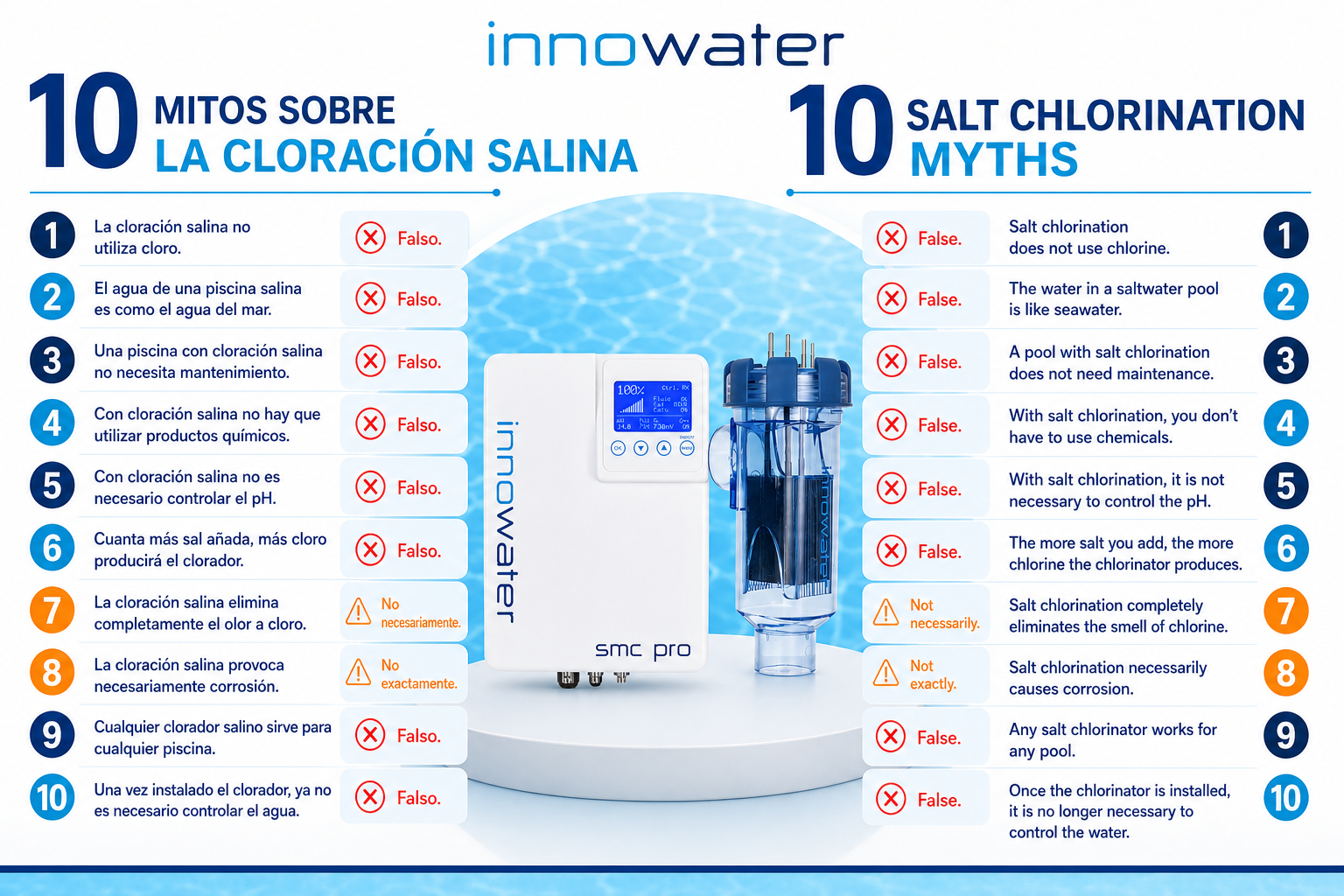
1. Salt chlorination uses no chlorine.
❌ False. A pool with salt chlorination does contain chlorine. In fact, chlorine is precisely the disinfecting agent that eliminates microorganisms present in the water.
2. The water in a saltwater pool is like seawater.
❌ False. Water in a pool with salt chlorination contains salt, but its concentration is much lower than that of seawater.
The ocean has an approximate salinity of 35 g/L, while electrolysis systems for pools typically work with much lower concentrations, between 4 and 6 g/L. The sensation of swimming in a salt-chlorinated pool is not comparable to swimming in the sea.

3. A pool with salt chlorination requires no maintenance.
❌ False. No pool operates without monitoring or maintenance. Although the salt chlorinator generates the disinfectant automatically, it is necessary to control parameters such as:
- pH.
- Free chlorine.
- Alkalinity.
- Salt concentration.
- Temperature.
- …
“The true value of salt chlorination is not only in generating chlorine from salt, but in being able to integrate that generation into an automated treatment system that continuously measures and adapts the treatment to the water’s real needs.”
4. With salt chlorination, you don’t need to use chemicals.
❌ False. Salt electrolysis reduces the manual handling and dosing of certain products, but it does not turn the pool into a chemical-free system. Water chemistry remains fundamental.
Although salt chlorination reduces the need for other chemicals, the control and dosing of other parameters do require the addition of other chemicals.
pH, disinfectant, alkalinity, and other parameters must be maintained within appropriate values to ensure effective disinfection and protect both swimmers and the installation itself.
5. With salt chlorination, pH control is not necessary.
❌ False. It’s precisely the opposite. The electrolysis process can favor a tendency for pH to increase, so its control is especially important in a salt-chlorinated pool. Furthermore, pH directly influences the effectiveness of chlorine as a disinfectant.
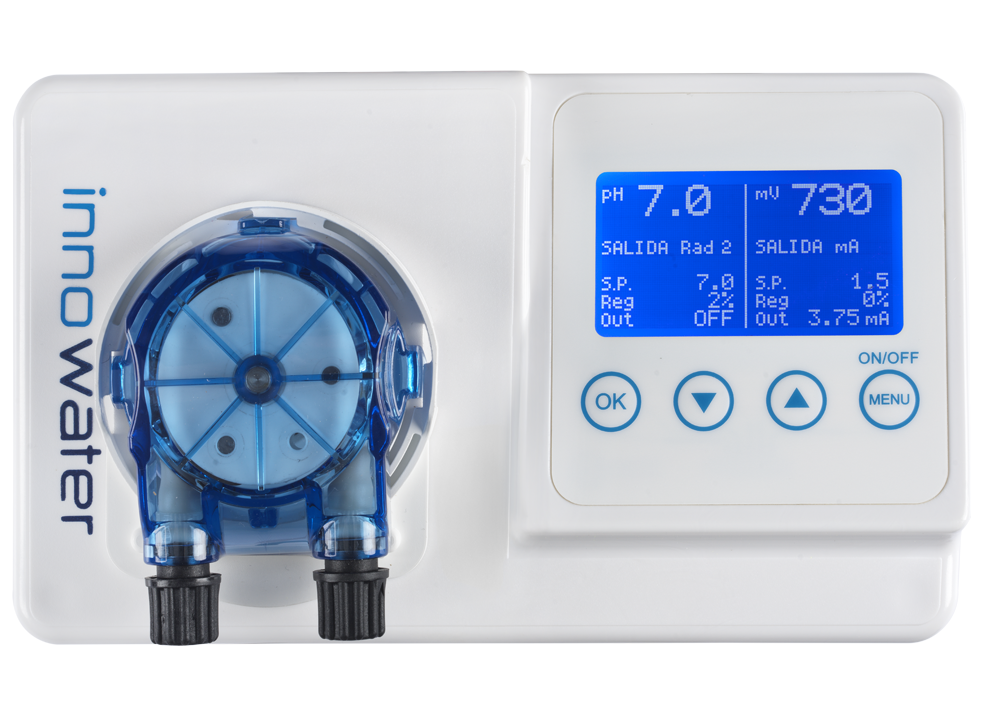
An automatic pH regulation system can dose the necessary product to maintain the parameter within the established range. Therefore, when seeking an advanced water treatment system, it is particularly beneficial to combine: Salt chlorination + automatic pH control + ORP control.
An example could be the combination of our SMC Salt Chlorinator with the pH Redox control and dosing equipment.
6. The more salt I add, the more chlorine the chlorinator will produce.
❌ False. Chlorine production primarily depends on the chlorinator’s capacity and its production percentage, in addition to the system’s operating conditions.
Adding salt above the recommended level does not mean the equipment will proportionally produce more chlorine. In fact, an incorrect salt concentration can negatively affect the system’s operation and, depending on the installation, promote corrosion problems or affect certain components.
Therefore, more salt does not necessarily mean more disinfection. Salt concentration must always be maintained within the manufacturer’s specified range.
7. Salt chlorination completely eliminates the smell of chlorine.
⚠️ Not necessarily. A properly treated pool may have a very reduced chlorine smell, but salt chlorination does not by definition eliminate chloramines.
The well-known “chlorine smell” is related to compounds derived from the reaction of chlorine with organic matter, as well as the general water conditions.
Proper filtration, disinfection, water renewal, and bather load management are fundamental for maintaining good water quality.
Therefore: Salt chlorination ≠ absolute absence of chlorine smell.
8. Salt chlorination necessarily causes corrosion.
⚠️ Not exactly. The salt concentration used in a pool is much lower than that of seawater, but it is still important to consider material compatibility and ensure a correctly designed installation.
Corrosion problems can be related to different factors:
- Incorrect salt concentration.
- pH out of range.
- Poor equipotential bonding.
- Deficient electrical installation.
- Unsuitable materials.
- Lack of maintenance.
Therefore, it would not be correct to state that “salt never causes corrosion”, but neither does installing a salt chlorinator necessarily imply corrosion problems.
A correctly executed and maintained installation significantly minimizes these risks.
9. Any salt chlorinator works for any pool.
❌ False. Each pool has different needs. To correctly select a salt chlorinator, factors such as the following must be considered:
- Water volume.
- Temperature.
- Solar radiation.
- Number of bathers.
- Filtration hours.
- Pool usage.
- Indoor or outdoor pool.
- Climatic conditions.
- Automation level.
A private pool used by a family has very different needs from those of a hotel, a campsite, a sports center, or a municipal pool.
That is why it is essential to correctly size the equipment.
10. Once the chlorinator is installed, water control is no longer necessary.
❌ False. Automation does not mean absence of control. The most advanced systems allow continuous measurement of parameters such as pH and ORP, and adjust treatment based on the water’s real needs. This allows for a shift from treatment based on manual interventions to a much more precise and stable system.
The true evolution of the pool is not simply moving from chlorine to salt. It is moving from manual treatment to intelligent and automated treatment.
Conclusion: Salt Chlorination is Not Magic, It’s Technology
Salt chlorination has evolved significantly and has become one of the main solutions for pool water treatment. But to truly harness its benefits, it’s important to separate myths from reality.
A pool with salt chlorination:
✅ Does contain chlorine.
✅ Does not have salinity comparable to the sea.
✅ Still needs pH control.
✅ Requires maintenance.
✅ Can automate a large part of the treatment.
✅ Must have correctly sized equipment.
✅ Needs a suitable installation and compatible materials.
And, above all, salt chlorination works much better when integrated into a complete water automation and control system.
Technology is not simply about adding salt to the pool. It’s about intelligently generating, measuring, and controlling water treatment.

Salt chlorination for pools is a treatment system that generates pure chlorine from the salt dissolved in the water, through an electrolysis process. A sustainable, automated, and safe treatment for swimming.
Related News
Bipolar cells, reverse polarity and programmable polarity in salt chlorination
Superchlorination or Boost Function in a Salt Chlorinator: What It Is, What It’s For, and When to Use It

Chloramines in Pools: What They Are, How They Form, and How to Eliminate Them
How to solve the 20 most frequent pool water problems
Complete guide to pool water treatment: all the parameters you need to control
Relationship between pH, ORP, and free chlorine: The ultimate guide to achieving effective pool disinfection
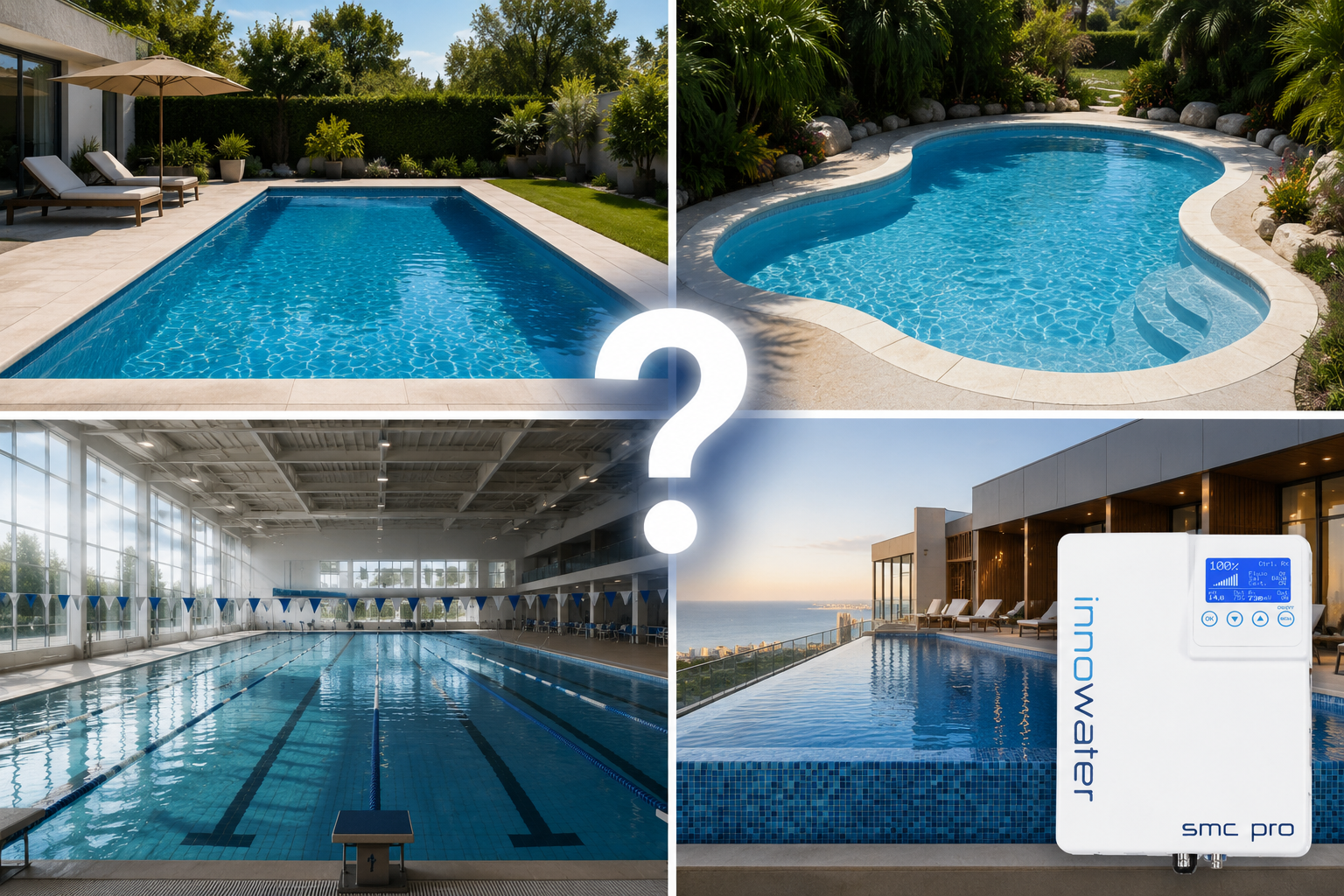
How to correctly size a salt chlorinator for your pool: the ultimate guide to choosing the right equipment
What is ORP and why is it the most important parameter to ensure effective disinfection in a swimming pool?
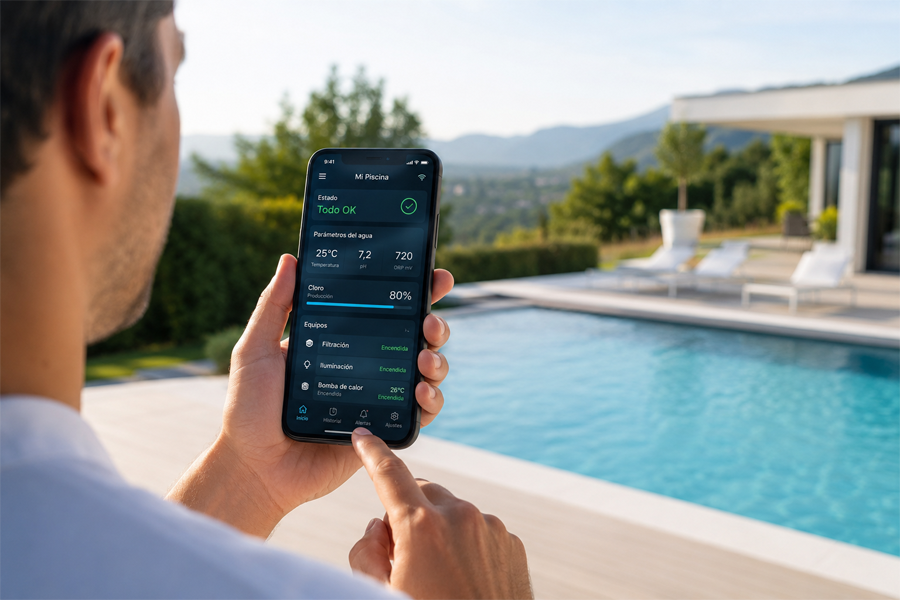
Automating pool water treatment: greater efficiency, less maintenance, and consistently high water quality