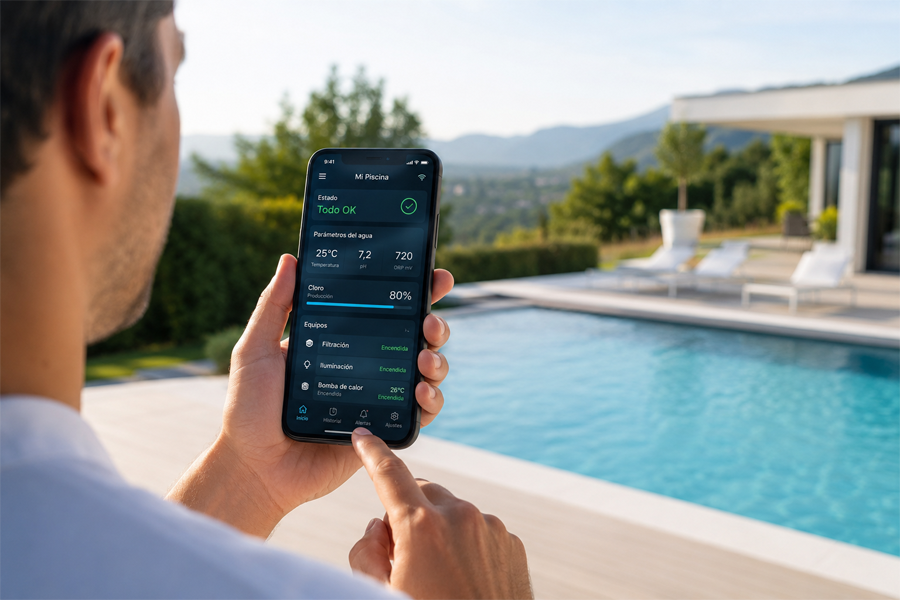
How to switch your pool to salt chlorination: step-by-step guide
Do you want a healthier pool, with fewer chemicals and easier maintenance? Switching your pool to salt chlorination is one of the best decisions you can make. In this article, we explain how to make the transition from traditional chlorine to a salt chlorination system in a clear, practical, and safe way.
What is salt chlorination and how does it work?
Salt chlorination is a disinfection system that naturally generates chlorine through a process of salt electrolysis. Pool water, with a low salt concentration, passes through a salt chlorinator equipped with electrodes. There, an electrochemical reaction produces hypochlorous acid, the main disinfecting agent in the water.
You can read more about how salt chlorination works here.
Benefits of switching to salt chlorination
Choosing salt chlorination offers multiple advantages for both pool maintenance and swimmers’ health:
- Healthier, more natural water
- Less use of chemicals
- Significantly reduced maintenance
- Helps prevent eye and skin irritation
- Protects swimwear and prevents strong chlorine smells
- Reduces the risk of freezing in cold climates

How to switch your pool from chlorine to salt chlorination
Contrary to what many people think, installing a salt chlorinator in an existing pool is easier than it looks. You only need a bit of space in the equipment room, where the filtration system is located.
Steps to install a salt chlorinator
- Prepare the existing system
Make sure the pool water has a low chlorine concentration. You can wait for it to dissipate naturally or partially drain the pool and add fresh water. - Cut the return line
Locate the section of pipe that runs from the multiport valve to the pool return inlets. That’s where the salt chlorinator will be installed, after the filtration system. - Install the electrodes and housing
Insert the chlorinator housing into the pipe, connecting the electrodes to the corresponding control panel. - Install in bypass (Recommended)
Adding shut-off valves lets you divert the water flow if you need to perform maintenance. It’s more practical and offers greater control. - Add salt to the water
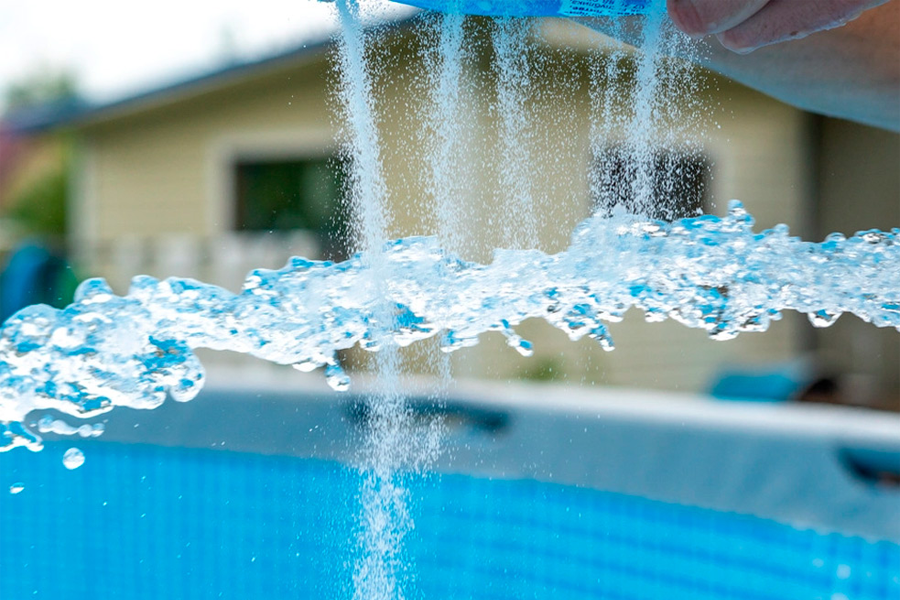
Add the amount of salt indicated by the chlorinator manufacturer (usually between 4 and 6 g/L). Use pool-grade salt. -
Check connections and operation
Make sure all system valves are closed during installation. When finished, check for leaks and that the chlorinator is working properly.
Important: trust the professionals
Although the process is simple, working with a specialist installer ensures the equipment is tailored to your pool’s specific needs (volume, type of use, temperature, etc.). Trust Innowater—we’re leaders in salt chlorination systems for both private and public pools.
Whether it’s a private pool, a community pool, or a public-use pool (schools, gyms, hotels…), salt chlorination is an investment in health, efficiency, and sustainability.
Ready to take the next step?
Switching to salt chlorination isn’t just easy—it’s a smart move. It improves the swimming experience, reduces long-term costs, and takes care of everyone who enjoys your pool.
Find out which salt chlorinator is ideal for your pool with our digital calculator.
If you prefer, contact us directly. We’ll advise you so you can choose the best salt chlorinator for your pool.

Salt chlorination for pools is a treatment system that generates pure chlorine from the salt dissolved in the water, through an electrolysis process. A sustainable, automated, and safe treatment for swimming.
Related News
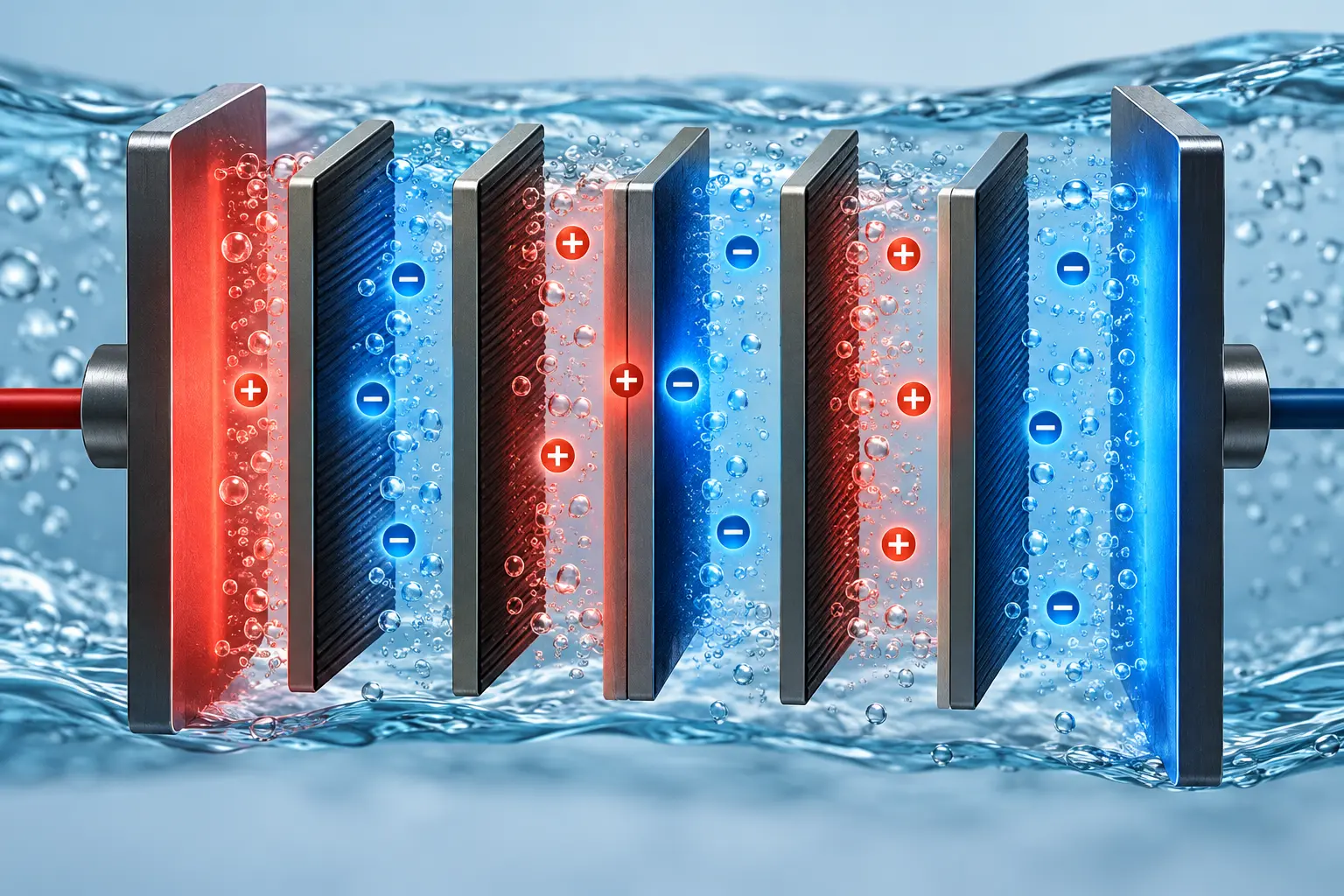
Bipolar cells, reverse polarity and programmable polarity in salt chlorination
Superchlorination or Boost Function in a Salt Chlorinator: What It Is, What It’s For, and When to Use It

Chloramines in Pools: What They Are, How They Form, and How to Eliminate Them
How to solve the 20 most frequent pool water problems
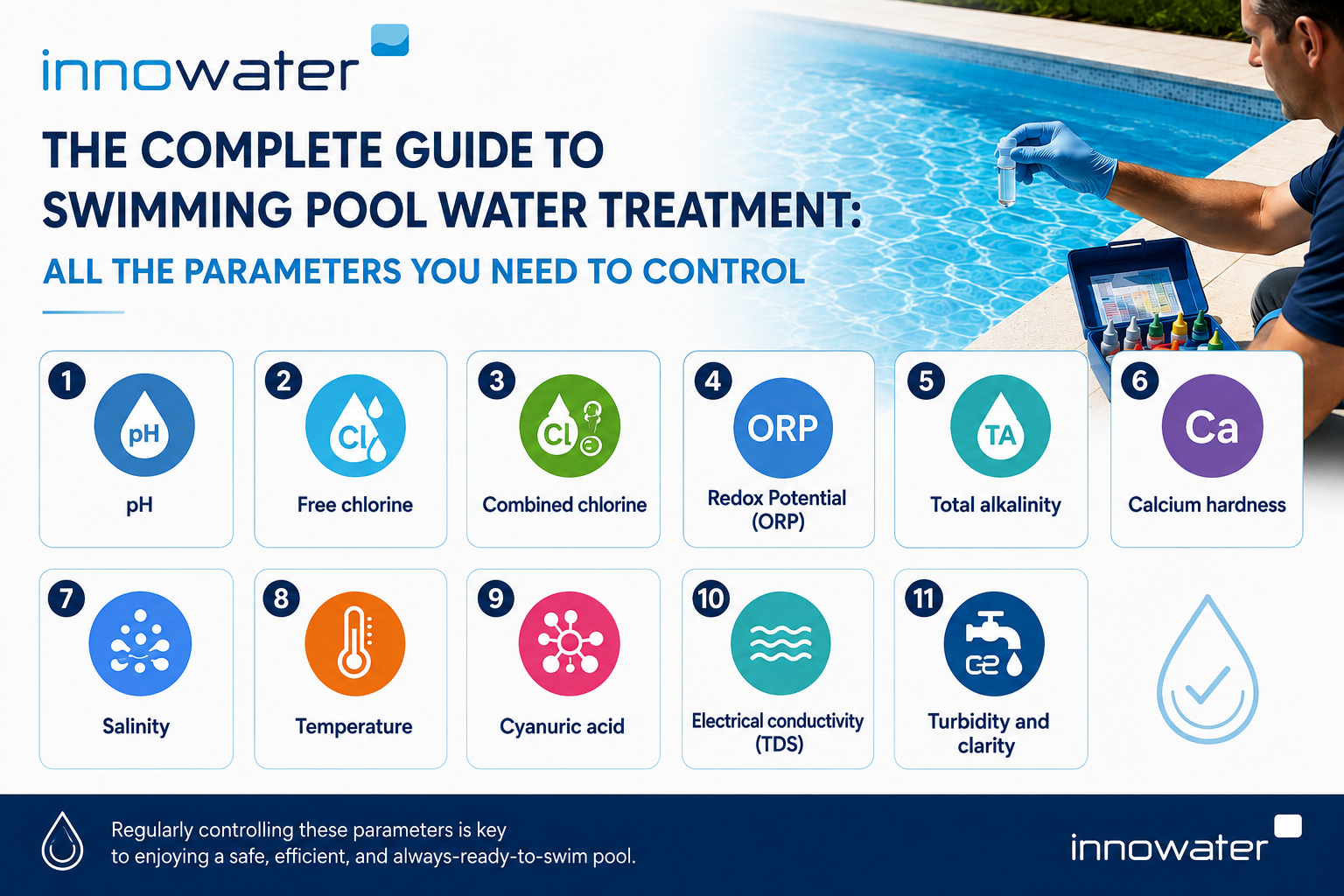
Complete guide to pool water treatment: all the parameters you need to control
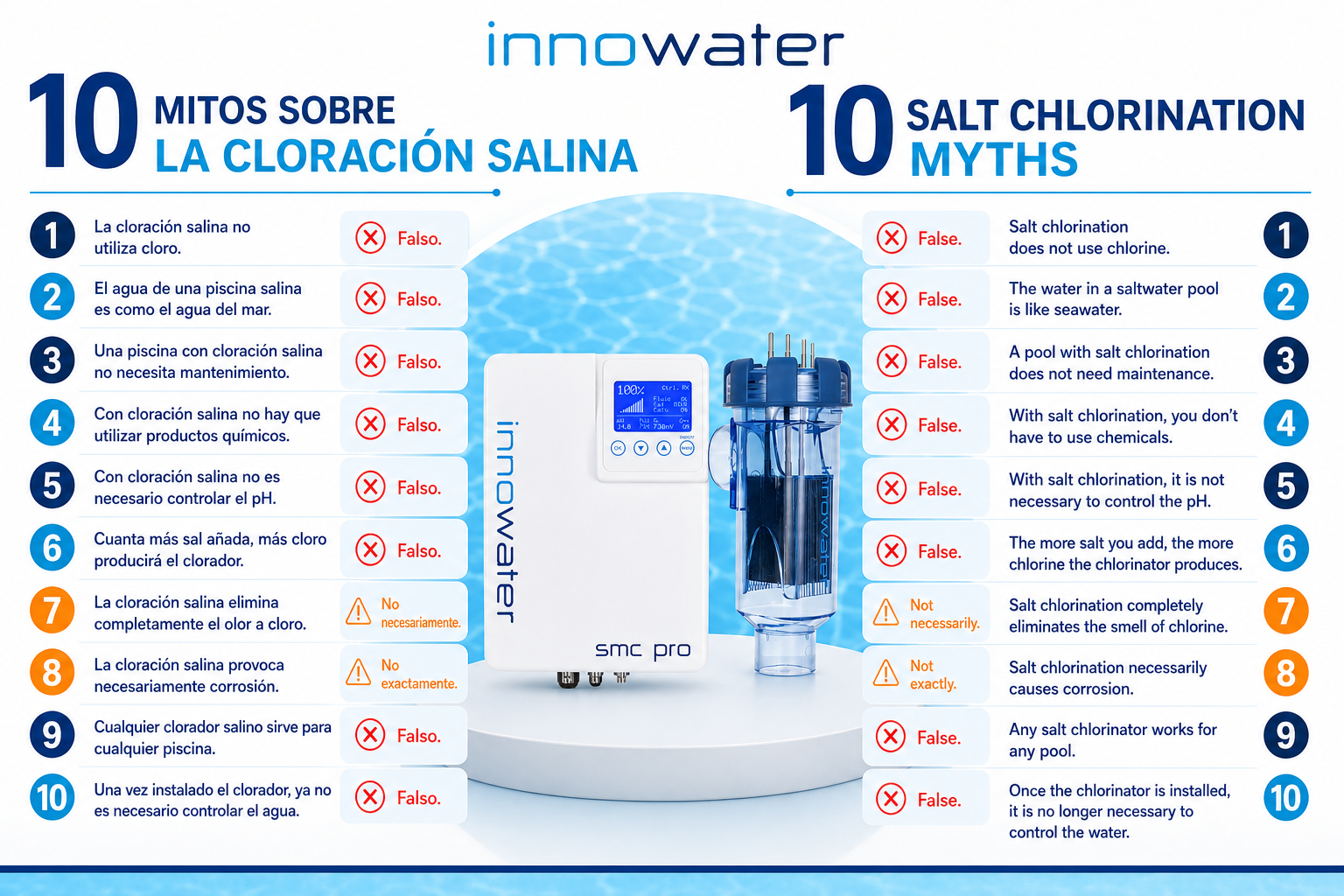
Myths about Salt Chlorination: 10 Misconceptions You Need to Know
Relationship between pH, ORP, and free chlorine: The ultimate guide to achieving effective pool disinfection
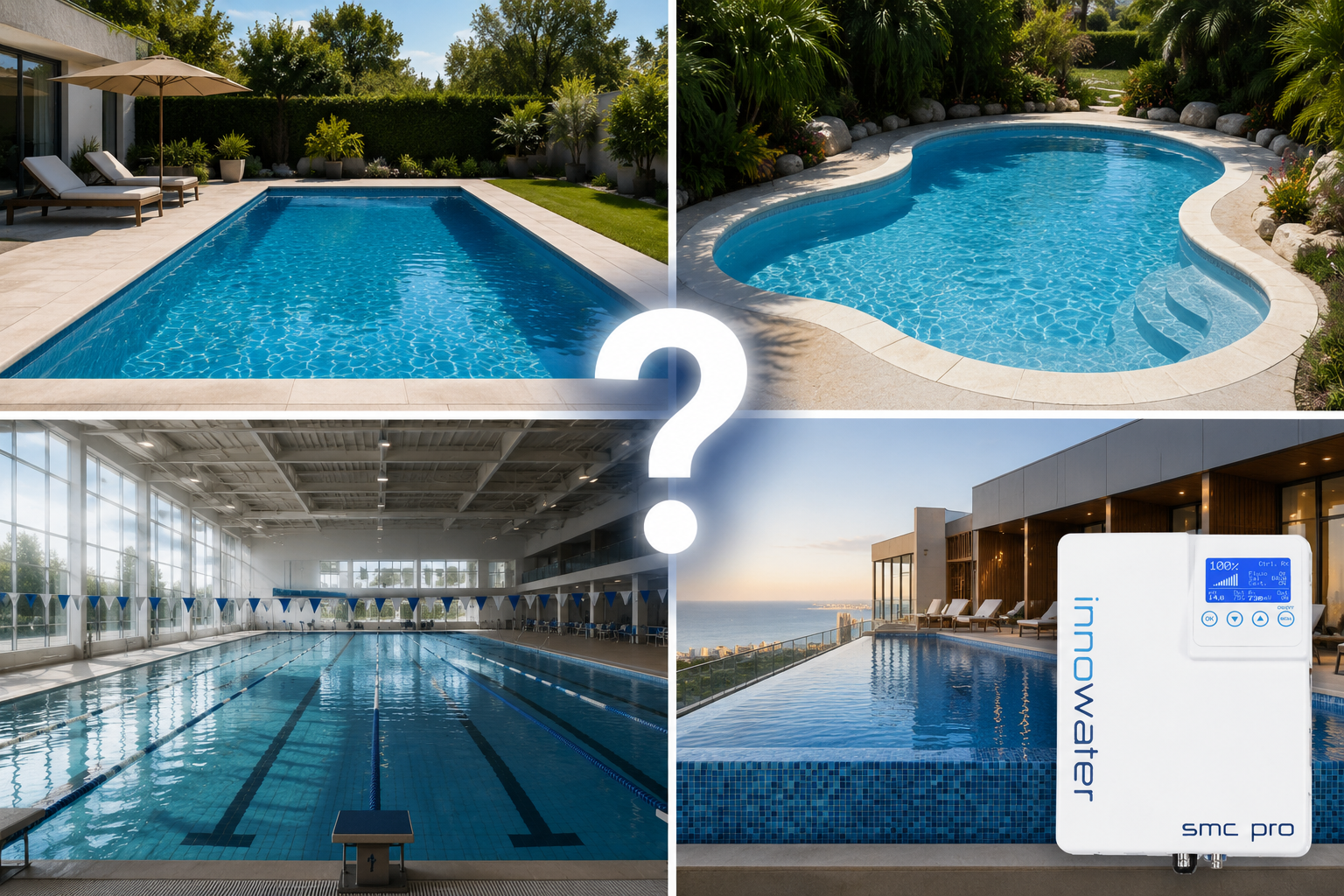
How to correctly size a salt chlorinator for your pool: the ultimate guide to choosing the right equipment

What is ORP and why is it the most important parameter to ensure effective disinfection in a swimming pool?