Relationship between pH, ORP, and free chlorine: The ultimate guide to achieving effective pool disinfection
Being able to have clean, safe, and crystal-clear pool water does not solely depend on adding more chlorine. In reality, disinfection effectiveness is determined by the balance between three fundamental parameters: pH, ORP (Redox Potential), and free chlorine.
Understanding how they relate to each other is key to optimizing water treatment, reducing chemical consumption, and ensuring consistent water quality. In this guide, we explain how these parameters interact and why automatic control systems are becoming increasingly important in modern pools.
What is pH?
The pH measures the degree of acidity or alkalinity of water on a scale of 0 to 14.
In a pool, the recommended range is usually between 7.2 and 7.6. Maintaining the pH within these values not only improves swimmer comfort but also allows the disinfectant to act with maximum effectiveness.
A pH that is too high significantly reduces the disinfectant power of chlorine, while a pH that is too low can promote corrosion of certain materials and cause skin and eye irritation.
What is free chlorine?
Free chlorine is the amount of chlorine available to eliminate bacteria, viruses, algae, and other microorganisms present in the water.
It is one of the most well-known parameters in pool maintenance, but by itself, it does not guarantee effective disinfection. Its ability to act depends directly on the water’s balance, especially the pH value.
What is ORP?
ORP (Oxidation Reduction Potential) measures the water’s actual capacity to oxidize and eliminate contaminants.
It is expressed in millivolts (mV) and reflects the water’s disinfectant effectiveness in real-time.
While free chlorine indicates how much disinfectant is available, ORP shows whether that disinfectant is acting effectively.
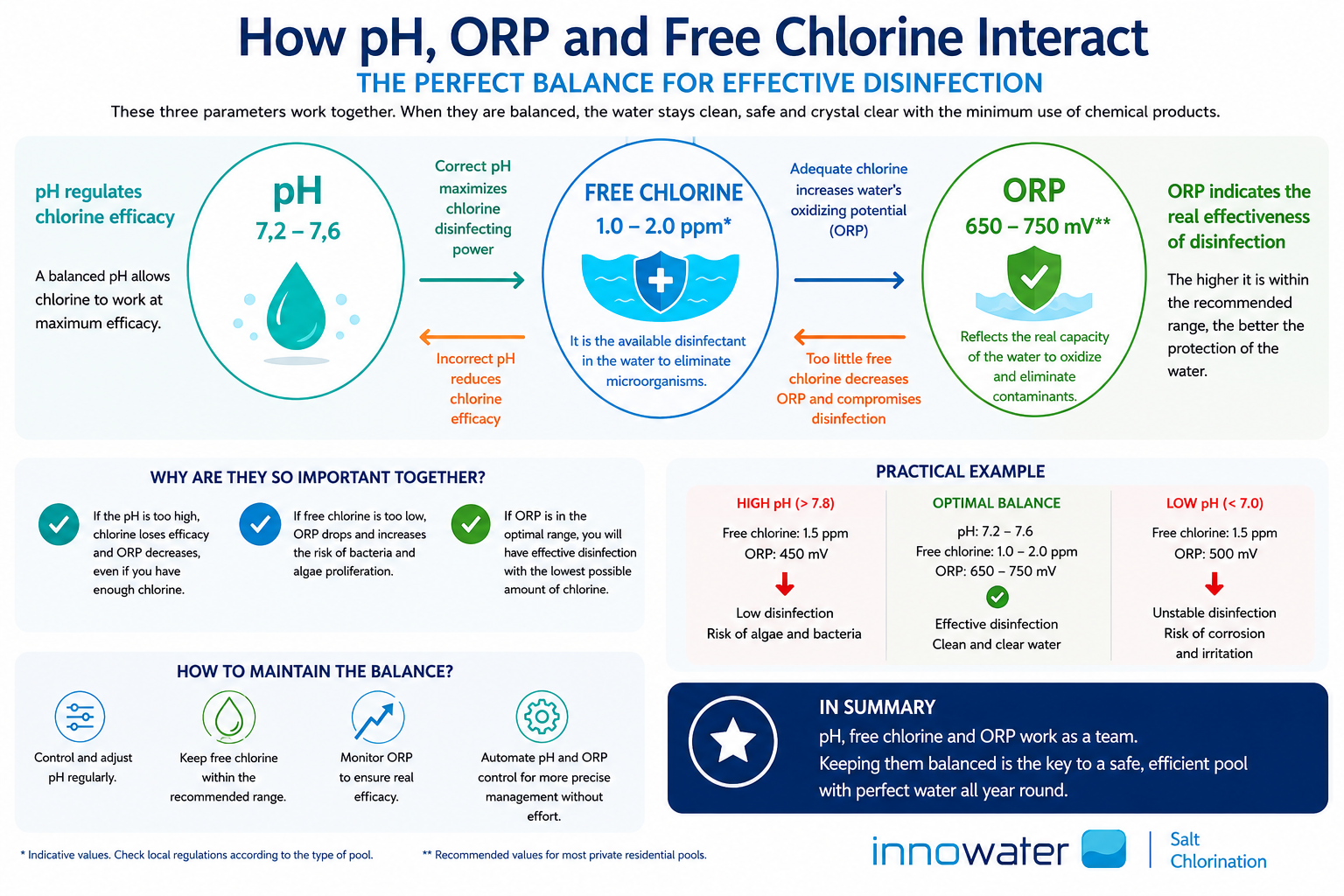
How are pH, ORP, and free chlorine related?
pH influences chlorine effectiveness
When the pH rises above recommended values, the proportion of hypochlorous acid (HOCl), the form of chlorine with the highest disinfectant capacity, decreases. As a result, the water may contain a correct level of free chlorine but offer less effective disinfection.
ORP reflects the final result
ORP integrates the combined effect of free chlorine, pH, and other factors present in the water. Therefore, two pools with the same chlorine concentration can show very different ORP values if the other parameters are not balanced.
Balance is more important than quantity
Adding more chlorine does not always solve a disinfection problem. Often, correcting the pH allows for an adequate ORP to be restored without needing to increase disinfectant production.
“Free chlorine indicates the amount of disinfectant present; ORP measures its actual capacity to protect the water”
Recommended values
Although they may vary depending on regulations and the type of installation, as a general reference, it is recommended to maintain:
| Parameter | Recommended Value |
| pH: | 7.2 – 7.6 |
| Free chlorine: | According to applicable regulations and pool type |
| ORP: | Approximately 650 – 750 mV |
Maintaining these parameters within their optimal ranges promotes effective disinfection and a better swimming experience.
Why automate pH and ORP control?
Manually controlling these parameters can be complex, especially when pool usage conditions change.
Factors such as:
- water temperature
- solar radiation
- number of bathers
- rain
- organic matter
are capable of rapidly modifying disinfection needs.
Automatic systems continuously monitor the water and make the necessary adjustments to maintain stable conditions.
Advantages of automatic control
Automating water treatment allows for:
- maintaining consistent water quality
- optimizing chlorine production
- reducing chemical consumption
- minimizing manual corrections
- improving the efficiency of salt electrolysis
- increasing swimmer comfort
- simplifying daily maintenance
The ideal combination: salt electrolysis + automatic control
Salt electrolysis systems achieve their maximum performance when working alongside automatic pH and ORP regulation equipment.
While the salt chlorinator generates the necessary disinfectant, the control system continuously adapts its operation according to the water’s real needs.
This combination allows for effective disinfection with lower chemical consumption and much more efficient pool management.
Conclusion
pH, ORP (Redox), and free chlorine should not be understood as independent parameters, but as three elements that work together to ensure effective disinfection.
Maintaining a good balance between them improves water quality, optimizes treatment performance, and reduces installation maintenance.
For this reason, more and more pools are incorporating automatic systems capable of controlling these parameters in real-time, offering more precise, efficient, and sustainable water management.
Discover our control and dosing systems for all types of pools; public and private.

Salt chlorination for pools is a treatment system that generates pure chlorine from the salt dissolved in the water, through an electrolysis process. A sustainable, automated, and safe treatment for swimming.
Related News
Bipolar cells, reverse polarity and programmable polarity in salt chlorination

Superchlorination or Boost Function in a Salt Chlorinator: What It Is, What It’s For, and When to Use It

Chloramines in Pools: What They Are, How They Form, and How to Eliminate Them
How to solve the 20 most frequent pool water problems
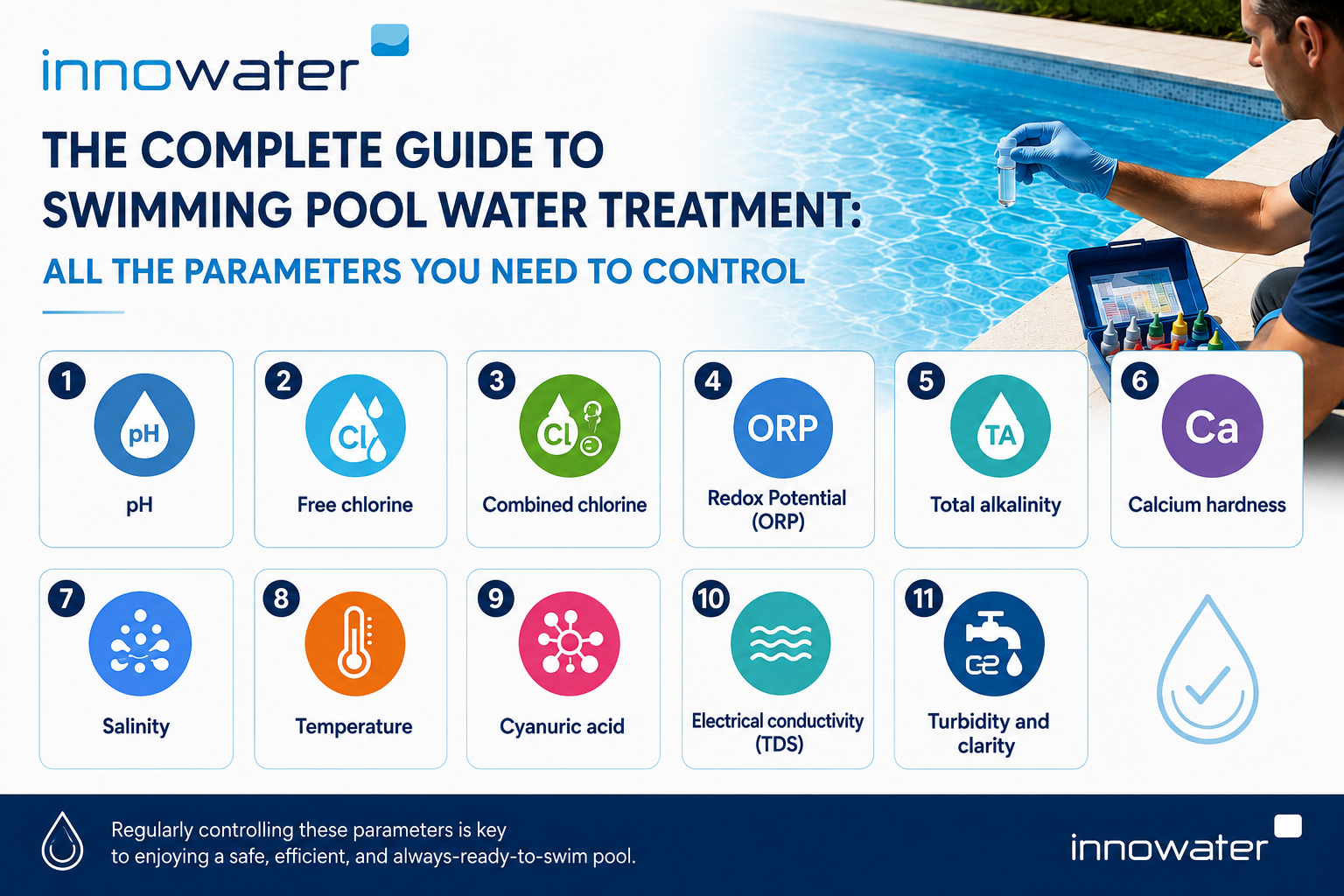
Complete guide to pool water treatment: all the parameters you need to control
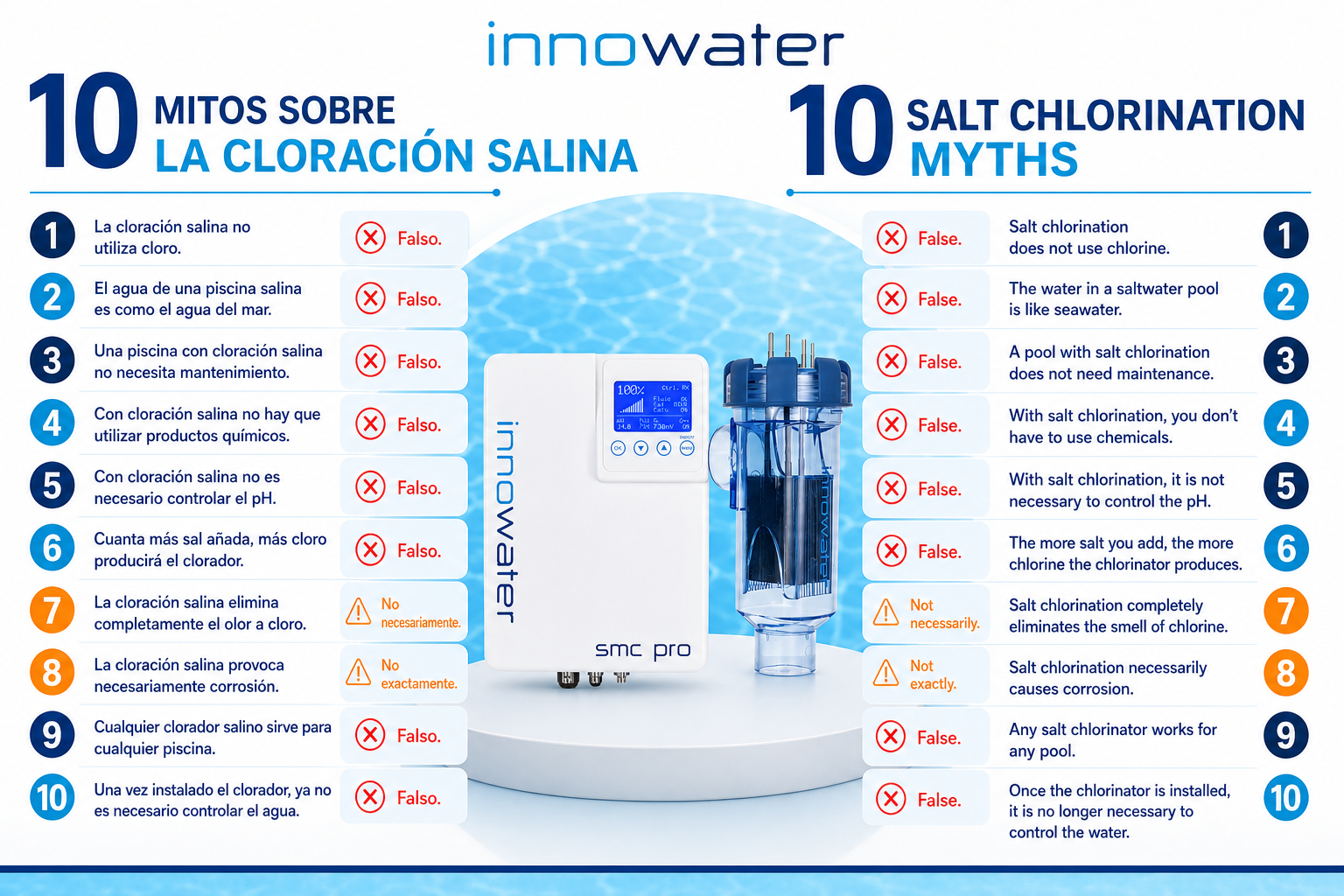
Myths about Salt Chlorination: 10 Misconceptions You Need to Know
How to correctly size a salt chlorinator for your pool: the ultimate guide to choosing the right equipment

What is ORP and why is it the most important parameter to ensure effective disinfection in a swimming pool?
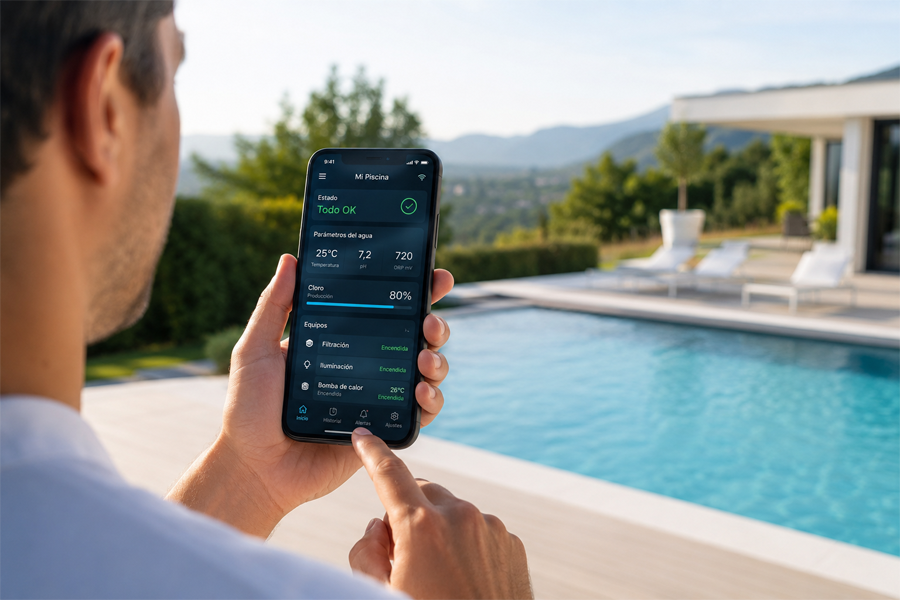
Automating pool water treatment: greater efficiency, less maintenance, and consistently high water quality