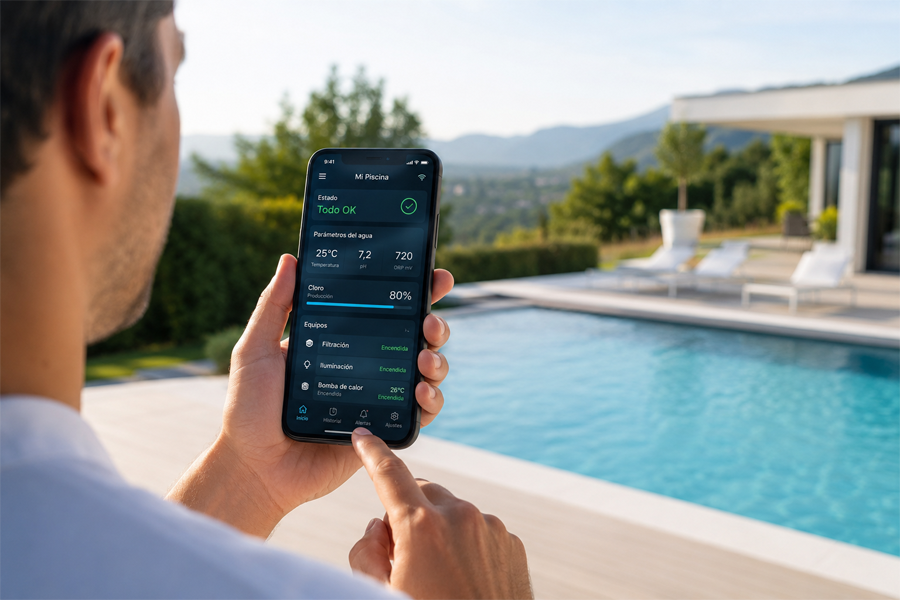
How to clean cells for salt chlorinators. It’s very easy!
Salt chlorinator cells wear out significantly over time, especially in areas with high limescale content in the water. If you want to ensure maximum disinfection of your pool water, you must make sure they are in proper condition at all times; otherwise, performance may be reduced. At Innowater, specialists in saltwater electrolysis, we’ll show you how to clean cells for salt chlorinators.

Our chlorinators with a self-cleaning system
Innowater’s SMC chlorinators require very little maintenance, as they are equipped with a self-cleaning system. This means the user doesn’t have to keep such a close eye on their chlorinator, as it runs automatically through a electrolytic process that repeats cyclically. That said, we should periodically check the condition of the cell, since in water with a high limescale concentration the polarity reversal may not be enough to remove limescale deposits.
Therefore, the cleaning frequency of cells for salt chlorinators depends directly on water purity, although there are other factors that can also influence it, such as pH or the amount of salt present in the water. Over time, cells can accumulate limescale, algae, or other contaminants, directly affecting chlorine production.
Cleaning cells for salt chlorinators
When the cells’ automatic cleaning is not enough to remove the accumulated residue, the user will need to carry out this process manually. To properly maintain your chlorinator’s cells, follow this procedure:
- Regularly inspect the condition of the cell to detect the presence of limescale.
- Turn off the pump and the chlorinator.
- Disconnect the cell, unscrew it, and remove it.
- Let the cell dry for several days so the plates come off on their own, or by tapping them lightly—never inserting any sharp object inside.
- If this doesn’t work, immerse the electrodes in a solution of hydrochloric acid and water. Once the limescale comes off, rinse the cell with water, dry the terminals, and reinstall it in the chlorinator.
Service life of our salt chlorinators
Cells for salt chlorinators have a defined service life. Those for residential chlorinators should be replaced after 14,000 hours of use, and those for medium-capacity and high-capacity industrial salt chlorinators every 20,000 hours.
At Innowater we manufacture our own chlorinators, so if you need cells for salt chlorinators, we can supply them.
Find out more about how to carry out proper maintenance of your chlorinator to ensure maximum efficiency.

Salt chlorination for pools is a treatment system that generates pure chlorine from the salt dissolved in the water, through an electrolysis process. A sustainable, automated, and safe treatment for swimming.
Related News
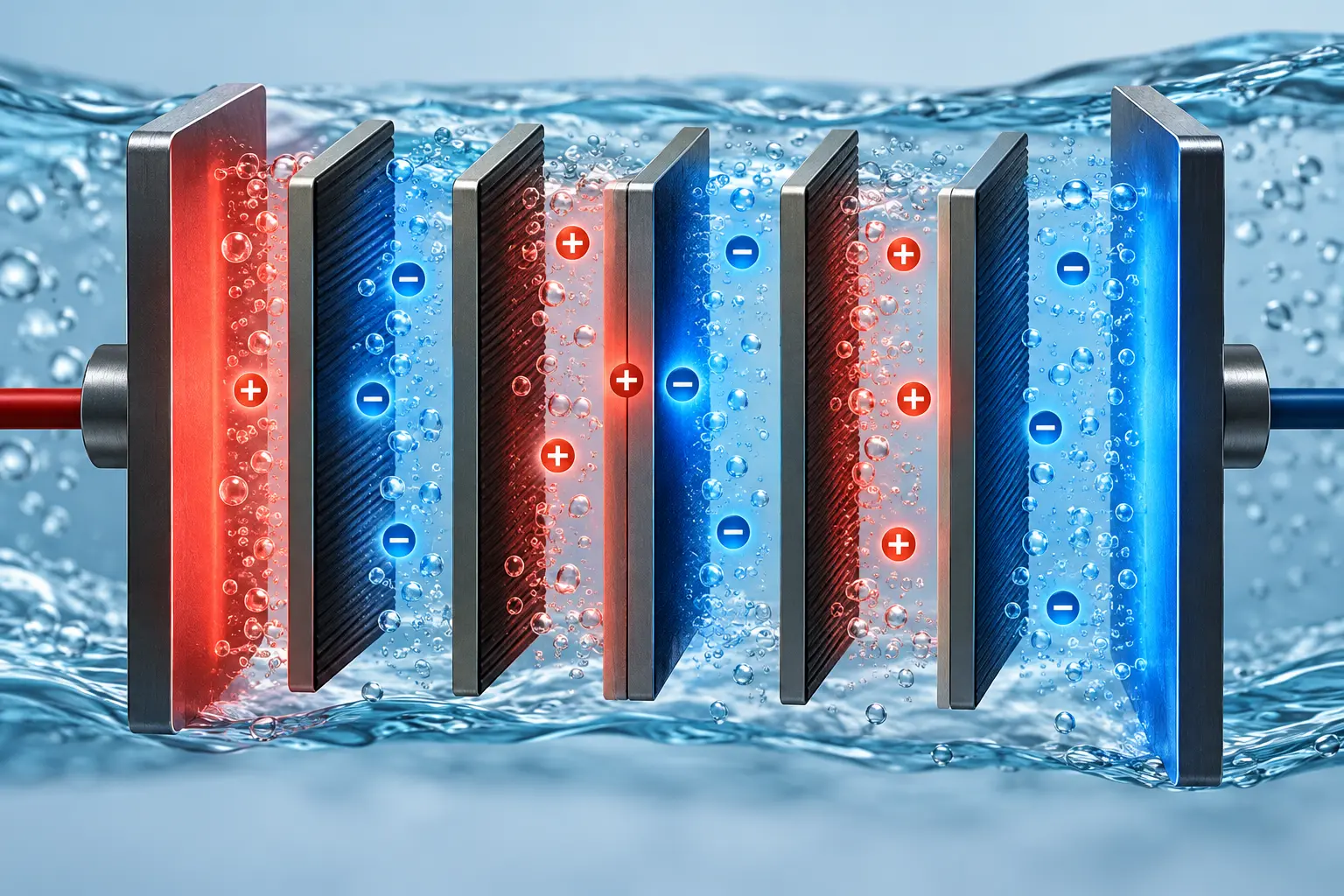
Bipolar cells, reverse polarity and programmable polarity in salt chlorination
Superchlorination or Boost Function in a Salt Chlorinator: What It Is, What It’s For, and When to Use It
Chloramines in Pools: What They Are, How They Form, and How to Eliminate Them
How to solve the 20 most frequent pool water problems
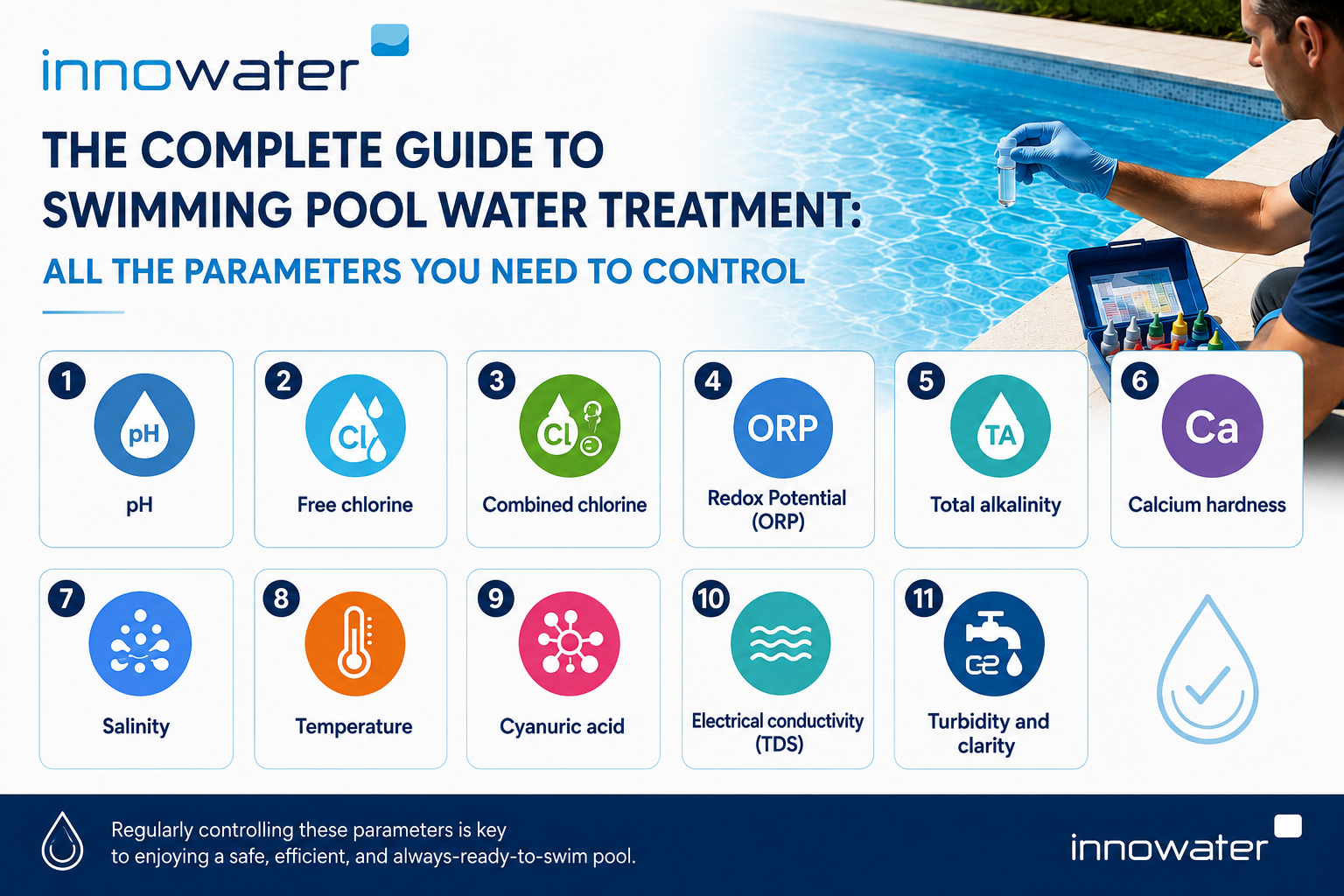
Complete guide to pool water treatment: all the parameters you need to control
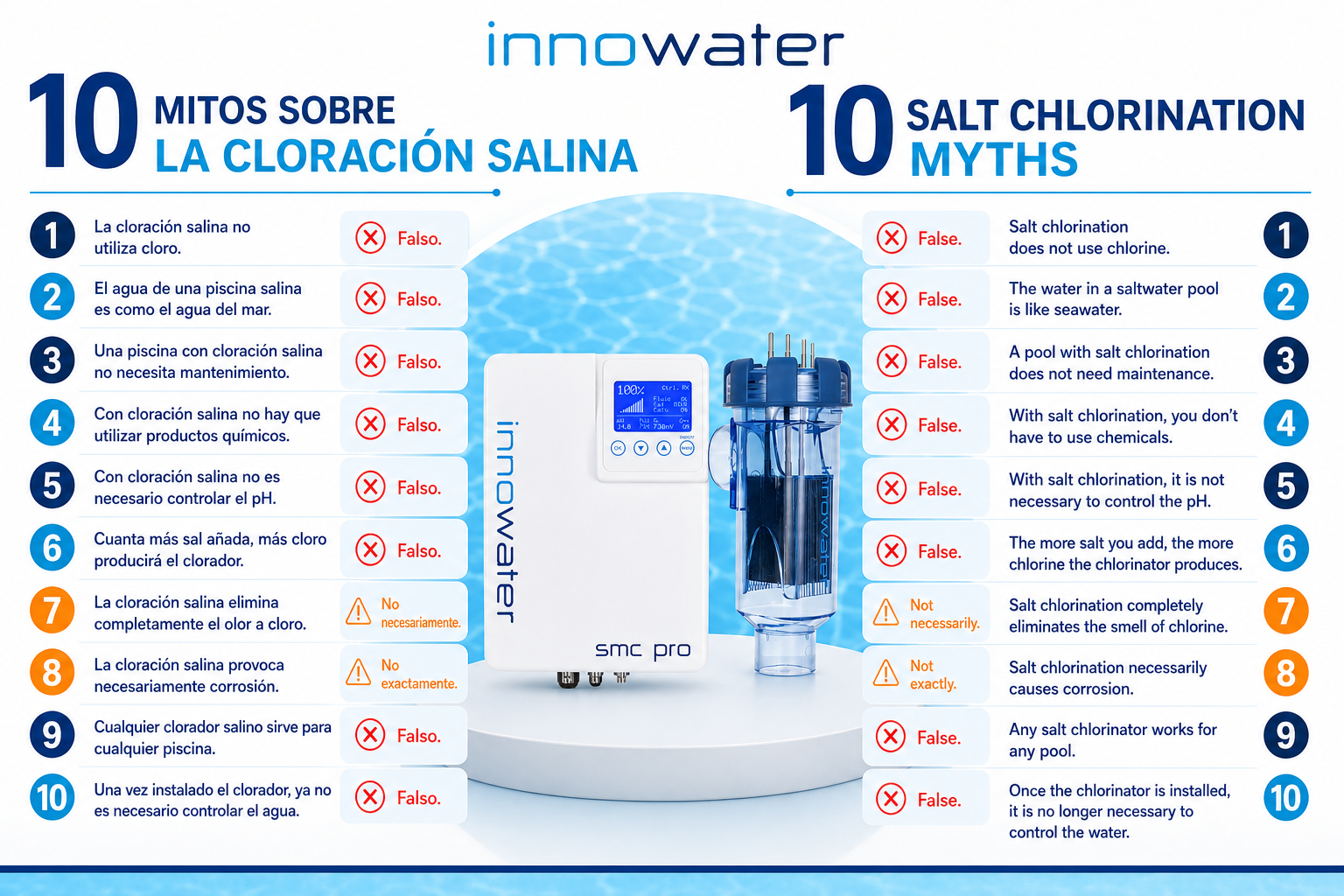
Myths about Salt Chlorination: 10 Misconceptions You Need to Know
Relationship between pH, ORP, and free chlorine: The ultimate guide to achieving effective pool disinfection
How to correctly size a salt chlorinator for your pool: the ultimate guide to choosing the right equipment

What is ORP and why is it the most important parameter to ensure effective disinfection in a swimming pool?