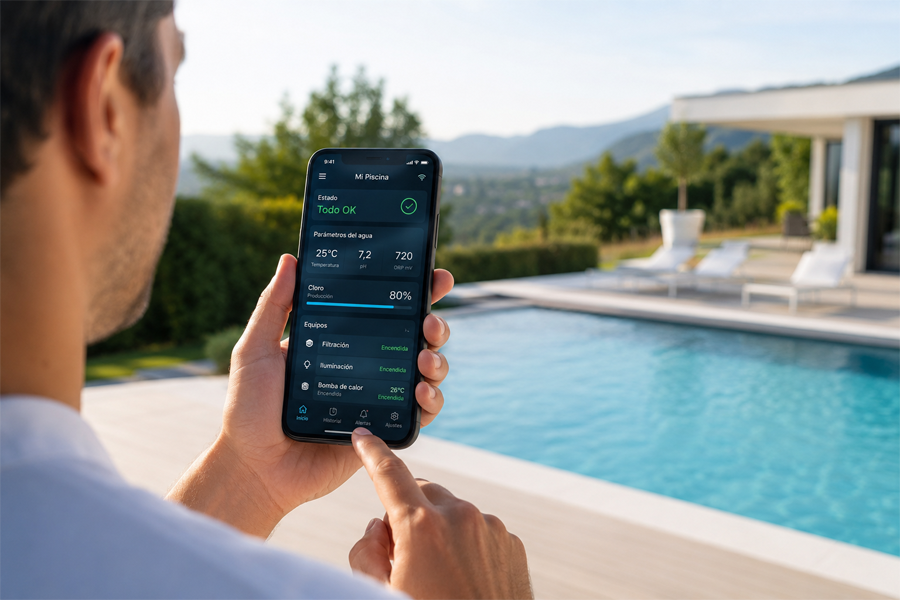
What is the correct salt level for a salt-chlorinated pool?
One of the main advantages of salt chlorinators is that they require little maintenance, which doesn’t mean we should completely stop paying attention to the condition of the water. The salt levels in our pool can be affected by multiple factors, causing the water not to be disinfected properly. Some users who use electrolysis systems don’t know what the right salt level is for your pool.
Filter cleaning, high temperatures, swimmers getting in and out, or topping up the water are some of the causes that can reduce the salt concentration in pool water. This doesn’t mean we have to be constantly adding salt to the water; rather, we should check the levels periodically to make sure the amount is optimal for proper cleaning and disinfection.

Measuring your pool’s salt concentration
First, you’ll need to know its cubic meters. To calculate them, you must take into account its surface area and average depth. However, the shape of your pool will also have an impact, so oval pools won’t hold the same amount of water as rectangular ones. In this article, we provide a guide to calculating your pool’s cubic meters.
The appropriate salt concentration for a pool with a salt chlorinator should be between 4 and 7 g/L (grams per liter). This means we should add between 4 and 5 kilograms of salt per cubic meter of water. Want to know how to measure your pool’s salt level?
These values are suitable for a salt electrolysis system to work properly. A chlorinator will not operate correctly below a concentration of 4 g/L or above 7 g/L. When salt levels are lower, not enough chlorine is generated to disinfect the water, while if they are higher, the chlorinator cells could be damaged.
How and when to add salt to a salt-chlorinated pool
Once the salt chlorinator is installed, we must calculate the kilos of salt we need based on the cubic meters of water. Normally, we’re talking about between 5 and 6 kilos of salt per m3.
Salt is added directly to the pool basin, trying to distribute it evenly across the entire surface. Once it has dissolved in the water, the SALT CHLORINATOR can start working properly.
Water evaporation usually occurs in the pool (especially in outdoor pools). When we need to add new water to the pool, that’s the time to add salt. How much? We do the same calculation as at the start: how many cubic meters of water have I added? We calculate the kilos of salt needed and add them.
Typically, most users add a new amount of salt at the start of each season. Normally, this is enough.
Innowater offers you
At Innowater, we offer salt chlorinators and water pH regulation systems for proper maintenance of your pool water. Discover the latest news on salt electrolysis.

Salt chlorination for pools is a treatment system that generates pure chlorine from the salt dissolved in the water, through an electrolysis process. A sustainable, automated, and safe treatment for swimming.
Related News
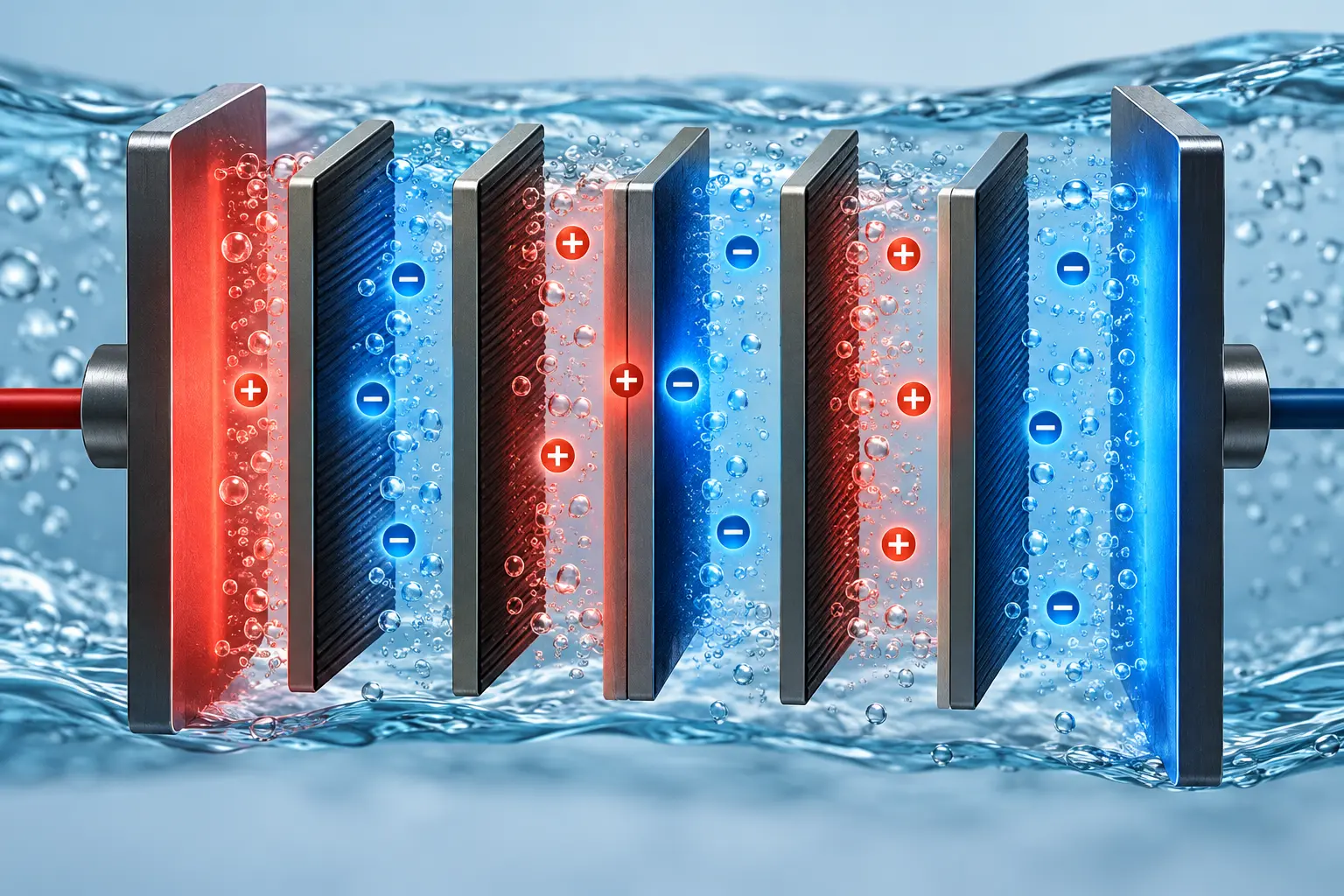
Bipolar cells, reverse polarity and programmable polarity in salt chlorination
Superchlorination or Boost Function in a Salt Chlorinator: What It Is, What It’s For, and When to Use It

Chloramines in Pools: What They Are, How They Form, and How to Eliminate Them
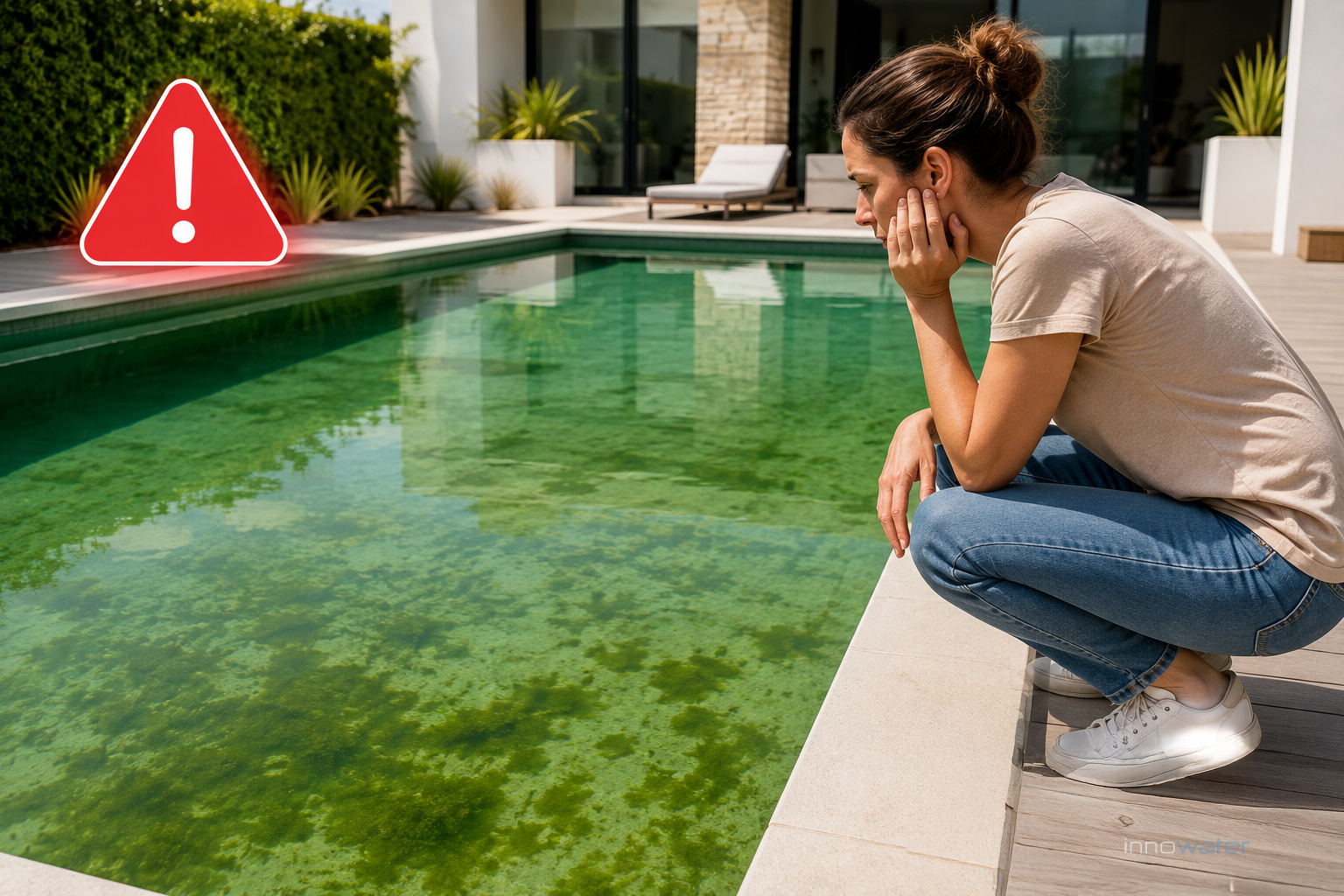
How to solve the 20 most frequent pool water problems
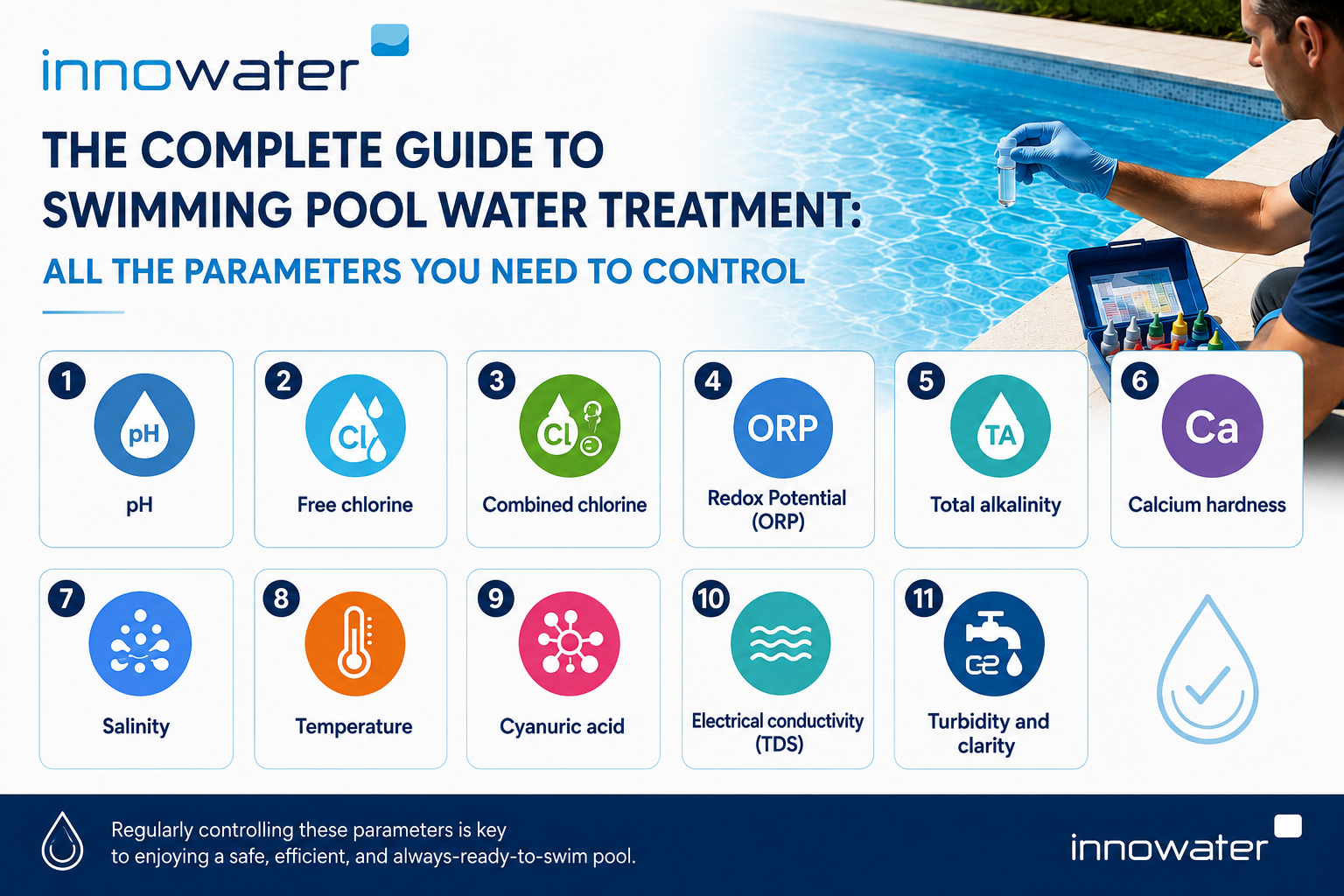
Complete guide to pool water treatment: all the parameters you need to control
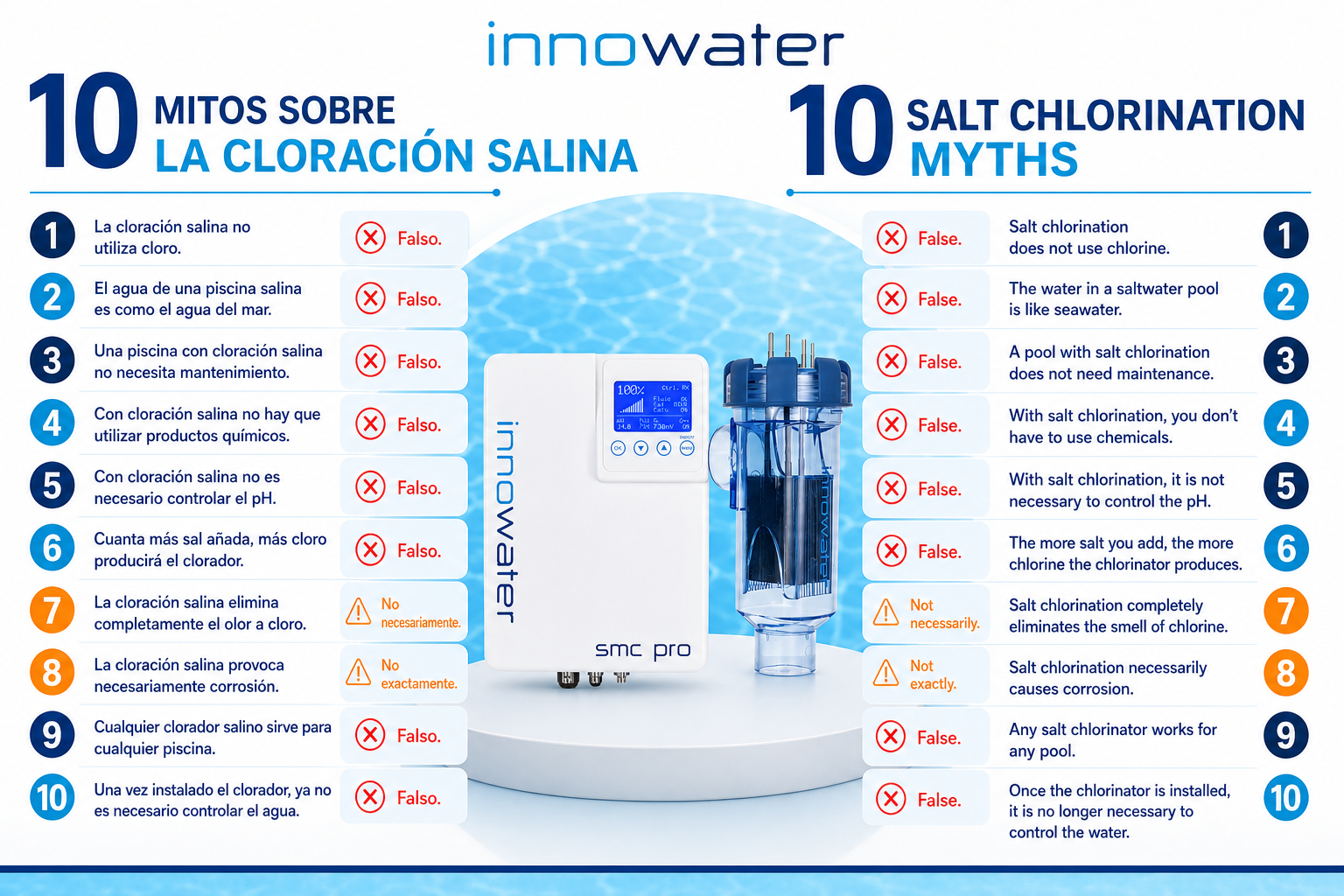
Myths about Salt Chlorination: 10 Misconceptions You Need to Know
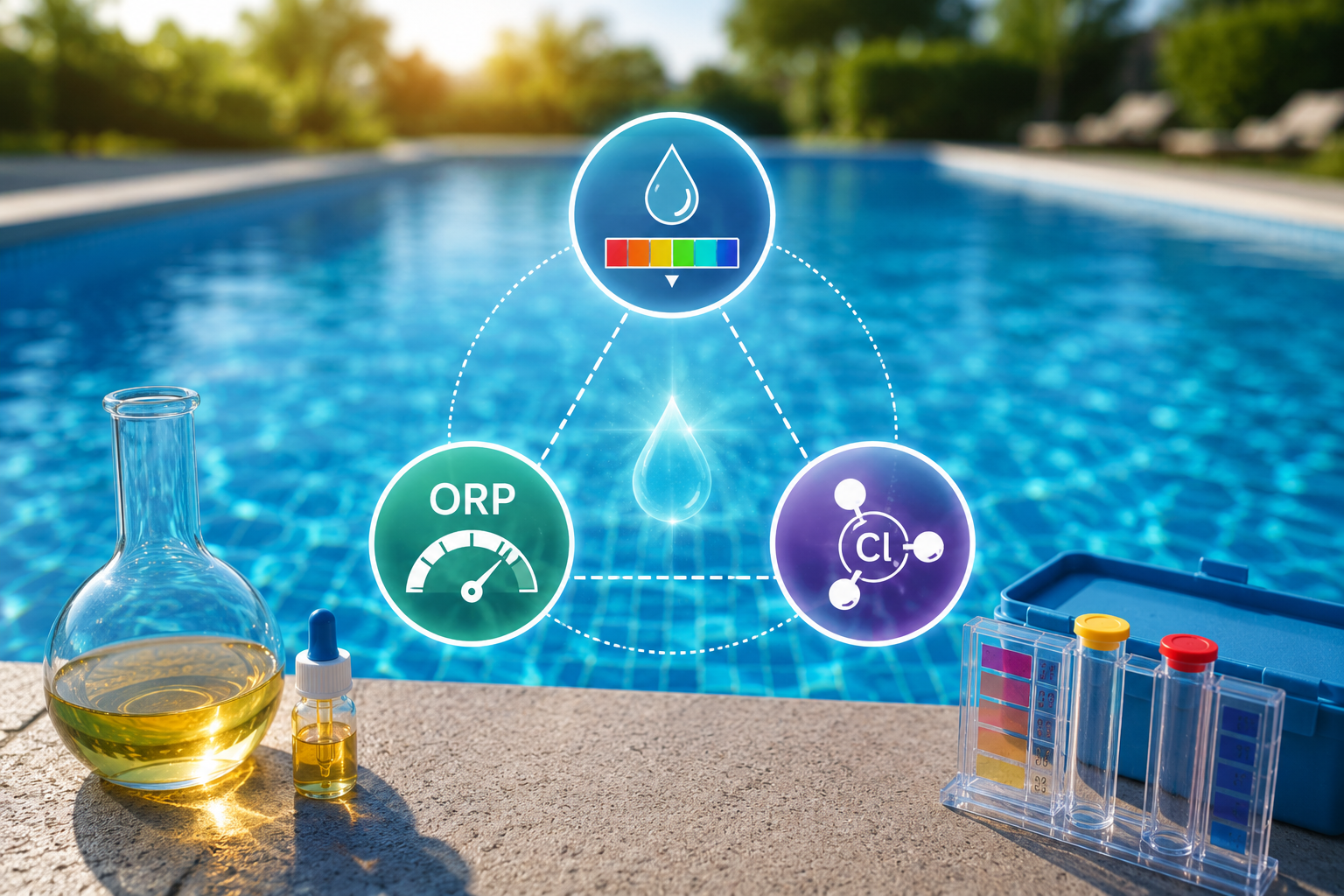
Relationship between pH, ORP, and free chlorine: The ultimate guide to achieving effective pool disinfection
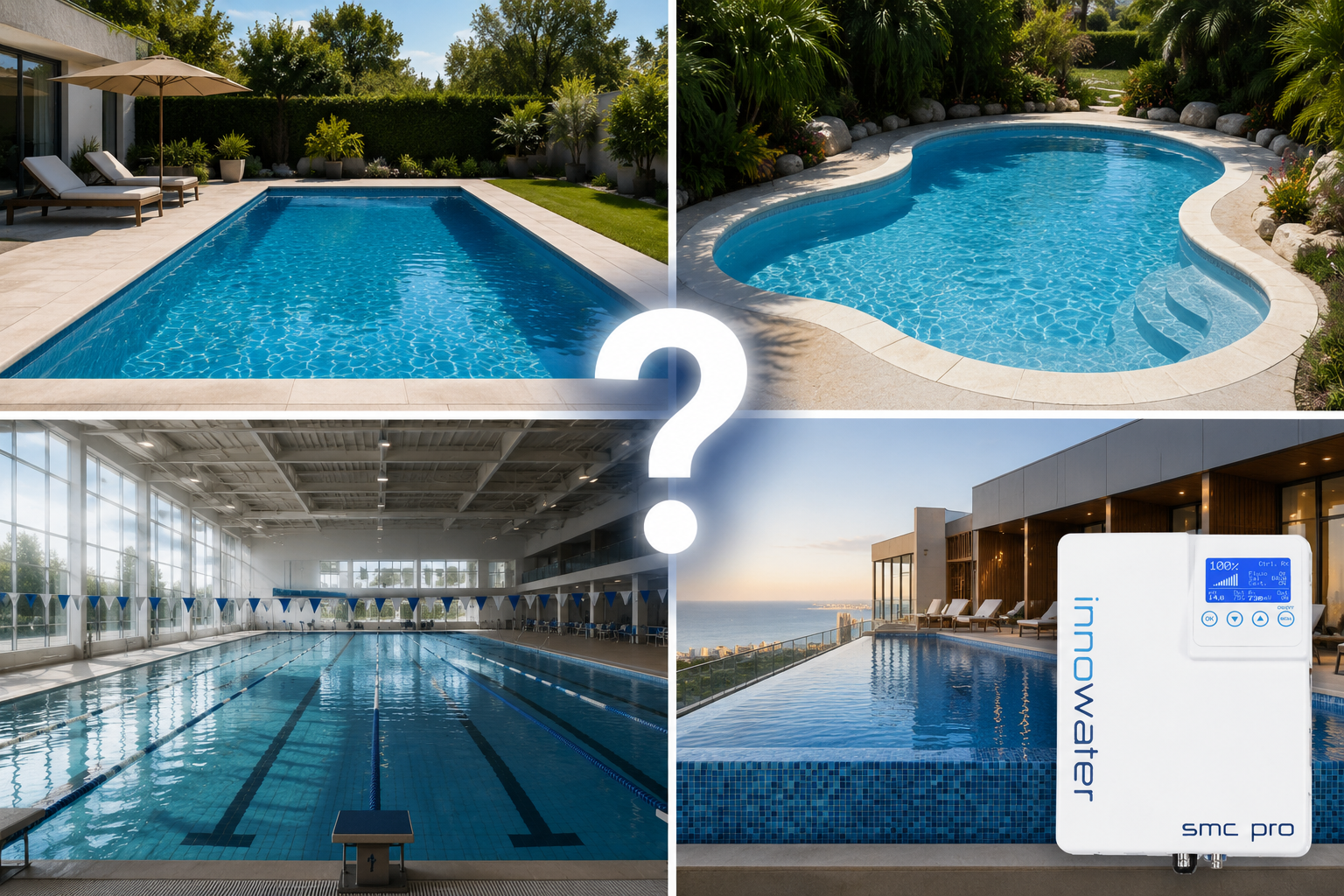
How to correctly size a salt chlorinator for your pool: the ultimate guide to choosing the right equipment

What is ORP and why is it the most important parameter to ensure effective disinfection in a swimming pool?