Complete guide to pool water treatment: all the parameters you need to control
Keeping pool water clean, crystal clear, and correctly disinfected does not simply consist of adding chlorine. Water is a dynamic system in which different chemical and physical parameters that are closely related to each other intervene.
pH, free chlorine, combined chlorine, Redox potential (ORP), alkalinity, hardness, salinity, and temperature influence water quality and treatment efficacy.
Understanding what each parameter measures is important, but it is even more important to understand how they interact with each other.
For example, having an adequate concentration of free chlorine does not alone guarantee effective disinfection. The pH can considerably modify chlorine efficacy, while ORP provides additional information on the water’s oxidizing capacity.
In pools with salt chlorination, you also have to control the salt concentration and the operation of the electrolytic cell to guarantee adequate disinfectant production.
In this guide, we explain the main pool water parameters, why they are important, how they relate, and how they can be controlled through automation systems.
Which parameters should be controlled in a pool?
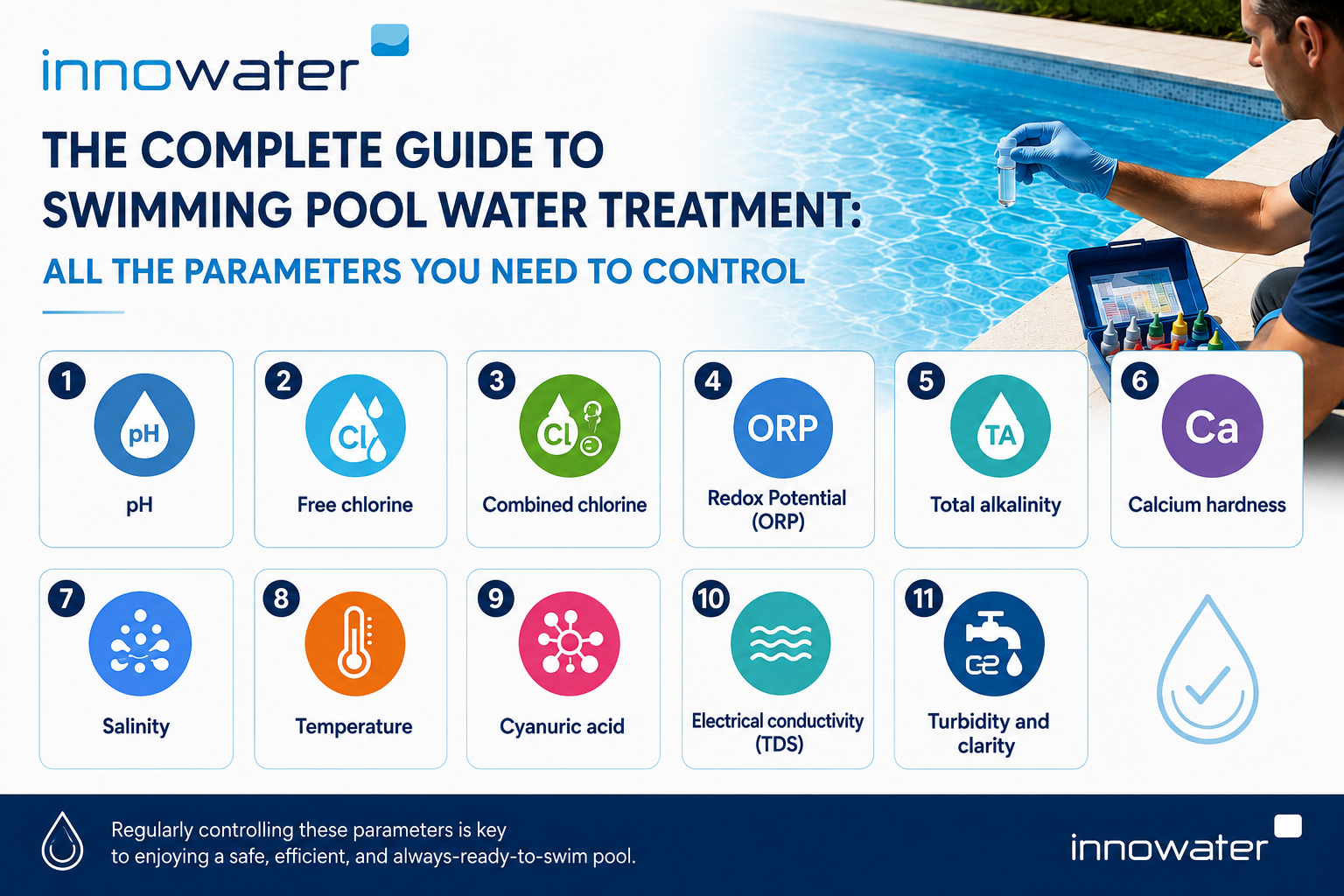
Not all parameters have the same function or should be measured with the same frequency. Among the main parameters worth knowing, we find the following:
- pH
- Free chlorine
- Combined chlorine
- Redox Potential (ORP)
- Total alkalinity
- Calcium hardness
- Salinity
- Temperature
- Cyanuric acid
- Conductivity and dissolved solids
- Turbidity and transparency
- Source water quality
Appropriate values can vary depending on the type of pool, the disinfection system, the temperature, the use of the facility and, especially in public pools, the applicable current regulations.
That is why there is no single table of values valid for every pool.
1. pH: the parameter that conditions the entire treatment
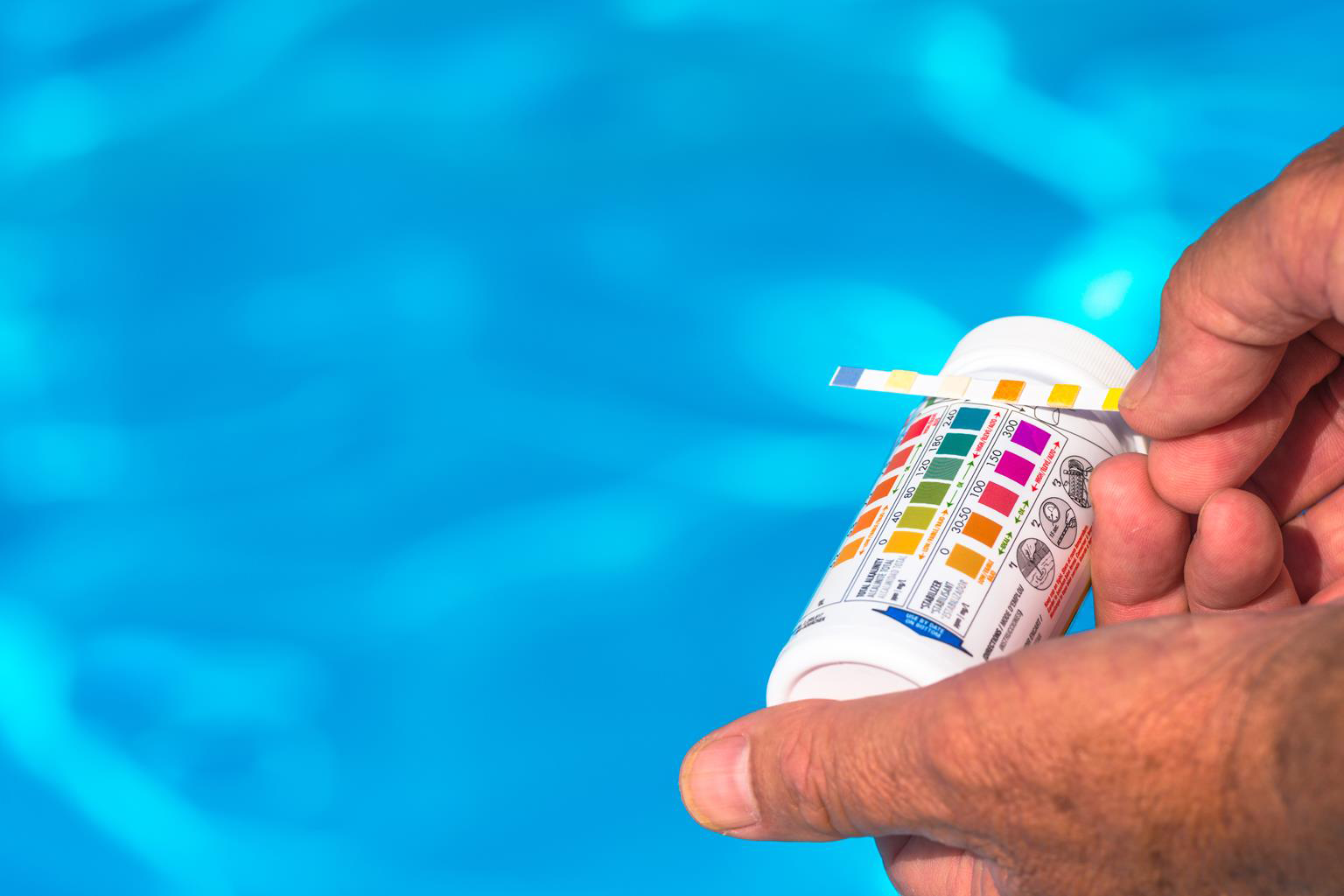
The pH indicates the degree of acidity or alkalinity of the water and is one of the fundamental parameters of the treatment.
In pools, the usual target is approximately around 7.2–7.6, although the specific value must be adjusted to the type of facility, lining, treatment system, and applicable regulations. Innowater uses, for example, a range of 7.2–7.6 as a reference for certain concrete pools in its technical documentation.
Why is pH so important?
Because pH directly influences different aspects such as:
- Chlorine efficacy.
- Bather comfort.
- Water stability.
- Scaling formation.
- Corrosion risk.
- The operation of certain equipment.
Results of an unbalanced pH
- A pH that is too high can reduce the disinfectant efficacy of chlorine and encourage the formation of deposits.
- A pH that is too low can increase the aggressiveness of the water and encourage corrosion.
Why is pH especially important in salt chlorination?
Salt electrolysis generates disinfectant through an electrochemical process and can influence the water balance.
Therefore, a pool with salt chlorination is not automatically exempt from pH control. In fact, automating pH control and dosing is one of the most recommended additions if you have a salt chlorinator.
2. Free chlorine: the available disinfectant
The free chlorine represents the fraction of chlorine available to exert its disinfectant and oxidizing action. It is one of the most used values to evaluate the disinfection status of the water.
However, there is an important idea worth remembering: Having a certain concentration of free chlorine does not necessarily mean that the water has the same disinfectant capacity in all circumstances.
pH, temperature, the presence of organic matter, and other factors directly influence the behavior of the disinfectant. Therefore, especially in automated systems, free chlorine can be complemented by measuring the Redox potential (ORP).
3. Combined chlorine: the origin of the well-known “chlorine smell”
Combined chlorine appears when part of the chlorine reacts with substances present in the water, especially organic matter from bathers.
These can include:
- Sweat.
- Cosmetics.
- Body product residues.
- Other organic substances.
Chloramines associated with combined chlorine can be related to the characteristic intense pool smell and to irritation under certain conditions.
Therefore, a pool with a strong chlorine smell does not necessarily have too much free chlorine. In fact, it is possible that it is precisely a problem with combined chlorine.
What to do if combined chlorine increases?
Depending on the situation, measures such as the following may be necessary:
- Improve water renewal.
- Optimize filtration.
- Reduce the pollutant load.
- Review the water balance.
- Perform an oxidation or superchlorination treatment when appropriate.
4. ORP or Redox potential: measuring the oxidizing capacity of the water
The ORP (Oxidation-Reduction Potential), also called Redox potential, is one of the parameters that adds the most value to the automation of water treatment. It is normally expressed in millivolts (mV) and provides information on the oxidizing or reducing capacity of the water.
In the context of a chlorine-treated pool, it provides an additional reference for the water’s disinfectant capacity.
Why is it different from free chlorine?
Because both parameters answer different questions.
- Free chlorine: How much available disinfectant is in the water?
- ORP: What oxidizing capacity does the water present?
This difference is fundamental.
Two pools can have a similar concentration of free chlorine and yet present different ORP values due to factors such as pH, temperature, organic load, or water composition. Therefore, free chlorine and ORP should not be considered equivalent parameters.
We have recently developed specific content on this issue where it is clear that Redox Potential or ORP is a fundamental parameter for evaluating disinfection efficacy.
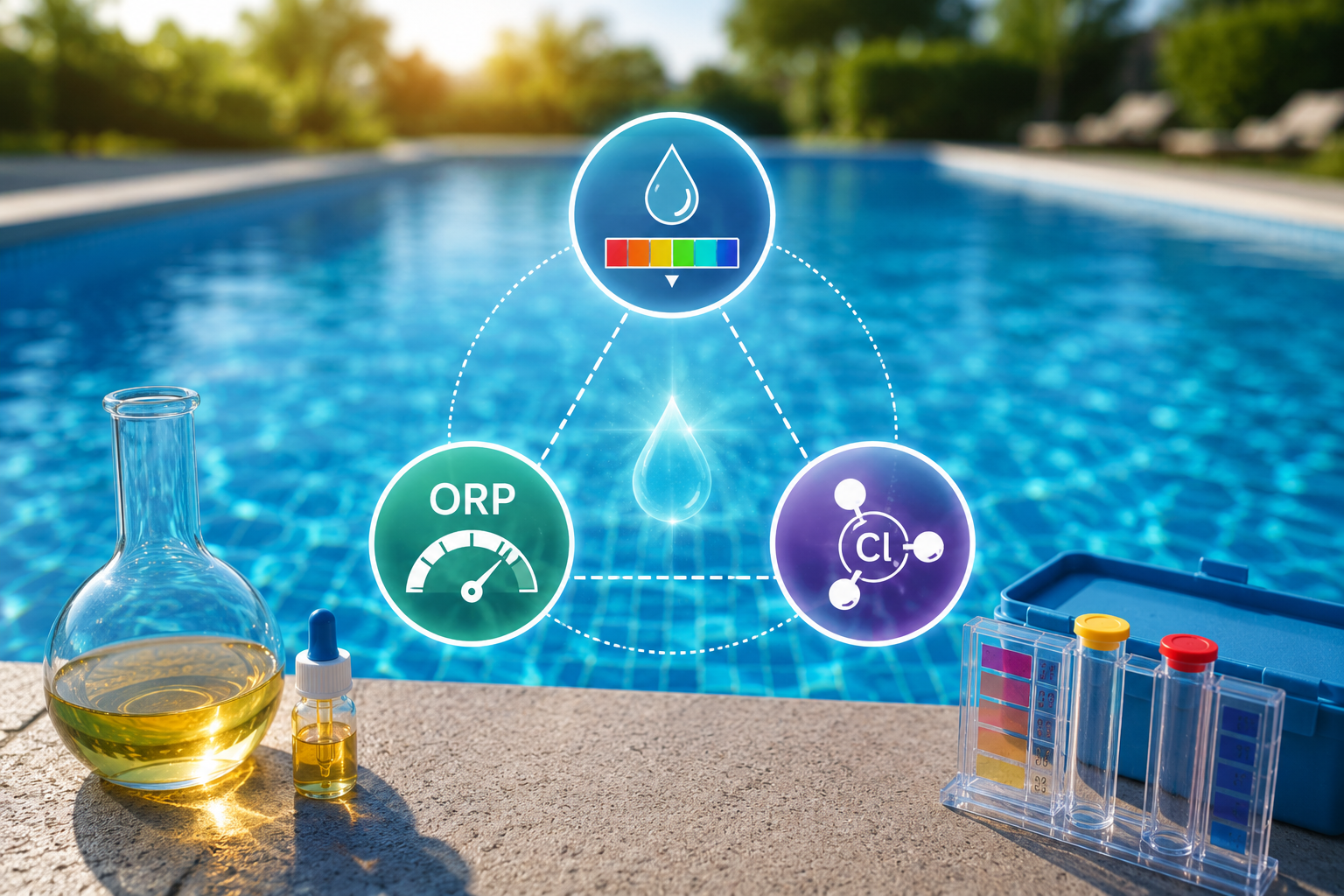
5. The relationship between pH, free chlorine, and ORP (Redox potential)
This is a key point of difference. These three parameters should not be analyzed in isolation. We can represent it simply:
- pH → influences chlorine efficacy
- Free chlorine → indicates the amount of available disinfectant
- ORP → provides information on oxidizing capacity
Therefore, to correctly evaluate the disinfection of a pool, it is not enough to ask: “How much chlorine does it have?”
You also have to ask: “In what conditions is that chlorine and what oxidizing capacity does the water have?”
Here you have more detailed information on the relationship between pH, free chlorine, and Redox potential (ORP)
This relationship is precisely the basis of advanced water treatment control systems.
6. Total alkalinity: the pH stabilizer
The total alkalinity, usually expressed as TAC, mainly represents the water’s ability to neutralize acids and act as a buffer system. Its function is especially important because it helps avoid sudden variations in pH.
If alkalinity is too low
The pH can be very unstable and vary easily.
If alkalinity is too high
The pH can be difficult to adjust and can encourage problems such as:
- Scaling.
- Cloudy water.
- Greater difficulty in maintaining chemical balance.
Therefore, when a pH continuously rises or falls, it is not always just the pH that needs correcting. It is also worth checking the alkalinity.
7. Calcium hardness
Hardness mainly indicates the amount of dissolved calcium and magnesium in the water.
In pools, an excessively high hardness can encourage:
- Scaling.
- Limescale deposits.
- Whitish water.
- Mineral precipitation.
- Deposits in heat exchangers.
- Scaling in electrolytic cells.
On the other hand, a hardness that is too low can contribute to the water being more aggressive towards certain materials.
Why is calcium hardness important in a pool with salt chlorination?
Because the formation of limescale deposits in the electrolytic cell can reduce its performance and hinder its operation. Therefore, the balance between pH + alkalinity + hardness is especially important to protect the system.
8. Salinity: the fundamental parameter of electrolysis
In a pool with salt chlorination, salt is not simply an element added to the water to change its taste. It is the raw material that allows the chlorinator to generate the disinfectant through electrolysis.
As we have already mentioned on other occasions, the necessary concentration depends on the characteristics of each piece of equipment. For example, the different Innowater systems usually work with concentrations in the range of 4–6 g/l, although the specific model specification must always be respected.
What happens if there is too little salt in the pool water?
Chlorine production may decrease or an insufficient salt alarm may appear.
What happens if there is too much salt in the water?
An excessive concentration can cause equipment warnings and increase the water’s conductivity.
An important issue
If a chlorinator indicates that there is little salt, it does not always mean that salt must be added immediately.
It may also be necessary to check:
- Cell condition.
- Presence of scaling.
- Flow rate.
- Temperature.
- Salinity measurement.
In the technical documentation of Innowater salt chlorinators, it is warned that certain cell issues can influence the salt indication.
9. Water temperature
Temperature is not a chemical parameter, but it has a huge influence on the treatment.
When the temperature increases, the following can also increase:
- Disinfectant demand.
- Microbiological activity.
- Algae growth.
- Bather load at certain times.
- The need for filtration.
Therefore, a treatment system that works correctly in spring may need a different configuration during the hottest days of summer.
Temperature is also a parameter that Innowater systems can take into account to manage the chlorinator’s operation.
10. Cyanuric acid: the chlorine stabilizer
Cyanuric or isocyanuric acid is mainly used to protect chlorine against degradation caused by ultraviolet radiation. Its importance depends especially on the treatment system and the type of disinfectant used.
An excessive concentration can modify the relationship between chlorine concentration and its disinfectant efficacy. Therefore, when stabilizer is used, it is not enough to measure only free chlorine; it is also important to know the cyanuric acid level.
In pools with salt electrolysis, its use and target level must be established according to the system, the facility conditions, and the applicable technical recommendations.
11. Conductivity and dissolved solids
The electrical conductivity of water is related to the quantity and nature of the dissolved ionic substances.
In a pool with salt electrolysis, the presence of salt makes the conductivity considerably higher than that of a freshwater pool. TDS (Total Dissolved Solids) represent the approximate total amount of dissolved solids.
A progressive increase can occur due to the accumulation of different substances that enter or are added to the water. Therefore, conductivity and TDS can provide complementary information on the evolution of the water, although they do not replace specific measurements of pH, chlorine, ORP, or salinity.
12. Turbidity and transparency
Correctly treated water must maintain adequate transparency.
Turbidity can appear for different reasons:
- Insufficient filtration.
- Suspended particles.
- Chemical imbalance.
- Mineral precipitation.
- Organic matter.
- Microorganism proliferation.
Therefore, when the water becomes cloudy, it is not advisable to just add more disinfectant.
You must check together: water chemistry + filtration + circulation + pool shell condition.
13. Source water quality
A parameter that is often forgotten is the composition of the water used to fill or top up the pool. This can vary, for example, depending on the source of the water and the environment (well water, canal water…)
Source water can contain different concentrations of:
- Calcium.
- Magnesium.
- Bicarbonates.
- Iron.
- Manganese.
- Other minerals.
- Dissolved salts.
- …
Therefore, two identical pools may need different treatment strategies if they use source waters with different compositions. In areas with especially hard water, for example, hardness control becomes even more important.
“Pool water treatment is a complex system in which different parameters interact continuously. It is fundamental to understand this relationship”
How do all the parameters relate?
One of the keys to understanding water treatment is to accept that parameters do not function independently.
A simple example:
High pH
↓
Reduced chlorine effectiveness
↓
It may be necessary to increase production
↓
Higher disinfectant consumption
↓
Greater difficulty in keeping the water stable
Another example:
High hardness + high pH
↓
Higher risk of carbonate precipitation
↓
Scaling
↓
Possible deposits in the electrolytic cell
↓
Reduction in system performance
And another:
More bathers + high temperature
↓
Higher pollutant load
↓
Higher disinfectant demand
↓
Decrease in available chlorine
↓
Reduction in disinfectant capacity
↓
Need to temporarily increase production or adjust treatment
Therefore, water treatment must be understood as a system, not as a collection of independent parameters.
Summary table of the main water parameters
| Parameter | What does it measure? | Why is it important? |
| pH | Acidity or alkalinity | Influences disinfection, comfort, and balance |
| Free chlorine | Available disinfectant | Allows evaluation of the disinfectant level |
| Combined chlorine | Chlorine bound to compounds | Can indicate chloramine accumulation |
| ORP / Redox | Oxidizing potential | Helps evaluate disinfectant capacity |
| Alkalinity | Buffer capacity | Helps stabilize pH |
| Hardness | Calcium and magnesium | Influences scaling and water aggressiveness |
| Salinity | Salt concentration | Fundamental for salt electrolysis |
| Temperature | Water temperature | Influences disinfectant demand and biological activity |
| Cyanuric acid | Chlorine stabilizer | Protects against UV radiation, but must be controlled |
| Conductivity | Electrical capacity of water | Helps determine dissolved ion concentration |
| TDS | Dissolved solids | Allows evaluation of the overall load of dissolved substances |
| Turbidity | Suspended particles | Indicator of quality and filtration efficacy |
| Source water | Composition of water used | Conditions hardness, salts, and balance |
How often should parameters be controlled?
Not all parameters require the same measurement frequency. This frequency will depend on the type of pool, volume, use, temperature, treatment system, and applicable regulations.
As a general criterion:
Frequent control
- pH and disinfectant
These are the parameters that most directly intervene in the sanitary quality of the water and must be monitored regularly.
Periodic control
- Alkalinity
- Hardness
- Salinity
- Cyanuric acid
The frequency will depend on the characteristics of the facility and the evolution of the water.
Continuous monitoring
In automated facilities, parameters such as the following can be monitored continuously:
- pH.
- ORP.
- Free chlorine.
- Temperature.
- Flow rate.
- Salinity, depending on the system.
In professional systems, continuous control allows deviations to be detected and action to be taken before the problem is visible. The Innowater Monitor Controller, for example, is designed to continuously measure free chlorine and pH and automatically adjust the necessary dosage.
Which parameters is it worth automating for control and dosing?
In a private pool, the level of automation will depend on the owner’s needs. But there is a particularly interesting combination:
- Salt chlorination. Generates the disinfectant through electrolysis.
- Automatic pH control. Maintains the pH within the target.
- ORP control. Allows monitoring of the oxidizing capacity and regulation of disinfection.
This combination allows for a move from maintenance based on manual adjustments to a system capable of measuring, interpreting, and acting automatically.
Innowater has control and dosing systems capable of regulating pH and ORP, as well as solutions for measuring and controlling free chlorine and pH in professional facilities.

From measuring water to controlling water
There is an important difference between measuring and controlling.
Measuring. Means knowing the state of the water at a given moment.
For example:
- pH = 7.4
- Free chlorine = X
- ORP = X mV
Controlling. Means using that information to act on the system.
For example:
- The pH increases → the controller detects the deviation → activates dosing → the pH returns to the target.
- The Redox potential decreases → the system detects a lower oxidizing capacity → adjusts disinfectant production.
This difference is the basis of water treatment automation.
Is it enough to only control the pool’s chlorine?
Categorically No. Chlorine is fundamental, but it should not be analyzed in isolation. A pool can present an apparently correct level of chlorine and yet have:
- Incorrect pH.
- Insufficient ORP.
- Unbalanced alkalinity.
- Excessive hardness.
- Filtration problems.
- Incorrect salinity.
- High organic load.
Therefore, the question: “How much chlorine does my pool have?” is important, but not enough.
The correct question is: “Is the water correctly balanced and does it have an adequate disinfection capacity?”
Does salt chlorination eliminate the need to control the water?
No. Salt chlorination automates a fundamental part of the disinfection process, but it does not eliminate the need to control water parameters. The chlorinator generates the disinfectant from salt, but water control and balance are still necessary.
In particular, parameters such as the following must continue to be controlled:
- pH.
- Disinfection.
- Salinity.
- Temperature.
- Alkalinity.
- Hardness.
- Filtration status.
Logically, automation can considerably reduce manual work, but it does not replace the technical maintenance of the facility.
What is the most important parameter of pool water?
There is no single parameter that allows you to determine on its own if the water is correctly treated. pH, free chlorine, and ORP must be understood together, while alkalinity, hardness, salinity, temperature, and other parameters help explain and maintain the system balance.
A simple way to understand it would be: The pH largely determines the conditions in which the disinfectant acts; free chlorine indicates how much disinfectant is available; and ORP provides information on the oxidizing capacity of the water. From there, the rest of the parameters help keep that system stable.
The future of water treatment: measure, control, and automate
The evolution of technology is making water treatment increasingly less dependent on manual controls. Current systems allow for the combination of:
- Sensors
- Continuous measurement
- Intelligent control
- Automatic dosing
- Salt Chlorination
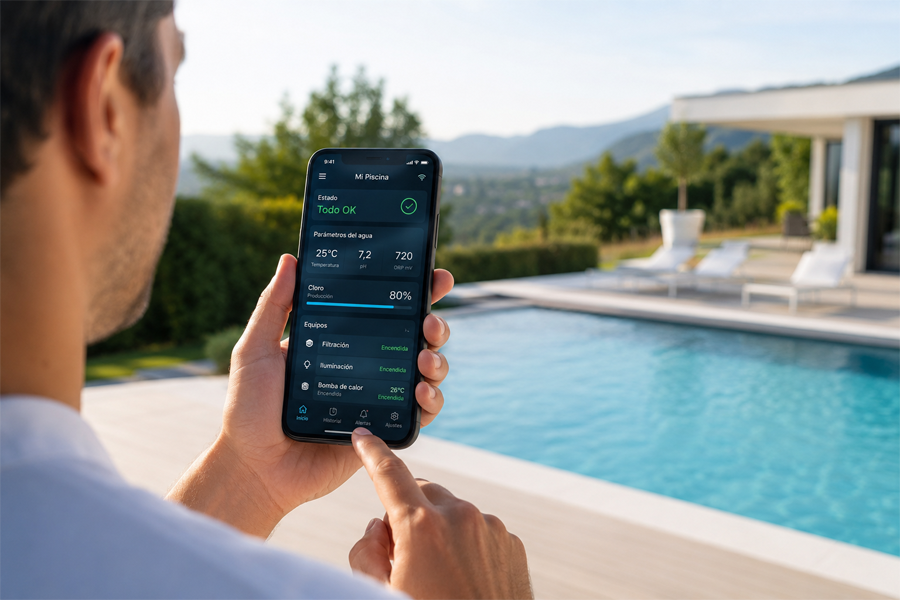
- Remote monitoring
The goal is not simply to automate tasks; it is to ensure the system responds to the real needs of the water.
Automation allows for maintaining a more constant quality, reducing manual interventions, and optimizing equipment operation. Innowater develops solutions that combine salt chlorination, control, dosing, and monitoring to achieve more efficient treatment.
Conclusion
Pool water treatment is a complex system in which different parameters interact continuously.
pH, free chlorine, combined chlorine, ORP, alkalinity, hardness, salinity, and temperature provide different and complementary information.
Understanding this relationship allows you to avoid one of the most common errors in pool maintenance: trying to solve each problem by adding products without first knowing what is happening in the water.
The current trend is to move towards systems capable not only of measuring but also of interpreting and acting automatically.
The combination of salt chlorination, pH control, ORP, dosing, and monitoring allows for more precise, efficient, and stable water treatment.
Because the goal is not to produce more disinfectant or add more products. The goal is to keep the water in balance and provide the necessary disinfection at all times.

Frequently asked questions about pool water parameters
Which parameters should be controlled in a pool?
The main ones are pH, free chlorine, combined chlorine, ORP, alkalinity, hardness, salinity, temperature and, depending on the treatment system, cyanuric acid, conductivity, and TDS.
What is the appropriate pH for a pool?
As a general reference, it is usually worked between 7.2 and 7.6, although the appropriate range depends on the facility and the applicable regulations.
What is the difference between free chlorine and ORP?
Free chlorine indicates the amount of available disinfectant, while ORP measures the oxidizing potential of the water. They are complementary, not equivalent parameters.
Does a pool with salt chlorination need to control the pH?
Yes. Salt chlorination generates the disinfectant through electrolysis, but pH remains a fundamental parameter for treatment efficacy and water balance.
What happens if the pH is too high?
It can decrease chlorine efficacy and encourage problems such as cloudy water or scaling.
What happens if the pH is too low?
The water can become more aggressive and encourage the corrosion of certain materials and components.
What is ORP used for in a pool?
ORP provides information on the oxidizing potential of the water and can be used as a parameter to automate disinfection control.
How much salt does a pool with a salt chlorinator need?
It depends on the chlorinator model. The concentration indicated by the manufacturer must always be used. In Innowater systems, depending on the model, it usually works in the range of 4–6 g/l.
Can water parameters be automated?
Yes. There are systems capable of automatically monitoring and regulating parameters such as pH, ORP, and free chlorine, in addition to controlling chlorine production and dosing.
Is it better to measure water manually or automate it?
Manual measurement is still important, especially for verifications and maintenance, but automation allows for much more continuous control and reacting sooner to deviations.

Salt chlorination for pools is a treatment system that generates pure chlorine from the salt dissolved in the water, through an electrolysis process. A sustainable, automated, and safe treatment for swimming.
Related News
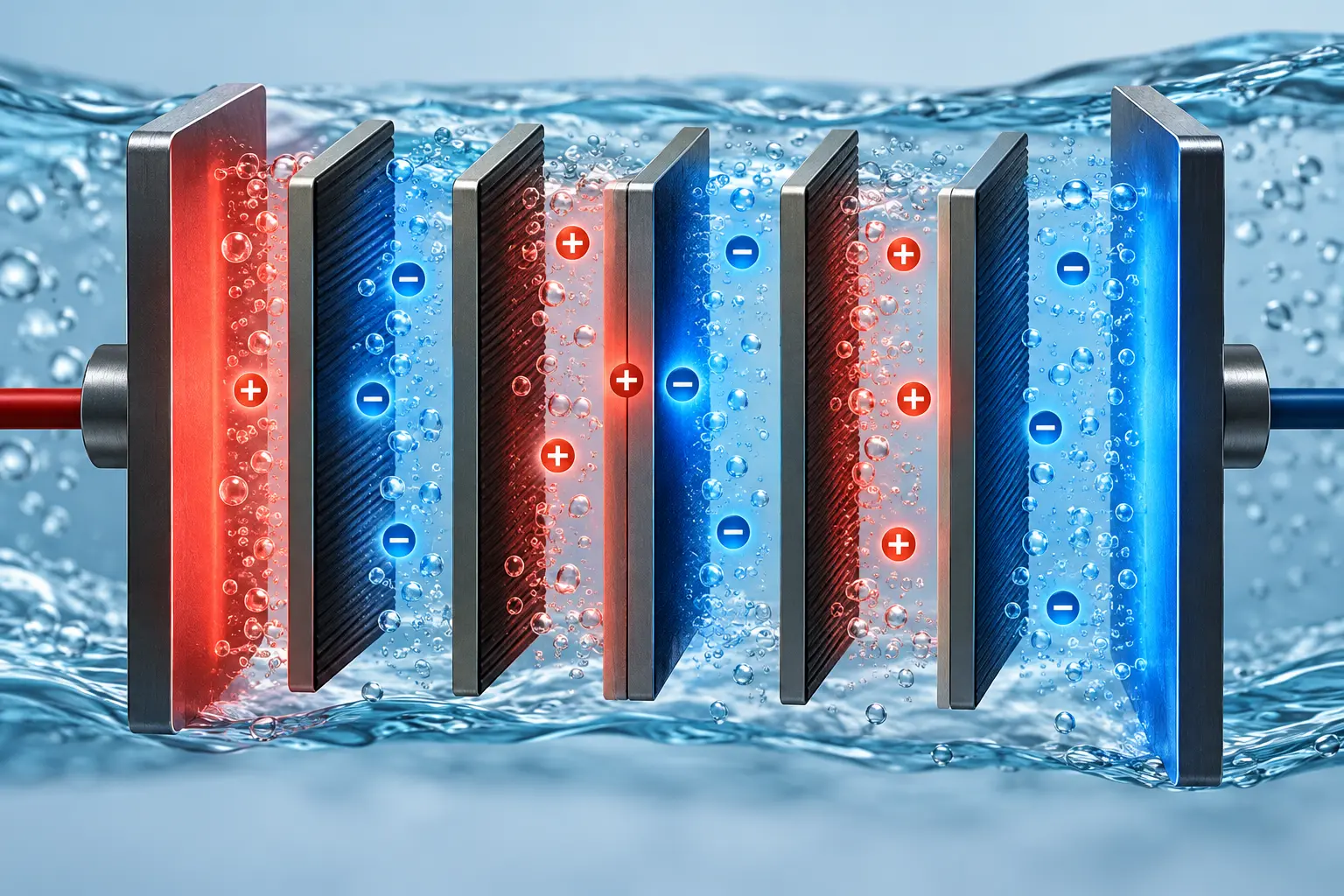
Bipolar cells, reverse polarity and programmable polarity in salt chlorination
Superchlorination or Boost Function in a Salt Chlorinator: What It Is, What It’s For, and When to Use It

Chloramines in Pools: What They Are, How They Form, and How to Eliminate Them
How to solve the 20 most frequent pool water problems
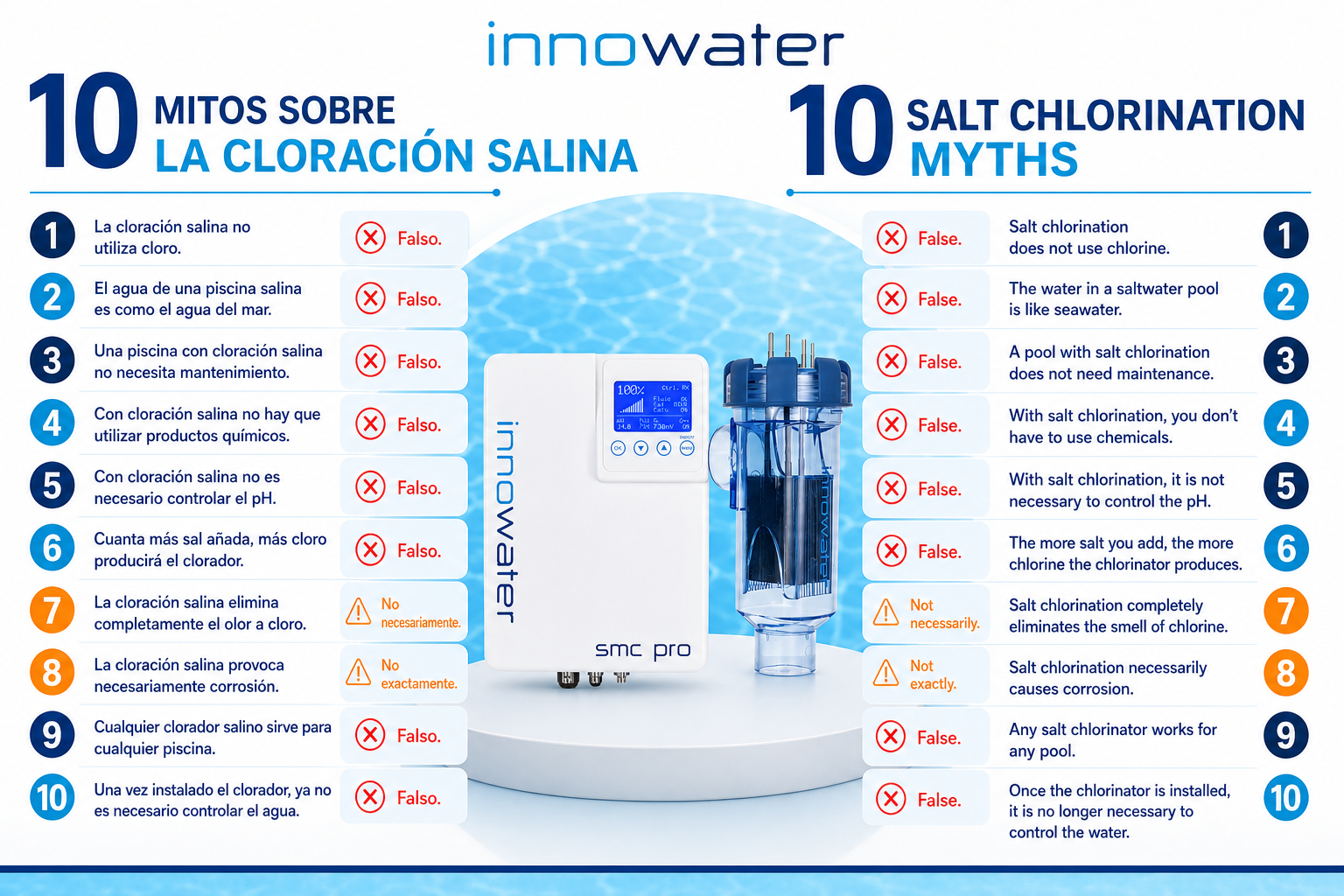
Myths about Salt Chlorination: 10 Misconceptions You Need to Know
Relationship between pH, ORP, and free chlorine: The ultimate guide to achieving effective pool disinfection
How to correctly size a salt chlorinator for your pool: the ultimate guide to choosing the right equipment

What is ORP and why is it the most important parameter to ensure effective disinfection in a swimming pool?
Automating pool water treatment: greater efficiency, less maintenance, and consistently high water quality