Superchlorination or Boost Function in a Salt Chlorinator: What It Is, What It’s For, and When to Use It
Salt chlorination allows you to automatically generate the chlorine needed to disinfect pool water through an electrolysis process. Under normal conditions, the chlorinator produces disinfectant progressively and in a controlled manner to keep the water in good condition.
But there are situations when chlorine demand increases temporarily: a pool with many bathers, a heat wave, water contamination, the start of the season, or the appearance of algae can make it necessary to temporarily increase disinfectant production.
It’s precisely in these situations when the Boost (Shock) or superchlorination function of a salt chlorinator can be especially useful.

What Is the Superchlorination or Boost Function of a Salt Chlorinator?
Superchlorination, Boost function, or Boost mode (Shock) is a feature that allows you to temporarily increase the chlorine production of a salt chlorinator above its normal operating level.
Instead of maintaining the production percentage configured for daily operation, the unit increases chlorine generation through electrolysis for a set period.
In other words: The Boost function allows you to produce more chlorine for a specific period to meet a disinfection demand higher than usual.
Innowater specifically identifies superchlorination or Boost as a feature that allows you to “temporarily overdimension chlorination.”
The exact function, production percentage, duration, and operating conditions depend on the salt chlorinator model and manufacturer specifications.
How Does Boost Work in a Salt Chlorinator?
To understand the Boost function, let’s first recall how a salt chlorinator normally works.
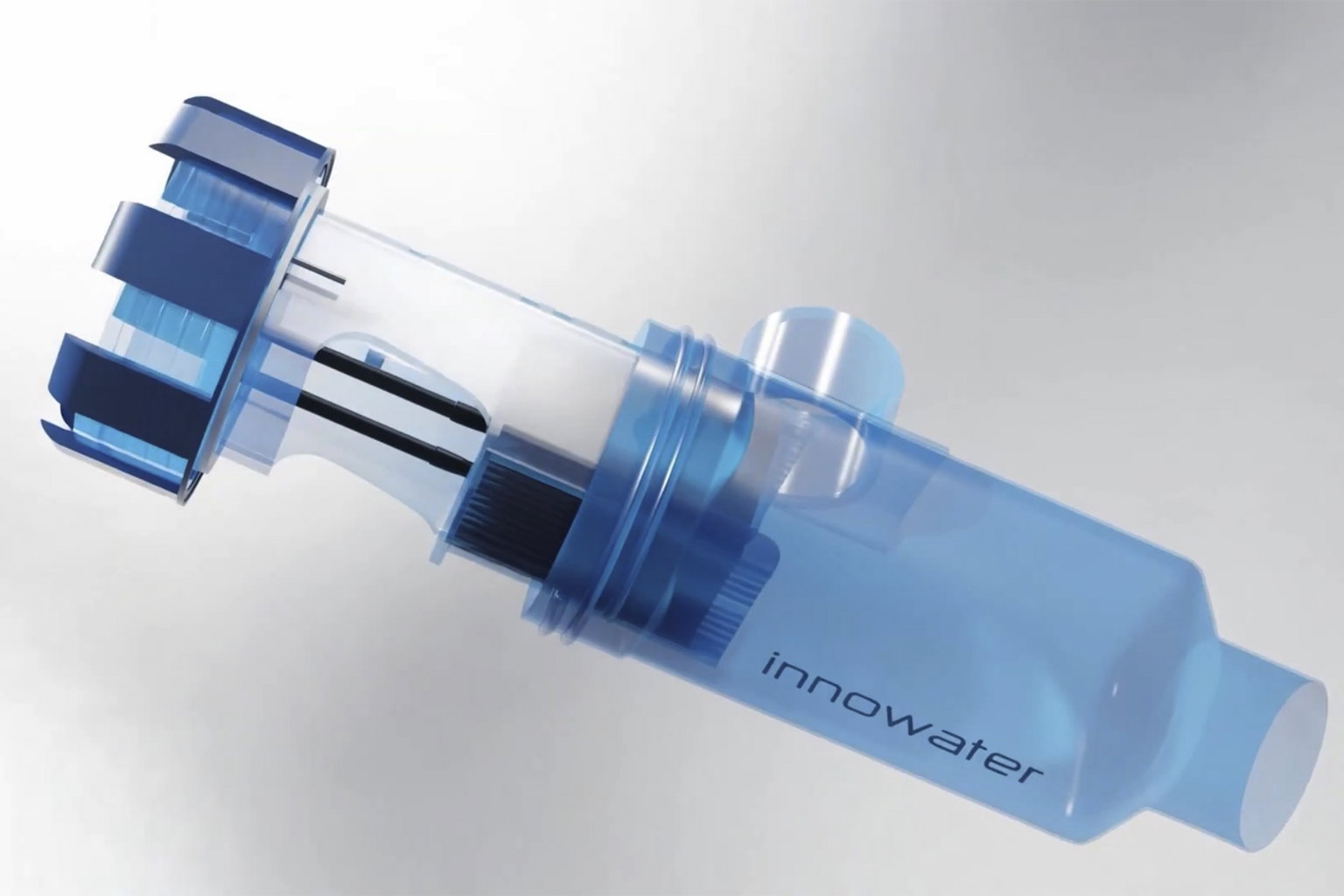
Pool water contains a certain salt concentration. When it passes through the electrolytic cell of the salt chlorinator, the electric current triggers an electrochemical reaction that generates chlorine from the chlorides present in the water.
That chlorine acts as a disinfectant and, subsequently, the chemical cycle allows the chlorides to be recovered, so the salt functions as the raw material for the process.
Innowater salt chlorination systems work with a relatively low salt concentration, which depends on the equipment and installation conditions: typically around 4–6 g/L.
During normal operation, the user can configure or regulate chlorine production according to the pool’s needs.
When Boost is activated, the system temporarily increases that production.
- Normal operation: Chlorine production → disinfectant level maintenance → stable operation
- Boost operation: Higher chlorine production → response to a specific demand → balance recovery → return to normal operation
Therefore, Boost does not change the operating principle of salt chlorination. What changes is the intensity or duration of chlorine production during a given period.
When to Use Superchlorination or the Boost Function?
The Boost function is designed primarily for situations when the pool needs more disinfection capacity than usual.
Its most common applications include the following:
1. After Heavy Pool Use
The more bathers use a pool, the greater the amount of organic matter that can enter the water. Sweat, cosmetic residues, sunscreens, and other substances introduced by bathers increase the oxidation and disinfection demand.
For example, after a day with particularly heavy pool traffic, it may be advisable to temporarily increase chlorine production. Here, superchlorination can help the system respond to that additional demand.
2. During Periods of High Temperatures
Water temperature is one of the factors that affect treatment needs.
During summer, especially in very hot periods, the following may increase:
- Pool usage frequency.
- Microbiological activity.
- Disinfectant consumption.
- Contaminant load.
- Evaporation and water replenishment needs.
That’s why a production setting that works perfectly in spring may be insufficient during certain summer days.
Boost allows you to have additional chlorine generation capacity when needed.
3. After a Storm
Heavy rainfall can introduce organic matter, dust, particles, and other contaminants into the pool. Additionally, a storm can temporarily alter water conditions and increase disinfectant demand.
After a significant rain event, it’s advisable to test the water and check:
- pH.
- Free chlorine.
- ORP.
- Salinity.
- Filtration.
- General water condition.
If the system requires it and the manufacturer allows it, Boost can be used to temporarily increase chlorine production.
4. At the Start of the Season
When a pool is used again after a prolonged period of inactivity, it’s especially important to check the water condition before beginning normal use.
You should not assume that simply activating the chlorinator and selecting Boost is enough. First, check:
- pH
- chlorine
- water condition
- filtration
- salinity
If the water has a high disinfection demand, the system may need higher-than-usual production. In that context, the Boost function can be a useful tool as part of commissioning.
5. When the Number of Bathers Increases Significantly
A private pool used by two or three people does not have the same disinfection demand as a pool used for several hours by many people.
Bather load is therefore one of the factors to consider when sizing and configuring a chlorination system.
If demand increases temporarily, the Boost function allows you to have additional capacity without needing to permanently maintain high production.
6. When Free Chlorine Has Dropped
If testing shows that the free chlorine level is below the target set for the installation, the system needs to recover its disinfection capacity.
Before activating Boost, however, you need to find out why the chlorine has dropped.
It may be due to:
- Excessive bather load.
- High temperature.
- Solar radiation.
- Organic matter.
- Presence of algae.
- Incorrect pH.
- Insufficient production.
- Insufficient running time.
- Cell problems.
- Incorrect salt level.
If the cause is simply a temporary demand higher than usual, Boost can help restore the disinfectant level. If there’s an underlying problem, temporarily increasing production won’t solve the cause.
Does Boost Mean Doing a Shock Treatment?
Not necessarily. In fact, this is one of the most important concepts to clarify.
In the pool industry, the terms “superchlorination,” “shock chlorination,” “Shock,” and “Boost” can be used similarly, but technically they don’t always mean exactly the same thing.
The Boost function of a salt chlorinator normally refers to a temporary increase in the chlorine production of the unit itself.
A shock treatment, on the other hand, refers to a strategy designed to significantly increase the water’s oxidation and disinfection capacity to respond to a specific situation.
Therefore:
| Boost | Shock Treatment |
| Temporarily increases chlorinator production | Seeks to significantly raise disinfection capacity |
| Performed through electrolysis | Can be performed through different methods |
| Integrated into certain chlorinators | Does not necessarily depend on a Boost function |
| Can be used preventively for a temporary demand | Typically used for certain incidents |
| Intensity and duration depend on the equipment | Procedure depends on the treatment used |
Not all manufacturers use exactly the same definition of Boost. That’s why you should always follow the specific instructions for the installed model.
When Should You Consider Using the Boost Function?
The Boost function is especially useful when there’s a temporary need to increase chlorine production, but the pool doesn’t require maintaining that elevated production permanently.
For example:
- Normal situation. Pool with typical use and balanced parameters ➡️ Normal production.
- Weekend with many bathers. Contaminant load increases ➡️ Temporarily increasing production may be necessary.
- Heat wave. Temperature and treatment demand increase ➡️ Using higher production may be advisable.
- After a storm. Contaminant input increases ➡️ Test the water and consider a temporary production increase.
- Appearance of algae growth symptoms
- ➡️ First diagnose the problem and check parameters.
- ➡️ Boost can be part of recovery, but does not replace proper treatment.
Should You Use Boost Every Day?
No.Boost is designed to respond to temporary needs, not to replace the chlorinator’s normal operation. Permanently maintaining maximum production is generally not the best strategy.
The goal of a good treatment system is not to produce the maximum amount of chlorine possible, but to produce the right amount at each moment.
A properly sized and regulated pool should be able to maintain adequate conditions during normal operation.
Boost functions as additional capacity for times when demand increases.
Does Boost Replace pH Control?
No. This is another fundamental issue. An increase in chlorine production does not mean that pH will automatically be balanced.
pH remains one of the fundamental parameters of water treatment and must be controlled independently. In fact, disinfection effectiveness is closely related to pH. That’s why a salt chlorinator should not be understood as a system that resolves all water parameters on its own.
Innowater notes that even in pools with salt chlorination, it’s necessary to continue monitoring parameters such as pH and Redox, and recommends automatic control systems to keep them properly regulated.
Does Boost Replace ORP Control?
No. ORP or Redox potential provides information about the water’s oxidizing capacity and can be used as a disinfection regulation parameter.
This is especially useful because it allows you to move from a system based exclusively on “The chlorinator produces X amount of chlorine”to a system based on “The system produces the disinfectant needed to keep the water at target conditions.”
That’s why the combination of: Salt chlorination + pH control + ORP (Redox) controlallows for much more precise water treatment management.
Can Boost Be Used to Eliminate Algae?
It can be part of the recovery strategy, but Boost should not be considered a specific algae treatment on its own.
When a pool turns green, you must first analyze:
- pH.
- Free chlorine.
- Combined chlorine.
- ORP.
- Filtration.
- Circulation.
- Temperature.
- Salinity.
- Electrolytic cell condition.
If there’s significant algae growth, a specific treatment may be necessary following the manufacturer’s recommendations and installation conditions.
The most common mistake is thinking: “The pool is green. Iactivate Boost andproblem solved” and that’s not the case.
Boost increases chlorine production, but if there’s a filtration problem, poor pH regulation, a faulty cell, or very high disinfectant demand, you must also address the cause.
What Happens If We Use Boost Too Much?
Occasional use of a production increase function is not equivalent to keeping the equipment permanently at maximum production. If used unnecessarily, it can result in chlorine production higher than needed.
That’s why chlorinator operation must be adapted to:
- Pool volume.
- Temperature.
- Number of bathers.
- Sun exposure.
- Cover or pool cover.
- Filtration time.
- Disinfection demand.
- Equipment characteristics.
Regulation should always seek balance, not maximum production.
Do All Salt Chlorinators Have a Boost Function?
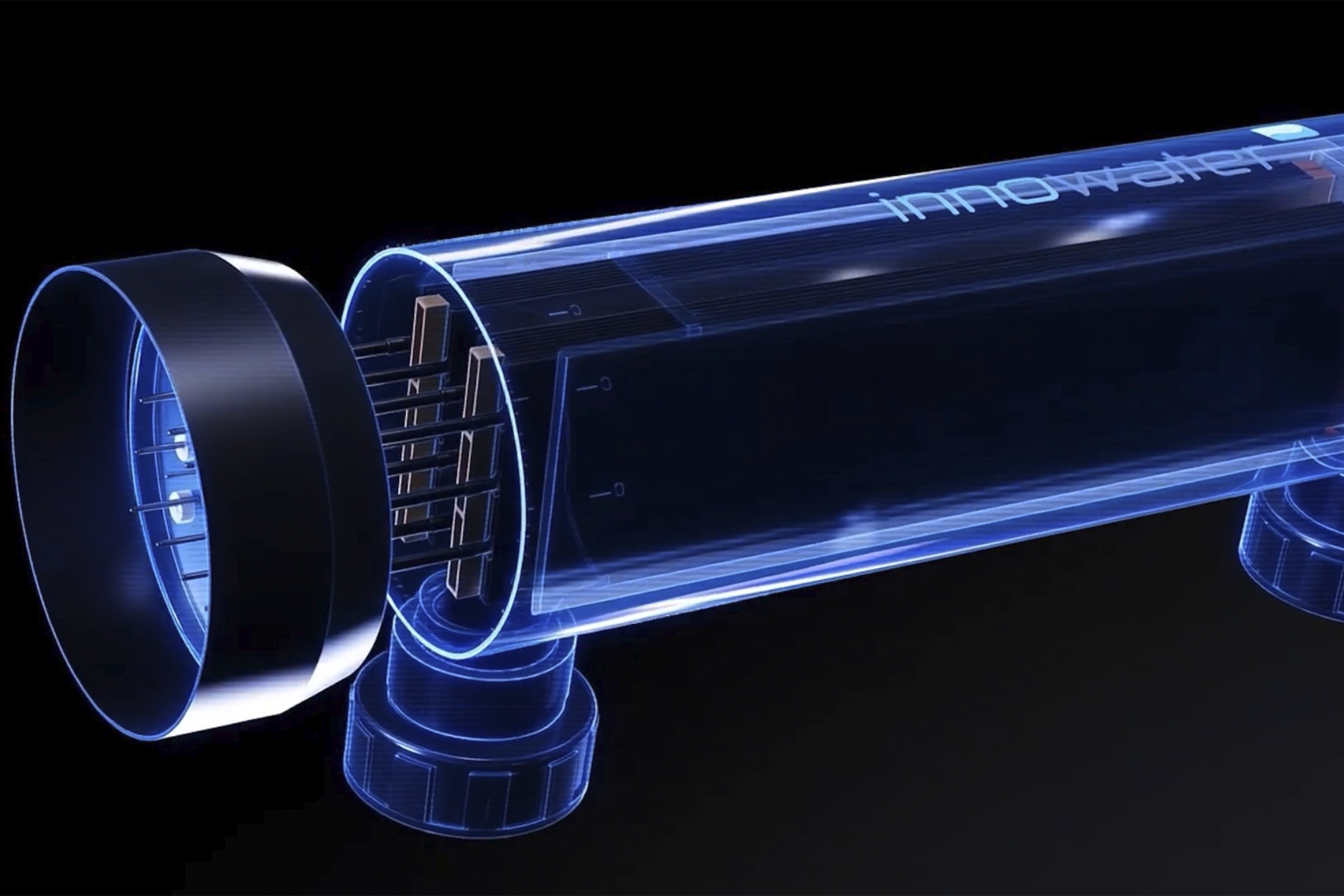
Not all salt chlorinators have the superchlorination function. The Boost or superchlorination function is an additional feature incorporated into certain models.
In fact, at Innowater we recommend specifically checking the availability of this function when comparing salt chlorinator purchases.
When choosing equipment, in addition to checking whether it has Boost, consider:
- Chlorine production.
- Recommended pool volume.
- Required salt concentration.
- Temperature range.
- Cell type.
- Electrode lifespan.
- Polarity reversal system.
- Flow control.
- Salinity control.
- pH control.
- ORP control.
- Compatibility with automation systems.
- Remote control capability.
- Technical service and spare parts availability.
The Boost function is useful, but it should not be the only criterion for choosing a chlorinator.
Innowater salt chlorinators have a Boost function, in this case identified as Shock.
Boost or Oversizing the Chlorinator?
These are two related but different concepts. A properly sized chlorinator must be able to meet the pool’s typical needs.
The Boost function provides temporary additional capacity. That’s why equipment with Boost can offer greater flexibility:
Proper sizing + normal production + Boost capacity
versus:
Undersized equipment + permanent operation at maximum
A chlorinator should not be selected thinking exclusively of using Boost to compensate for undersized equipment.
Salt chlorinator sizing must be done taking into account water volume, temperature, use, location, sun exposure, and installation characteristics.
How Do You Know If You Need to Use the Superchlorination Function?
One of the best ways to decide is to observe the water’s behavior. If during normal operation:
- Free chlorine remains stable.
- ORP stays within target.
- pH is properly controlled.
- Water remains crystal clear.
- No algae appear.
- The system responds adequately to bather load.
There’s no reason to use Boost regularly. If, however, a temporary higher demand occurs and the system needs to temporarily increase production, the function can be especially useful.
Boost and Automation: A Particularly Useful Combination
The real potential appears when the Boost function is part of an automated pool water treatment system. An advanced system can combine:
- Salt Chlorination
- Parameter measurement
- pH and ORP control
- Production adjustment
- Response to changes in demand
This way, the pool no longer depends exclusively on manual adjustments.
Automation allows for more stable control and detects deviations before they’re visible to the user.
Innowater works intensively to optimize this combination of salt chlorination, control, dosing, and connectivity as much as possible, for both private pools and public facilities.
Superchlorination in a Public Pool
The superchlorination (Boost) function can be especially useful in facilities with significant load variations. In fact, a public pool can experience very significant differences between:
- A low-traffic morning.
- A peak-occupancy afternoon.
- A public holiday.
- A weekend.
- A vacation period.
- …
That’s why the treatment system must be able to adapt to the facility’s actual needs.
In this type of pool, however, control must be performed with special consideration for health requirements and applicable regulations.
Boost can be a tool within the treatment strategy, but it does not replace regulatory control of water parameters.
What Should You Check Before Activating Your Salt Chlorinator’s Boost?
Before increasing chlorine production, it’s advisable to check the general water condition.
Checklist
- pH.Is it within the established target?
- Free chlorine. Is it actually low?
- Redox (ORP). If there’s Redox control, what value is it indicating?
- Salinity. Is the salt concentration adequate for the equipment?
- Filtration. Are the pump and filter working properly?
- Electrolytic cell. Is it clean and working properly?
- Flow rate. Is there sufficient water circulation through the cell?
- Bather load.Has it increased considerably?
- Water condition. Is there turbidity, algae, odor, or any other problem?
This diagnosis is important because activating Boost should not become an automatic solution for any pool problem.
Frequently Asked Questions About the Boost Function of a Salt Chlorinator
What Does Boost Mean in a Salt Chlorinator?
Boost means the chlorinator has a function to temporarily increase chlorine production compared to normal operation.
What Is Boost For?
It’s for responding to temporary situations when the pool needs higher disinfectant production, for example after heavy use or during certain high-demand episodes.
Are Boost and Superchlorination the Same Thing?
They’re often used as equivalent terms, but it’s worth distinguishing between a temporary increase in chlorinator production and an actual shock treatment. The exact function depends on the manufacturer and model.
Can I Use Boost Every Day?
It should not be used as a substitute for normal operation. It’s designed for temporary situations of higher demand.
Does Boost Eliminate Algae?
Not directly. It can help increase chlorine production, but algae growth requires diagnosing and treating the cause.
Does Boost Replace pH Control?
No. pH must continue to be controlled independently.
Does Boost Replace ORP Control?
No. ORP is an additional parameter that allows you to assess the water’s oxidizing capacity.
Do All Chlorinators Have Boost?
No. It’s a function available in certain models.
Is a Chlorinator with Boost Better?
It’s an extra feature. It can be an advantage, especially when the pool experiences significant demand variations. However, sizing, regulation, cell quality, and automation capabilities are equally important.
“More production when needed. Normal production when not needed. That’s the true purpose of the Superchlorination or Boost function in a pool with salt chlorination”
Conclusion: Superchlorination or Boost, More Capacity When You Really Need It
The Boost or superchlorination function is an especially useful tool in a salt chlorinator because it allows you to temporarily increase chlorine production when the pool’s disinfection needs are higher than usual.
After a day of heavy use, during periods of high temperatures, in certain contamination situations, or when disinfectant demand increases temporarily, having this additional capacity can help restore and maintain proper water conditions.
But there’s a fundamental idea worth remembering: Boost is not about always producing more chlorine, but about having more production capacity when you really need it.
The best strategy is to combine a properly sized chlorinator, adequate production control, and, when possible, automatic control and dosing systems for pH and ORP.
This way, salt chlorination stops being simply a chlorine generator and becomes a fundamental part of an intelligent water treatment system.

Salt chlorination for pools is a treatment system that generates pure chlorine from the salt dissolved in the water, through an electrolysis process. A sustainable, automated, and safe treatment for swimming.
Related News
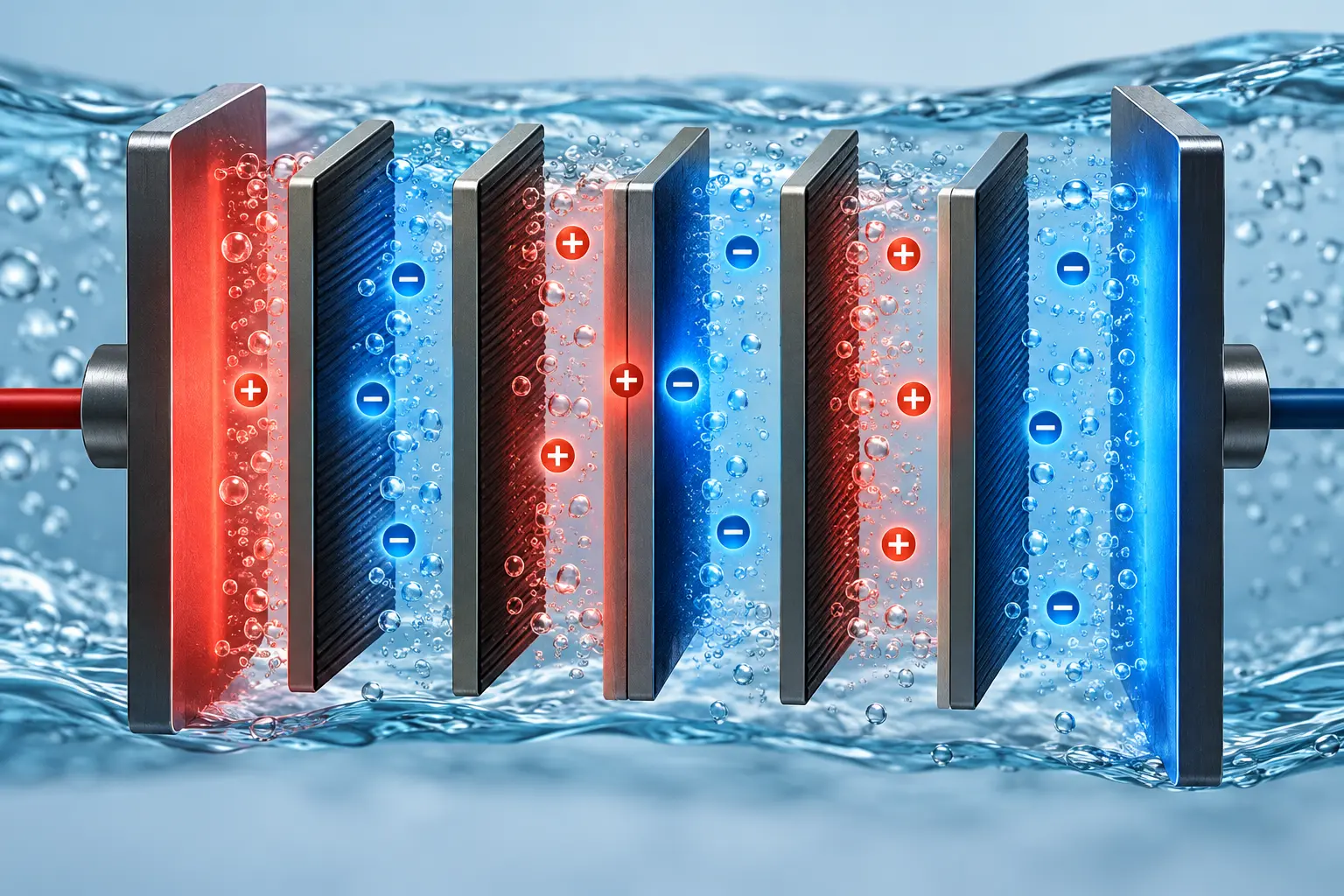
Bipolar cells, reverse polarity and programmable polarity in salt chlorination

Chloramines in Pools: What They Are, How They Form, and How to Eliminate Them
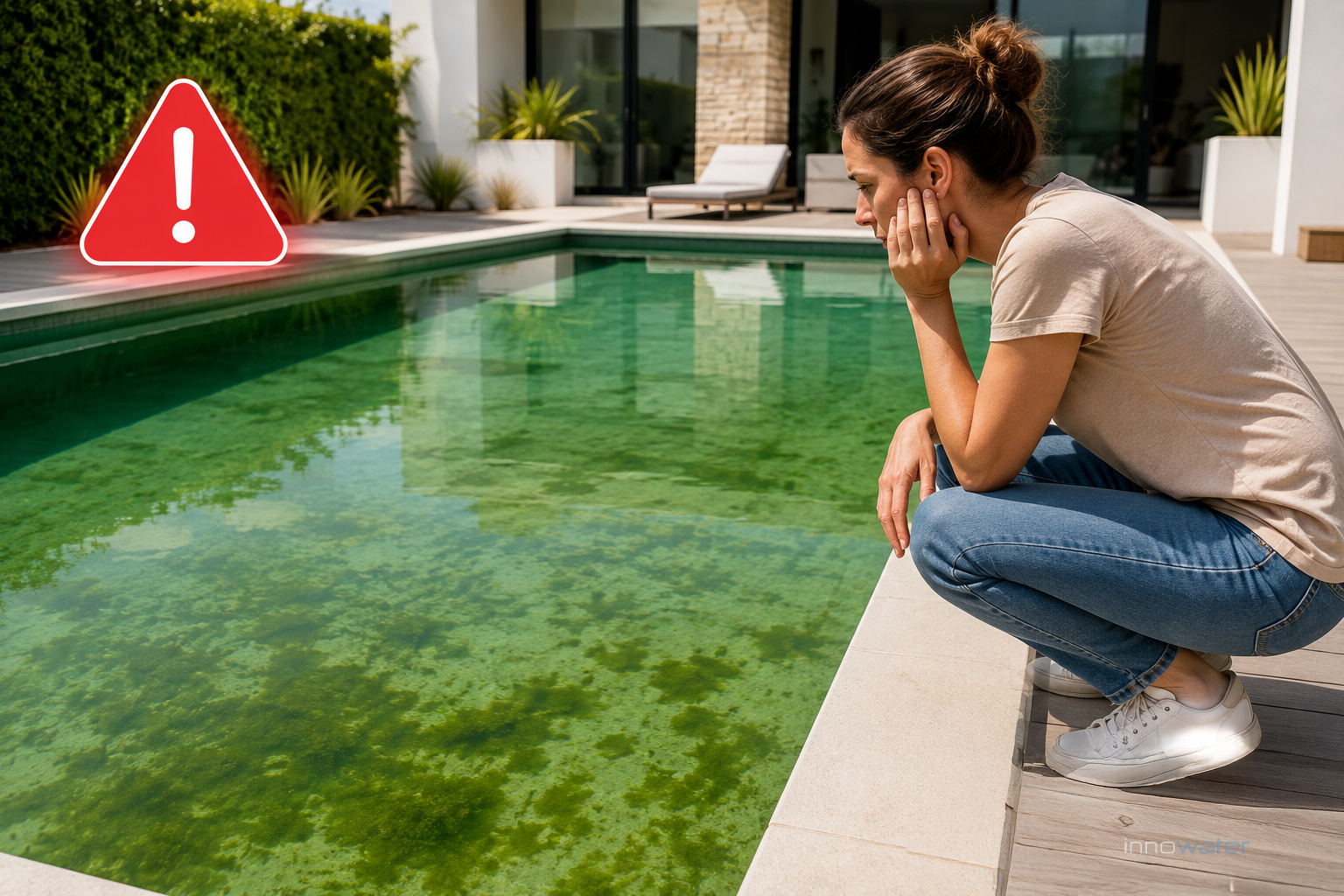
How to solve the 20 most frequent pool water problems
Complete guide to pool water treatment: all the parameters you need to control
Myths about Salt Chlorination: 10 Misconceptions You Need to Know
Relationship between pH, ORP, and free chlorine: The ultimate guide to achieving effective pool disinfection
How to correctly size a salt chlorinator for your pool: the ultimate guide to choosing the right equipment

What is ORP and why is it the most important parameter to ensure effective disinfection in a swimming pool?

Automating pool water treatment: greater efficiency, less maintenance, and consistently high water quality