Potential Problems with a Salt Chlorinator: Causes and Solutions
A salt chlorinator is one of the most efficient and convenient systems for keeping pool water disinfected, but like any technological equipment, it can present certain issues during operation.
Insufficient chlorine production, a scaled cell, incorrect salt concentration, or poor configuration are some of the most common problems.
The good news is that many of these issues can be prevented through correct installation, sizing, and maintenance of the equipment.
In this article, we review the main problems that can arise in a salt chlorinator, their most frequent causes, and the checks that should be performed to resolve them.
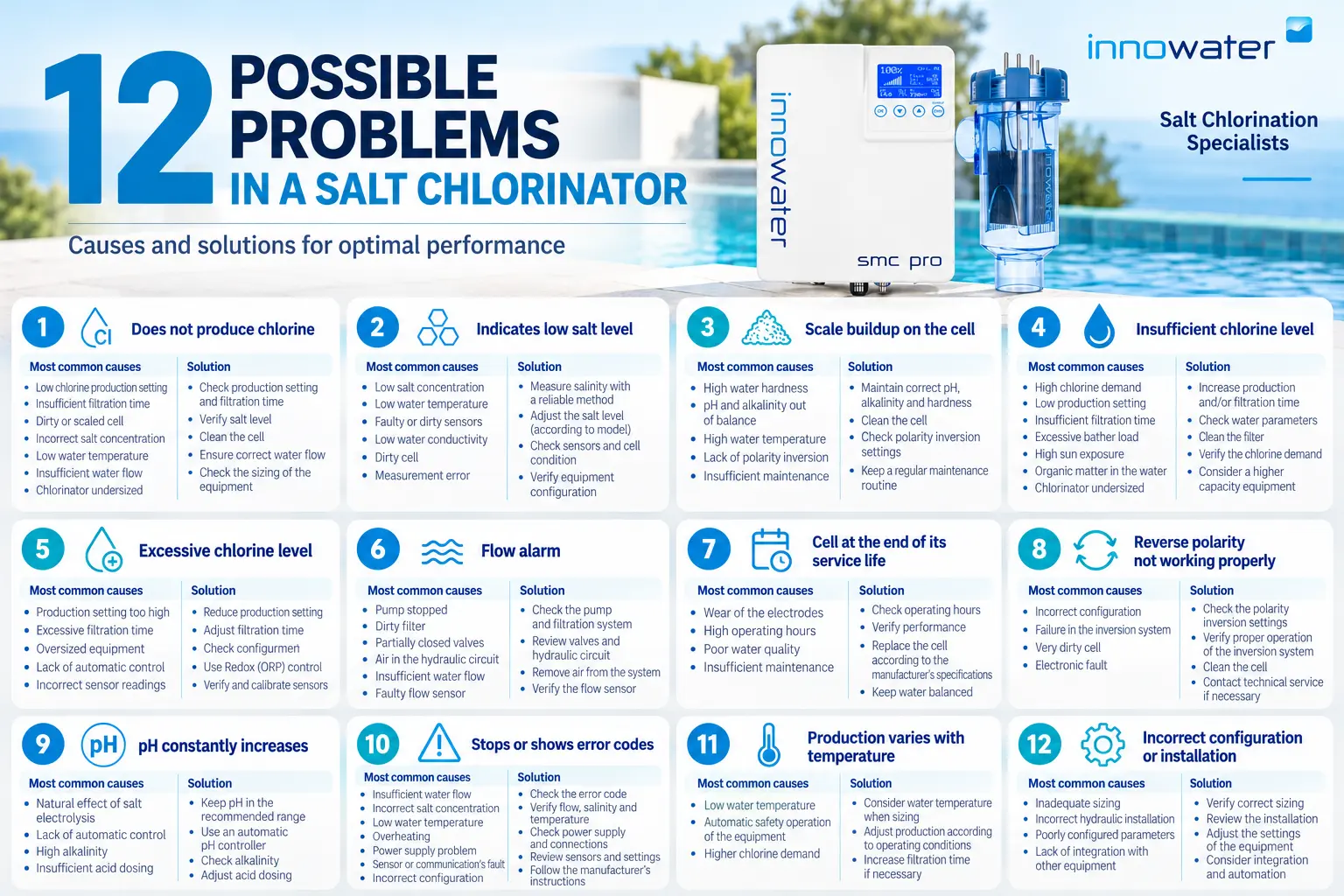
1. The salt chlorinator is not producing chlorine
This is one of the most common issues. When the unit is operating but the pool’s free chlorine concentration does not increase adequately, several causes may be at play.
Possible causes
- Chlorine production set too low.
- Insufficient filtration time.
- Electrolytic cell dirty or with scale buildup.
- Incorrect salt concentration.
- Water temperature too low.
- Insufficient water flow.
- Cell exhausted or at the end of its service life.
- Chlorine demand exceeds the unit’s capacity.
How to solve it?
The first step is to check that the chlorinator is producing and what production percentage is configured.
We must also verify the manufacturer’s recommended salt concentration and ensure the cell is correctly installed and receiving sufficient water flow.
If the cell shows calcium deposits, the corresponding maintenance must be performed according to the manufacturer’s instructions.
Finally, it is essential to check that the chlorinator is properly sized for the pool volume, water temperature, and usage conditions.
2. The chlorinator indicates low salt
Salt chlorinators require a specific salt concentration to produce chlorine through electrolysis. If the unit detects an insufficient concentration, it may reduce or stop production to protect the system.
What should we check?
Before adding salt, it is important to measure the actual water concentration. A low salinity alarm does not necessarily mean you need to add salt immediately.
It can also be related to:
- water temperature
- sensors
- electrolytic cell
- unit configuration
- water conductivity
- measurement errors
Solution
Measure salinity with a reliable method and compare it to the recommended range for your chlorinator model.
It is not advisable to add salt based solely on the unit’s reading without first checking the actual water value.
3. There is too much scale buildup on the cell
Scale buildup is particularly common when the water has high hardness or when the chemical balance is inadequate.
The accumulation of calcium carbonate on the electrodes can progressively reduce electrolysis efficiency.
What are the consequences?
A scaled cell can:
- produce less chlorine;
- increase its power consumption;
- generate warnings or alarms;
- operate with lower efficiency;
- reduce its service life if proper maintenance is not performed.
How to prevent it?
Properly control parameters such as:
- pH;
- alkalinity;
- hardness;
- temperature;
- salinity.
Automatic pH regulation can play a particularly important role in this regard.
4. The chlorinator works, but chlorine levels are insufficient
Low chlorine levels do not always mean the problem lies with the chlorinator. Chlorine production must be analyzed in conjunction with the pool’s disinfectant demand.
For example, a pool with high bather load, elevated temperatures, many hours of sun exposure, organic matter, or insufficient filtration may require considerably higher chlorine production.
What can we do?
Check:
- Chlorinator production
- Filtration hours
- Water quality
- Chlorine demand
It is also important to verify the free chlorine level and, when appropriate, other parameters such as ORP.
5. The chlorinator produces too much chlorine
The opposite problem can also occur.
Excessive production can lead to a chlorine concentration higher than necessary.
Possible causes
- Production set too high.
- Excessive filtration time.
- Oversized equipment.
- Incorrect control parameters.
- Absence of automatic regulation.
- Incorrect sensor readings.
The solution involves adjusting production and operating time, and in installations with a higher level of automation, establishing a control strategy based on parameters such as ORP.


6. A flow alarm appears
The salt chlorinator requires water circulation to function correctly. If the unit detects insufficient flow, it may stop chlorine production.
Common causes
- Pump stopped.
- Dirty filter.
- Partially closed valves.
- Air in the circuit.
- Insufficient flow.
- Flow sensor issues.
- Incorrect hydraulic installation.
What to check?
Before intervening with the unit, we must verify that the pump is working correctly and that there is water circulation.
It is also advisable to check the condition of the filter and the installation’s valves.
7. The electrolytic cell is reaching the end of its service life
The cell is one of the fundamental components of a salt chlorinator. Over time, the electrodes wear out as a result of the electrolysis process itself.
The service life will depend on the cell type, operating conditions, water quality, unit configuration, and maintenance performed.
When a cell is nearing the end of its service life, a progressive reduction in production capacity may be observed.
At this point, it is advisable to check its operating hours and consider its replacement according to the manufacturer’s specifications.
8. Reverse polarity is not working correctly
Polarity reversal is a technology used to reduce the accumulation of deposits on the electrodes.
By periodically reversing polarity, the formation of scale buildup is reduced, and cell maintenance is facilitated.
If the reversal system does not work correctly, deposit accumulation may increase, and cell performance may decrease.
In advanced units, in addition to automatic reversal, programmable polarity strategies adapted to operating conditions may exist.
9. The pool pH continuously rises
It is important to differentiate this problem from the chlorinator’s operation. Salt electrolysis can contribute to a tendency for water pH to increase, so proper control of this parameter is essential.
High pH can reduce disinfection effectiveness and promote scale formation.
Solution
Regularly monitor pH and keep it within the recommended range for the installation.
For a higher level of automation, an automatic pH controller allows us to continuously measure and correct the parameter.
“A problem with a salt chlorinator does not always mean a breakdown: correctly identifying the cause is the first step to restoring its performance and ensuring effective water disinfection.”
10. The chlorinator stops or shows electronic errors
When an electronic alarm appears, it does not always mean there is a serious fault.
It could be due to:
- lack of flow
- incorrect salinity
- insufficient temperature
- overheating
- communication failure
- power supply issue
- defective sensor
- incorrect configuration
Always consult the specific alarm code and follow the procedure indicated by the manufacturer.
Never tamper with the unit internally while it is connected to the electrical grid.
11. Production changes with temperature
Water temperature directly influences electrolysis behavior. When the water is cold, production can be limited, and some systems automatically reduce chlorine generation to protect the cell.
For this reason, as we have indicated on other occasions, the nominal capacity of a chlorinator should not be analyzed solely based on pool volume.
We must also consider:
- temperature
- filtration hours
- sun exposure
- number of bathers
- usage conditions
- disinfectant demand
12. How to prevent most salt chlorinator problems?
Prevention begins before installing the equipment. What should we consider?
- Properly size the unit. An undersized chlorinator may constantly operate at maximum capacity.
- Keep the water balanced. pH, alkalinity, hardness, and salinity must be maintained within recommended values.
- Keep the cell clean. A cell in good condition provides more efficient electrolysis.
- Ensure adequate flow. Hydraulics and filtration are fundamental for system operation.
- Automate when necessary. Automatic pH and ORP control allows the treatment to adapt to actual water conditions.
- Perform periodic maintenance. Preventing minor incidents keeps them from becoming major breakdowns.

Innowater Technology for More Efficient Operation
The evolution of salt chlorinators has led to the development of much more efficient, reliable, and easy-to-control equipment.
At Innowater, salt electrolysis technology is combined with advanced control and dosing systems to achieve more precise water treatment.
High-performance cells
Electrolytic cell technology is fundamental for achieving efficient and stable chlorine production.
Reverse polarity
Automatic polarity reversal helps reduce scale buildup on electrodes and facilitates maintenance.
Programmable polarity
The ability to adapt operating cycles allows for optimizing cell behavior based on the conditions of each installation.
pH control
Integration with automatic regulation systems allows pH to be maintained within established values and reduces manual interventions.
Redox / ORP Control
ORP-based control allows disinfectant production to be adjusted according to actual water conditions, providing a superior level of automation.
Protected electronics
Electronics specifically designed to operate in pool environments contribute to improving equipment reliability and durability.
Automation and integration
Innowater systems can be integrated with different automation solutions, enabling progress towards increasingly intelligent and efficient installations.
The key is not to produce more chlorine, but to produce it when necessary
An efficient salt chlorinator should not simply operate at maximum power. The goal is to achieve the right amount of disinfectant, at the right time, with the lowest possible consumption and maintenance.
Therefore, the future of salt chlorination involves combining:
- Electrolysis
- Measurement
- Control
- Dosing
- Automation
And it is precisely in this evolution that Innowater’s technology fully makes sense.
Conclusion
Salt chlorinator problems do not always mean the equipment is faulty. In many cases, an alarm or insufficient production is related to water parameters, flow, configuration, sizing, or maintenance.
The best strategy is to diagnose the cause before acting and maintain both the equipment and the water under recommended conditions.
Choosing a properly sized chlorinator, along with appropriate control and automation systems, improves efficiency, reduces maintenance, and achieves more stable disinfection.
At Innowater, we develop specialized technology for pool water treatment through salt electrolysis.
Salt Chlorination Specialists.

Salt chlorination for pools is a treatment system that generates pure chlorine from the salt dissolved in the water, through an electrolysis process. A sustainable, automated, and safe treatment for swimming.
Related News
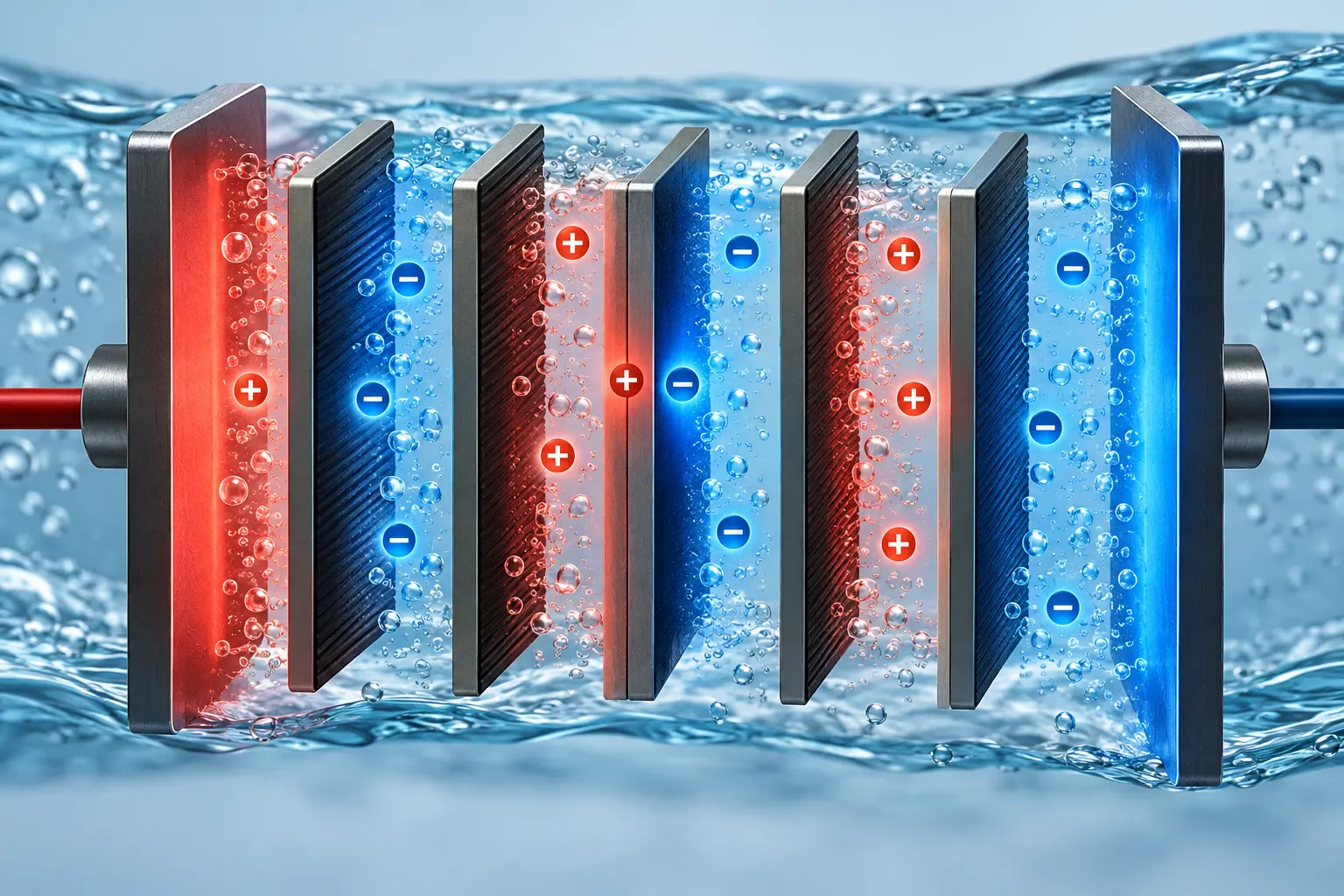
Bipolar cells, reverse polarity and programmable polarity in salt chlorination
Superchlorination or Boost Function in a Salt Chlorinator: What It Is, What It’s For, and When to Use It

Chloramines in Pools: What They Are, How They Form, and How to Eliminate Them
How to solve the 20 most frequent pool water problems
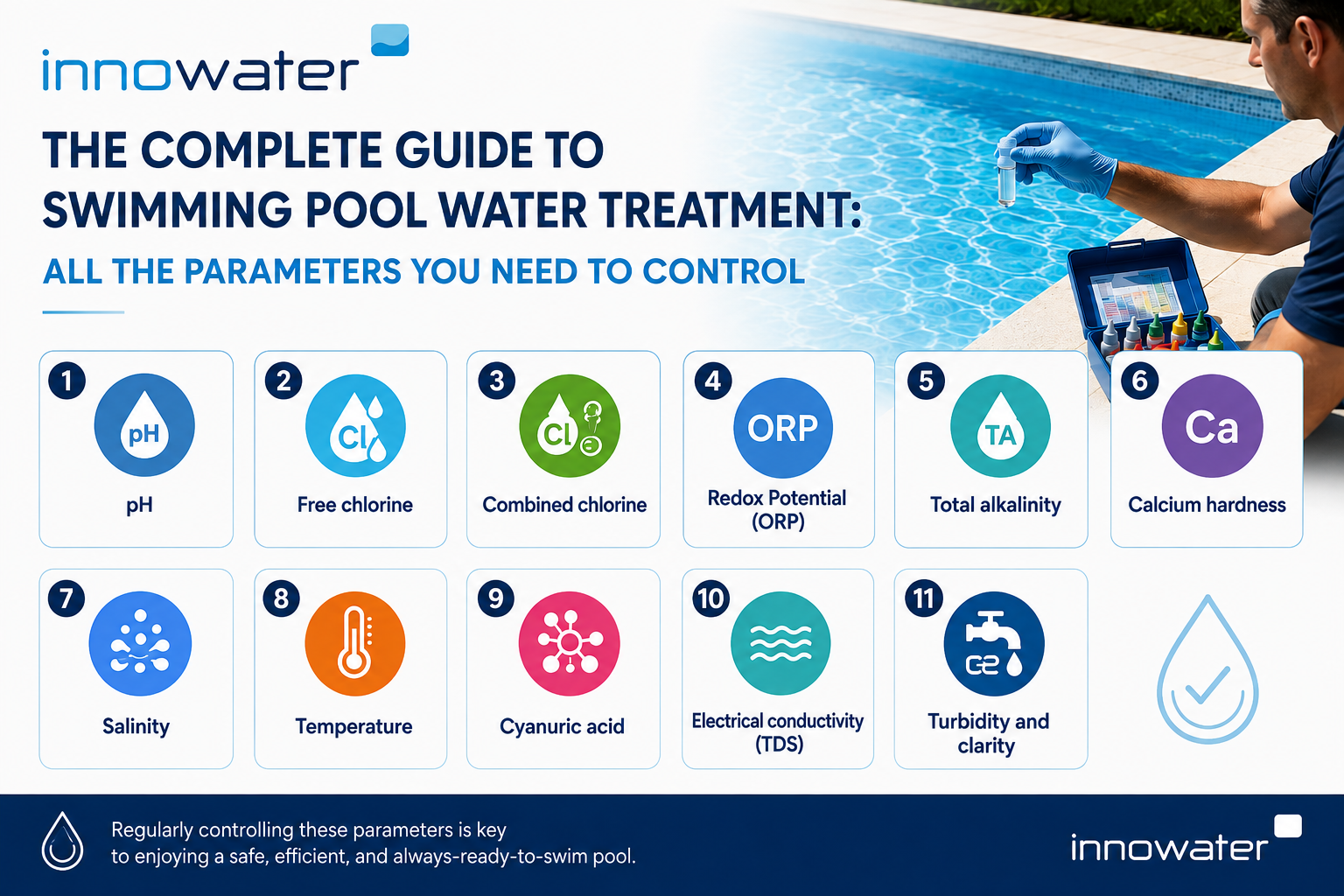
Complete guide to pool water treatment: all the parameters you need to control
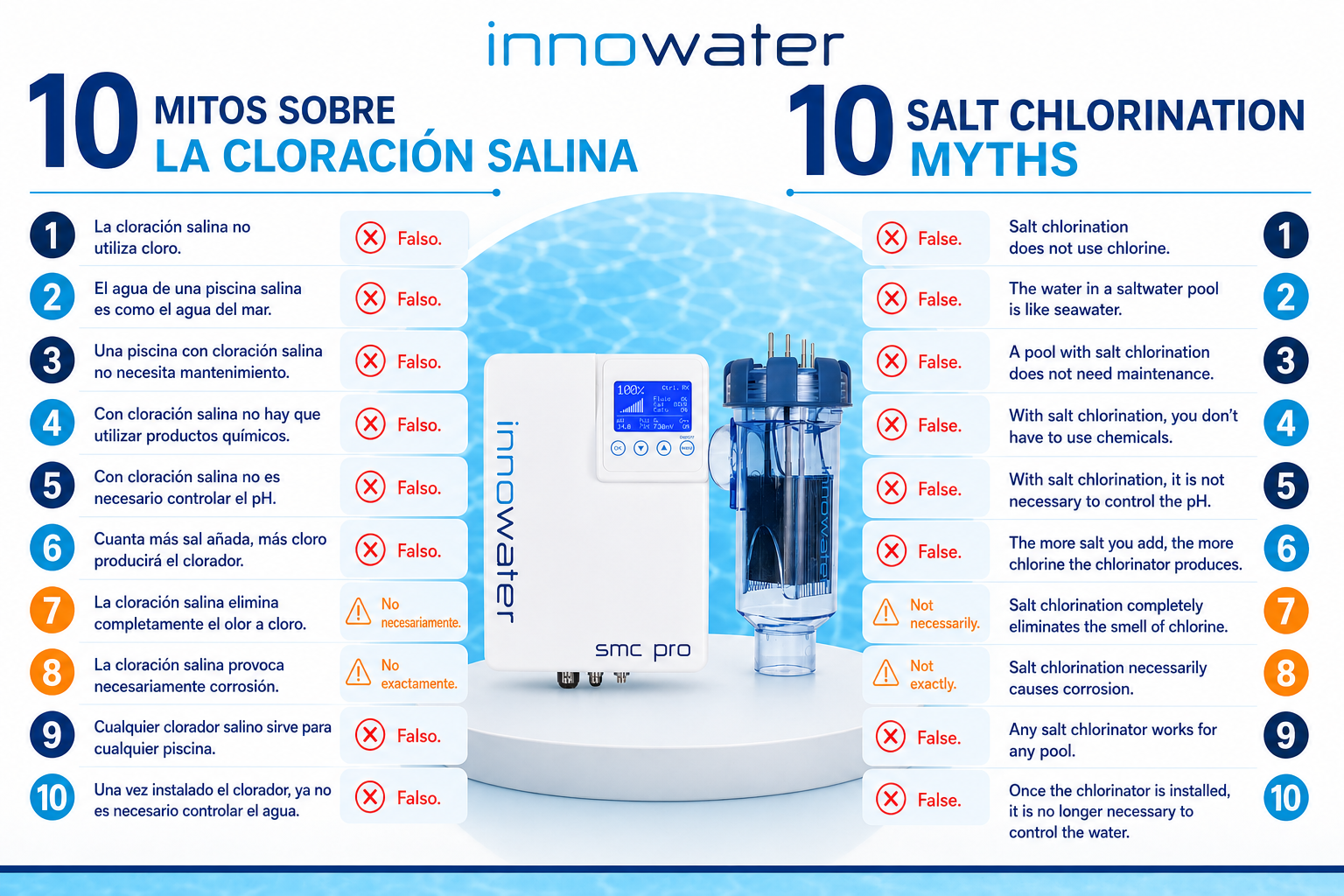
Myths about Salt Chlorination: 10 Misconceptions You Need to Know
Relationship between pH, ORP, and free chlorine: The ultimate guide to achieving effective pool disinfection
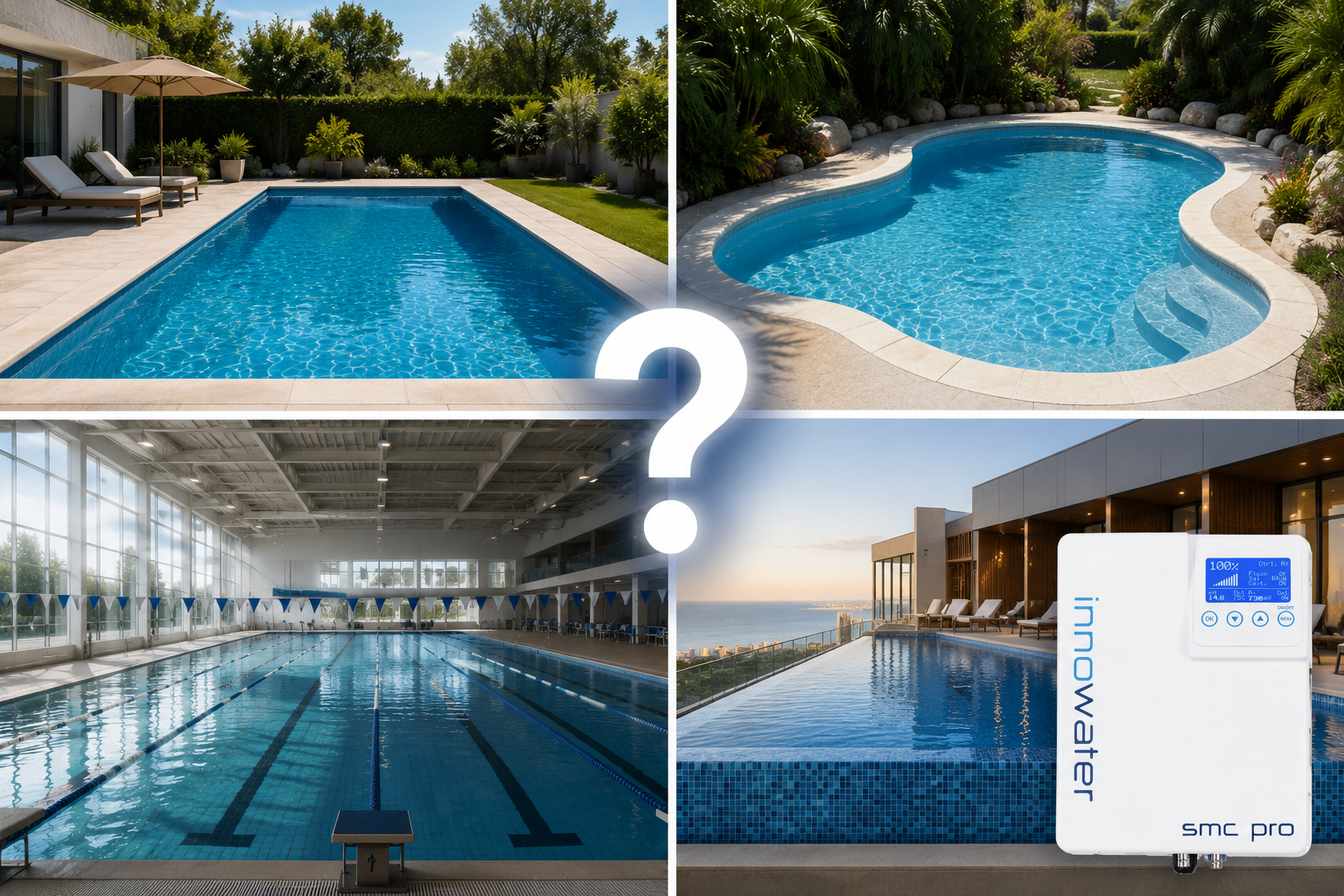
How to correctly size a salt chlorinator for your pool: the ultimate guide to choosing the right equipment
What is ORP and why is it the most important parameter to ensure effective disinfection in a swimming pool?