Optimal Disinfection in Municipal Pools
There are many times when we confuse “water cleaning” with “disinfection”. In the case of municipal pools, due to the large number of users who enjoy them during summer seasons, understanding this difference and acting accordingly is paramount to maintaining the water in these pools and guaranteeing the best experience and conditions for swimmers.
Cleaning can be defined as the physical removal of foreign bodies from the water, while disinfection is achieved through chemical processes, eliminating microorganisms that can sometimes be produced by the presence of those foreign bodies we first mentioned.
There are numerous water disinfection techniques, but one that is gaining increasing traction in the sector due to its proven efficiency is salt chlorination.

Salt Chlorination or Saline Electrolysis
Salt chlorination involves the decomposition of salt into sodium (Na) and chlorine (Cl), using the latter as the main disinfectant for pool water.
By adding salt to obtain this “disinfecting element” instead of the usual sodium hypochlorite, we achieve not only correct and effective disinfection but also avoid some of the problems associated with the use of chemicals, such as red eyes and skin, itching, or that chlorine smell after swimming.
As can be seen, the effect achieved by adding common salt, which will be transformed by the salt chlorinator cell, is the same as with methods that are more aggressive for users. Furthermore, the amount of salt needed is minimal compared to “chemical chlorine,” which also represents a significant economic saving for the installation in any pool, but when it comes to municipal pools, this is a decisive factor when choosing between systems.
Salt Chlorination Experts
At Innowater, experts in salt chlorination, we offer a range of salt chlorinators that will meet the disinfection and water quality needs of any municipal pool, ensuring it always looks its best.

Salt chlorination for pools is a treatment system that generates pure chlorine from the salt dissolved in the water, through an electrolysis process. A sustainable, automated, and safe treatment for swimming.
Related News
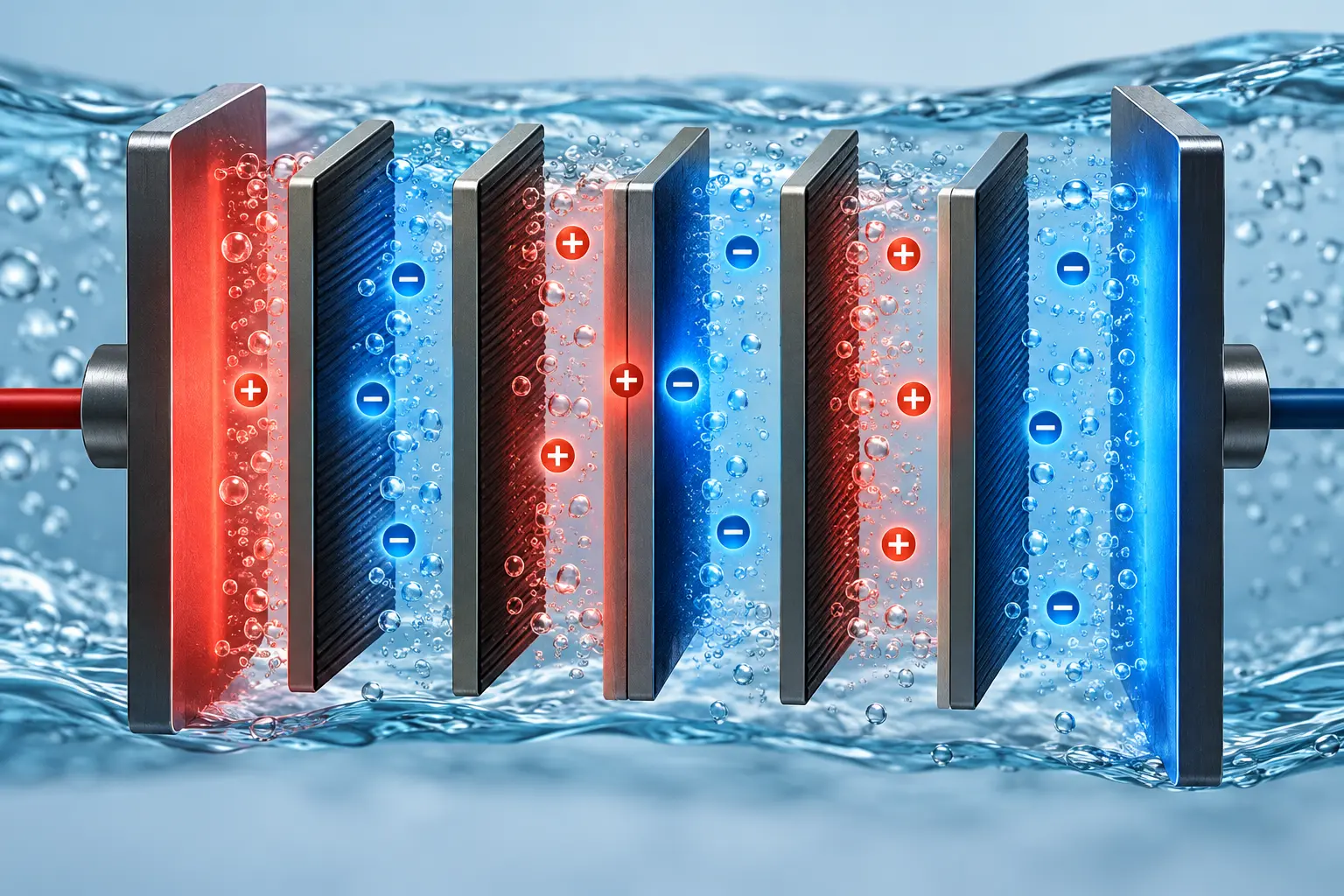
Bipolar cells, reverse polarity and programmable polarity in salt chlorination

Superchlorination or Boost Function in a Salt Chlorinator: What It Is, What It’s For, and When to Use It

Chloramines in Pools: What They Are, How They Form, and How to Eliminate Them
How to solve the 20 most frequent pool water problems
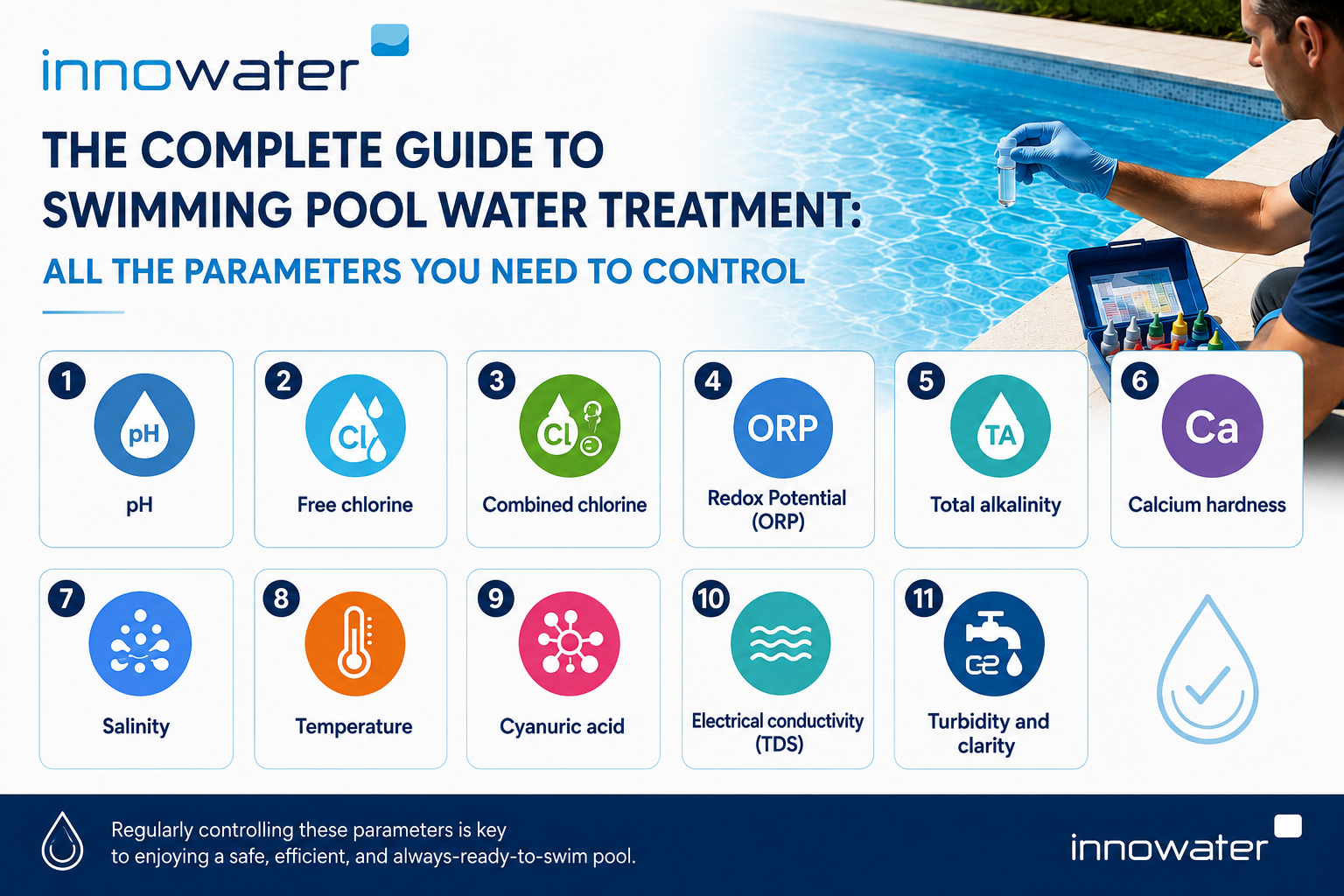
Complete guide to pool water treatment: all the parameters you need to control
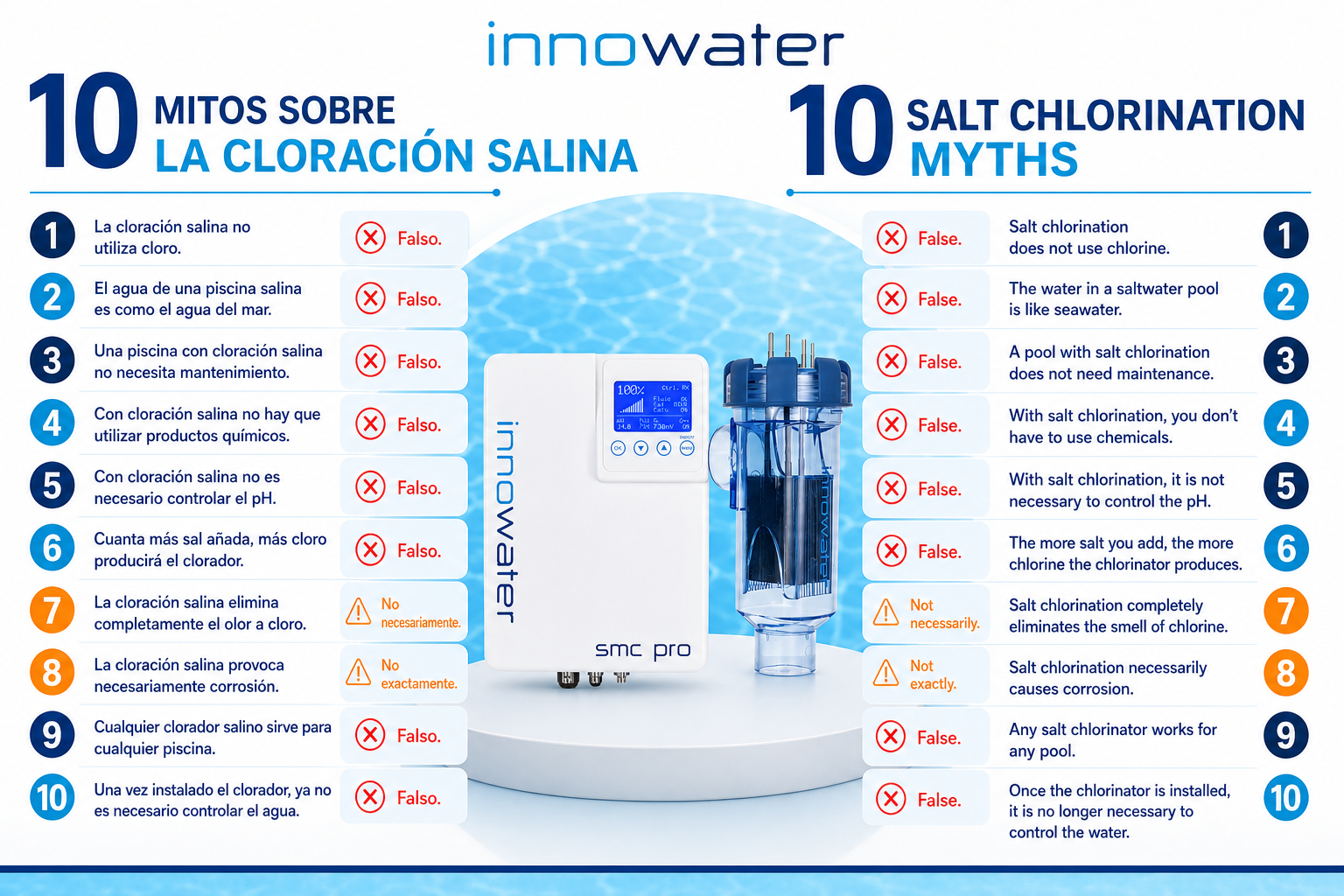
Myths about Salt Chlorination: 10 Misconceptions You Need to Know
Relationship between pH, ORP, and free chlorine: The ultimate guide to achieving effective pool disinfection
How to correctly size a salt chlorinator for your pool: the ultimate guide to choosing the right equipment

What is ORP and why is it the most important parameter to ensure effective disinfection in a swimming pool?